

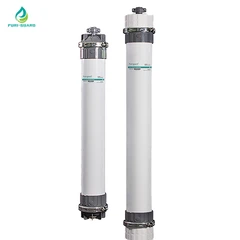

Hey there! As a supplier of NF RO membranes, I often get asked about how these nifty devices work. So, I thought I'd break it down for you in a way that's easy to understand.
Let's start with the basics. NF stands for Nanofiltration, and RO stands for Reverse Osmosis. These are two types of membrane filtration technologies that are used to remove impurities from water. They're super important for a whole bunch of applications, from making our drinking water safe to use in industrial processes.
How RO Membranes Work
First up, let's speak about Reverse Osmosis. Picture a semi - permeable membrane. It's like a definitely nice internet that solely lets sure matters through. In an RO system, water is pushed in opposition to this membrane beneath pressure. The stress is key here. It forces the water molecules to pass by thru the tiny pores in the membrane, whilst leaving at the back of large particles like salts, bacteria, and different contaminants.
The procedure starts offevolved in a feed water tank. The water is then pumped at excessive strain closer to the RO membrane. The membrane has pores that are so small-usually round 0.0001 microns. To put that in perspective, a human hair is about 75,000 microns wide. So, these pores are highly tiny.
As the water hits the membrane, the pure water (permeate) passes through, and the targeted answer of contaminants (brine) is left behind. The permeate is accumulated and can be used for quite a number purposes, like consuming or industrial processes. The brine is normally disposed of properly.
One of the cool matters about RO membranes is their capacity to eliminate a vast vary of contaminants. They can get rid of over 99% of dissolved salts, as properly as many natural and inorganic compounds. This makes them best for desalination plants, the place they flip seawater into fresh, drinkable water.
How NF Membranes Work
Now, let's pass on to Nanofiltration. NF membranes are comparable to RO membranes, however they have barely large pores. The pores in an NF membrane are generally in the vary of 0.001 to 0.01 microns.
NF membranes work in a comparable way to RO membranes. Water is additionally pushed in opposition to the membrane underneath pressure. But due to the fact the pores are larger, they enable some smaller ions and molecules to omit via whilst nevertheless blocking off large ones.
For example, NF membranes can do away with multivalent ions like calcium and magnesium, which are accountable for water hardness. They can additionally cast off some natural compounds and microorganisms. But they're now not as fantastic as RO membranes at disposing of monovalent ions like sodium chloride.
This selective filtration makes NF membranes terrific for functions the place you do not want to eliminate all the salts from the water. For instance, in some meals and beverage industries, NF membranes are used to cast off impurities whilst keeping some of the really useful minerals in the water.
Applications Of NF RO Membranes
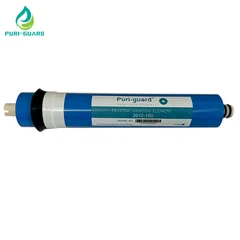
The purposes of NF RO membranes are vast. In the household, they're used in water purification systems. You can test out our Household NF for greater records on how these membranes can enhance the great of your consuming water.
In the industrial sector, NF RO membranes are used in a range of processes. For example, in the pharmaceutical industry, they're used to purify water for drug manufacturing. In the chemical industry, they're used to separate and purify one of a kind chemicals.
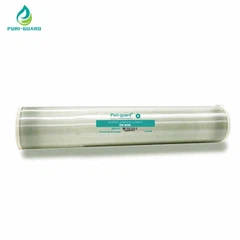
Our NF forty Membrane is a famous preference for many industrial applications. It gives excessive - overall performance filtration and is designed to stand up to the harsh prerequisites of industrial processes.
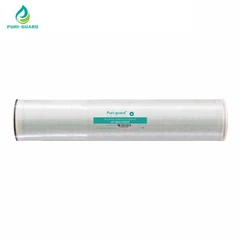
Another outstanding product is our Nanofiltration NF 8040. It's a giant - scale membrane it truly is ideal for large - time water cure plants.
Factors Affecting NF RO Membrane Performance
There are several factors that can affect the performance of NF RO membranes. One of the most important is the feed water quality. If the feed water has a high concentration of contaminants, the membrane will get clogged more quickly, and its lifespan will be reduced.
The operating pressure also plays a crucial role. If the pressure is too low, the water won't pass through the membrane efficiently. On the other hand, if the pressure is too high, it can damage the membrane.
Temperature is another factor. Higher temperatures can increase the rate of water flow through the membrane, but it can also affect the membrane's structure and performance in the long run.
Maintenance Of NF RO Membranes
Proper maintenance is essential to keep NF RO membranes working effectively. Regular cleaning is a must. This helps to remove any contaminants that have built up on the membrane surface. There are different cleaning methods, depending on the type of contaminants and the membrane material.
It's also important to monitor the membrane's performance regularly. You can do this by measuring the water flow rate, the quality of the permeate, and the pressure across the membrane. If you notice any changes in these parameters, it could be a sign that the membrane needs to be cleaned or replaced.
Why Choose Our NF RO Membranes
As a supplier, we take pride in offering high - quality NF RO membranes. Our membranes are made from the best materials and are designed to provide reliable and efficient filtration. We have a team of experts who can help you choose the right membrane for your specific application.
Whether you're a household looking for a better way to purify your water or an industrial company in need of a large - scale filtration solution, we've got you covered.
If you're interested in learning more about our NF RO membranes or are thinking about making a purchase, don't hesitate to reach out. We're here to answer all your questions and help you find the perfect membrane for your needs.