
As a seasoned water nanofiltration supplier, I've witnessed the growing demand for efficient water treatment solutions across various environments. High - altitude regions present unique challenges and opportunities for water nanofiltration systems, and I'm excited to share my insights on this topic.
Understanding Water Nanofiltration
Before delving into high - altitude performance, let's briefly recap what water nanofiltration is. Water Nanofiltration is a membrane - based filtration process that can remove a wide range of contaminants from water. Nanofiltration membranes have pores in the nanometer range, which allows them to selectively separate particles, ions, and molecules based on their size and charge. This process is effective in removing substances such as hardness, organic compounds, and some heavy metals while retaining certain beneficial minerals.
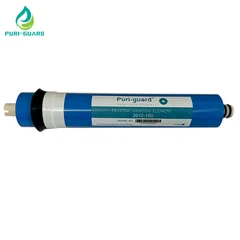
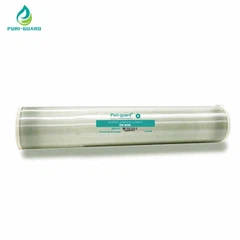
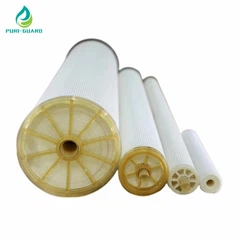
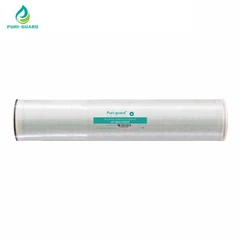
Common types of nanofiltration membranes available in our product line include NF 8040 and NF 4040. These membranes are designed for various applications, from large - scale industrial water treatment to Residential NF Membrane solutions. We also offer Reverse Osmosis Nanofiltration systems, which combine the principles of reverse osmosis and nanofiltration for enhanced water purification.
High - Altitude Conditions and Their Impact on Water Nanofiltration
Pressure and Flow Rate
One of the most significant factors affected by high altitude is atmospheric pressure. As altitude increases, atmospheric pressure decreases. In a water nanofiltration system, pressure is crucial for driving water through the membrane. A lower atmospheric pressure means that the net driving pressure for the filtration process is reduced. This can lead to a decrease in the flow rate of the treated water.
For example, in a standard water nanofiltration system operating at sea - level, a certain pressure is applied to force water through the membrane. At high altitudes, the same applied pressure will result in a lower effective pressure difference across the membrane. To maintain an acceptable flow rate, the system may need to be adjusted to increase the applied pressure. However, this adjustment must be carefully balanced to avoid damaging the membrane.
Temperature Variations
High - altitude regions often experience significant temperature variations. Cold temperatures can have a negative impact on the performance of water nanofiltration systems. As water temperature decreases, its viscosity increases. This means that the water becomes more resistant to flow, which can further reduce the flow rate through the membrane.
In addition, low temperatures can affect the physical properties of the membrane itself. Some nanofiltration membranes may become more brittle in cold conditions, increasing the risk of damage. On the other hand, sudden temperature changes, such as those that can occur between day and night in high - altitude areas, can cause thermal stress on the membrane and the system components, potentially leading to leaks or reduced membrane performance over time.
Water Quality at High Altitudes
The water sources in high - altitude regions can have unique characteristics. These areas may have water with higher levels of dissolved oxygen due to the lower atmospheric pressure. Additionally, the water may contain different types and concentrations of contaminants compared to lower - altitude sources. For example, mountainous regions may have water with higher levels of natural minerals, such as calcium and magnesium, which can contribute to water hardness.
Water nanofiltration systems need to be able to effectively handle these specific water quality challenges. Our Residential NF Membrane and industrial - grade membranes are designed to be adaptable to different water qualities, ensuring that they can provide high - quality treated water even from challenging high - altitude sources.
Strategies for Optimizing Water Nanofiltration at High Altitudes
Pressure Adjustment
To compensate for the reduced atmospheric pressure at high altitudes, it is essential to adjust the operating pressure of the nanofiltration system. This can be achieved through the use of pressure - boosting pumps. These pumps can increase the inlet pressure to the membrane, ensuring that there is sufficient driving force to push water through the membrane and maintain an adequate flow rate. However, it is important to select pumps that are compatible with the system and the membrane to avoid over - pressurization.
Temperature Management
Managing temperature is crucial for ensuring the proper performance of water nanofiltration systems at high altitudes. Insulation can be used to protect the system from cold temperatures. This can include insulating the pipes, tanks, and the membrane housing itself. In addition, pre - heating the feed water can help to reduce its viscosity and improve the flow rate through the membrane. However, the pre - heating process must be carefully controlled to avoid overheating the membrane and damaging its structure.
Membrane Selection
Selecting the right nanofiltration membrane is key to achieving optimal performance at high altitudes. Membranes with higher mechanical strength are better able to withstand the stress caused by temperature variations and pressure changes. Our NF 8040 and NF 4040 membranes are designed with high - quality materials that offer good mechanical stability and chemical resistance. They can handle the unique challenges presented by high - altitude conditions, including variations in water quality and temperature.
Case Studies of Water Nanofiltration at High Altitudes
We have had the opportunity to install and operate water nanofiltration systems in several high - altitude locations. In one project in a mountain village at an altitude of over 3000 meters, the local water source had high levels of hardness and some organic contaminants. Our team installed a Residential NF Membrane system with appropriate pressure - boosting and temperature - management measures.
Initially, the system faced some challenges with low flow rates due to the reduced atmospheric pressure. However, after adjusting the pressure and implementing insulation measures, the system was able to achieve a stable flow rate and effectively remove the hardness and contaminants from the water. The treated water met the local drinking water standards, providing a reliable source of clean water for the villagers.
Contact for Purchase and Consultation
If you are in a high - altitude area and are looking for a reliable water nanofiltration solution, we are here to help. Our team of experts has extensive experience in designing and implementing water treatment systems that can perform effectively in challenging environments. Whether you need a Residential NF Membrane for your home or a large - scale industrial system, we can provide you with the right product and support.
Reach out to us to discuss your specific requirements and get a customized solution for your water treatment needs. Let's work together to ensure that you have access to clean and safe water, no matter the altitude.