

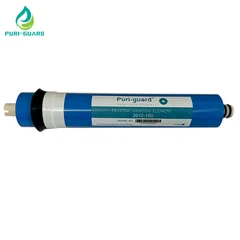
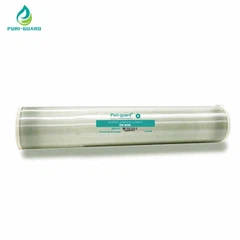
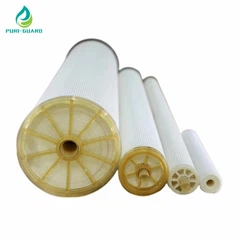
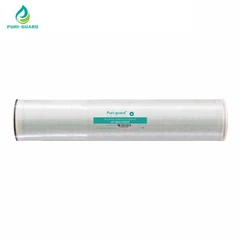
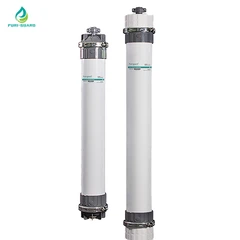
The desalination rate of RO reverse osmosis membrane elements is determined when they are manufactured. The desalination rate depends on the density of the ultra-thin desalination layer on the surface of the reverse osmosis RO membrane element. The denser the desalination layer, the higher the desalination rate, and the lower the water production. The desalination rate of reverse osmosis membranes for different substances is mainly determined by the structure and molecular weight of the substances. The desalination rate for high-valent ions and complex monovalent ions can exceed 99%, and the desalination rate for monovalent ions such as sodium ions, potassium ions, and chloride ions is slightly lower, but it can also exceed 98% (the longer the reverse osmosis membrane is used and the more times it is chemically cleaned, the lower the desalination rate of the reverse osmosis membrane). The removal rate for organic matter with a molecular weight greater than 100 can also reach 98%, but the removal rate for organic matter with a molecular weight less than 100 is lower.
Calculation method of reverse osmosis membrane desalination rate and salt permeability:
RO membrane salt permeability = RO membrane water production concentration / inlet water concentration × 100%
RO membrane desalination rate = (1 – RO membrane water production salt content / inlet water salt content) × 100%
RO membrane salt permeability = 100% – desalination rate
The Desalination Rate And Salt Permeability Of RO Reverse Osmosis Membrane
May 03, 2025
Leave a message