
Can HSRO Membrane be used in gas separation?
As a supplier of HSRO Membrane, I am frequently asked about the potential applications of our product, especially in the field of gas separation. In this blog post, I will delve into the feasibility of using HSRO Membrane for gas separation, exploring its properties, advantages, and limitations.
Understanding HSRO Membrane
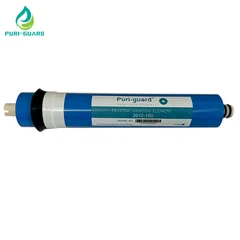
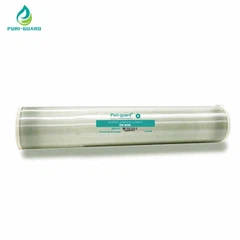
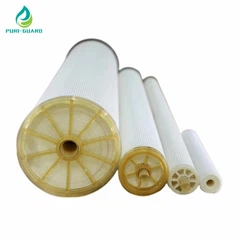
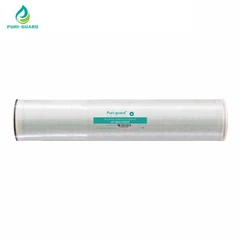
HSRO Membrane, which stands for High Selectivity Reverse Osmosis Membrane, is a type of semi - permeable membrane known for its high selectivity and separation efficiency. Our company offers a range of HSRO Membrane products, including HSRO 8040 and HSRO 4040. These membranes are widely used in water treatment processes due to their ability to separate dissolved solids, organic compounds, and other contaminants from water. But can they be used for gas separation?
The Principles of Gas Separation
Gas separation is a process that involves the separation of different components in a gas mixture. This can be achieved through various methods, such as absorption, adsorption, cryogenic distillation, and membrane separation. Membrane - based gas separation has gained significant attention in recent years due to its simplicity, energy efficiency, and potential for continuous operation.
The basic principle of membrane - based gas separation is the difference in the permeation rates of different gas components through the membrane. Gases with higher solubility and diffusivity in the membrane material will permeate through the membrane faster than those with lower solubility and diffusivity. This results in the separation of the gas mixture into a permeate stream, which is rich in the more permeable gas components, and a retentate stream, which is rich in the less permeable gas components.
Properties of HSRO Membrane for Gas Separation
- Selectivity
One of the key requirements for a membrane to be used in gas separation is high selectivity. Selectivity is defined as the ratio of the permeabilities of two different gas components. HSRO Membrane is designed to have high selectivity for different solutes in water treatment applications. In the context of gas separation, this selectivity can potentially be exploited to separate different gas components. For example, if a particular gas has a higher affinity for the membrane material than another gas, it will permeate through the membrane more readily, leading to separation. - Permeability
Permeability is another important property of a membrane for gas separation. It is a measure of how fast a gas can permeate through the membrane. HSRO Membrane has relatively high permeability for water molecules in water treatment applications. However, the permeability of gases through the membrane depends on the nature of the gas and the membrane material. Some gases may have a high permeability through the HSRO Membrane, while others may have a low permeability. The chemical structure and physical properties of the membrane, such as its porosity and surface area, can also affect gas permeability. - Chemical Resistance
Gas separation processes may involve the use of various gases, some of which may be corrosive or reactive. HSRO Membrane is designed to have good chemical resistance in water treatment applications. This chemical resistance can be an advantage in gas separation, as it allows the membrane to withstand the harsh chemical environment of some gas mixtures without significant degradation.
Advantages of Using HSRO Membrane in Gas Separation
- Energy Efficiency
Compared to traditional gas separation methods such as cryogenic distillation, membrane - based gas separation using HSRO Membrane can be more energy - efficient. Cryogenic distillation requires a large amount of energy to cool the gas mixture to very low temperatures for separation. In contrast, membrane separation operates at relatively low pressures and temperatures, which reduces the energy consumption significantly. - Compact Design
HSRO Membrane systems can be designed in a compact manner. This is beneficial for applications where space is limited, such as in offshore platforms or small - scale industrial plants. The compact design also allows for easy installation and maintenance of the gas separation system. - Continuous Operation
Membrane - based gas separation using HSRO Membrane can be operated continuously. This is in contrast to some batch - type separation methods. Continuous operation ensures a steady supply of the separated gas components, which is important for many industrial processes.
Limitations of Using HSRO Membrane in Gas Separation
- Membrane Fouling
Just as in water treatment applications, membrane fouling can be a problem in gas separation using HSRO Membrane. Particulates, condensable vapors, or reactive gases in the gas mixture can deposit on the membrane surface or within the membrane pores, reducing the membrane's permeability and selectivity over time. Regular cleaning and maintenance of the membrane are required to mitigate the effects of fouling. - Limited Gas Compatibility
The performance of HSRO Membrane in gas separation is highly dependent on the compatibility of the membrane material with the gas components in the mixture. Some gases may cause swelling, plasticization, or chemical degradation of the membrane, which can significantly affect its separation performance. Therefore, careful selection of the membrane material and pre - treatment of the gas mixture are necessary to ensure optimal performance. - Scale - up Challenges
While HSRO Membrane has shown potential for gas separation in laboratory - scale studies, scaling up the process to industrial - scale applications can be challenging. Issues such as uniform gas distribution across the membrane surface, pressure drop management, and membrane module design need to be addressed to ensure efficient and reliable operation at large scales.
Case Studies and Research Findings
Although the use of HSRO Membrane in gas separation is still in its early stages, there have been some promising research findings. Some studies have shown that HSRO Membrane can be used to separate carbon dioxide from nitrogen in flue gas mixtures. The high selectivity of the membrane for carbon dioxide over nitrogen allows for the efficient removal of carbon dioxide, which is an important step in carbon capture and storage technologies.
In another study, HSRO Membrane was investigated for the separation of hydrogen from a gas mixture containing methane and other hydrocarbons. The results showed that the membrane had a relatively high permeability for hydrogen, indicating its potential for use in hydrogen purification processes.
Conclusion
In conclusion, HSRO Membrane has the potential to be used in gas separation applications. Its properties such as selectivity, permeability, and chemical resistance make it a promising candidate for membrane - based gas separation. However, there are also limitations, such as membrane fouling, limited gas compatibility, and scale - up challenges, that need to be addressed.


As a supplier of HSRO Membrane, we are committed to further research and development to improve the performance of our membranes for gas separation. We believe that with continued innovation and optimization, HSRO Membrane can become a viable option for a wide range of gas separation applications.
If you are interested in exploring the use of HSRO Membrane in your gas separation processes, we invite you to contact us for further discussion and potential procurement. Our team of experts can provide you with detailed information about our products and help you determine the best solution for your specific needs.
References
- Baker, R. W. (2002). Membrane Technology and Applications. Wiley.
- Mulder, M. (1996). Basic Principles of Membrane Technology. Kluwer Academic Publishers.
- Koros, W. J., & Fleming, G. K. (1993). Membrane-based gas separation. Journal of Membrane Science, 83(1), 1-80.