
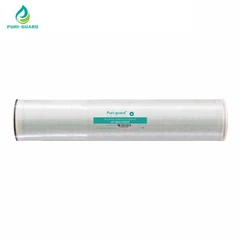
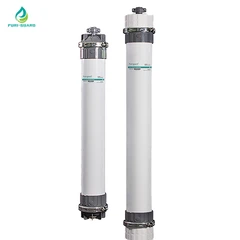
Hey there! As a supplier of Nanofiltration Membrane Flat Sheet, I often get asked if these membranes can be used for pharmaceutical wastewater treatment. Well, let's dive right into it and explore this topic in detail.
First off, let's understand what pharmaceutical wastewater is all about. Pharmaceutical manufacturing processes generate a variety of wastewaters that contain complex mixtures of organic and inorganic compounds, including active pharmaceutical ingredients (APIs), solvents, catalysts, and other chemicals. These wastewaters can be highly polluting and pose significant environmental and health risks if not properly treated.

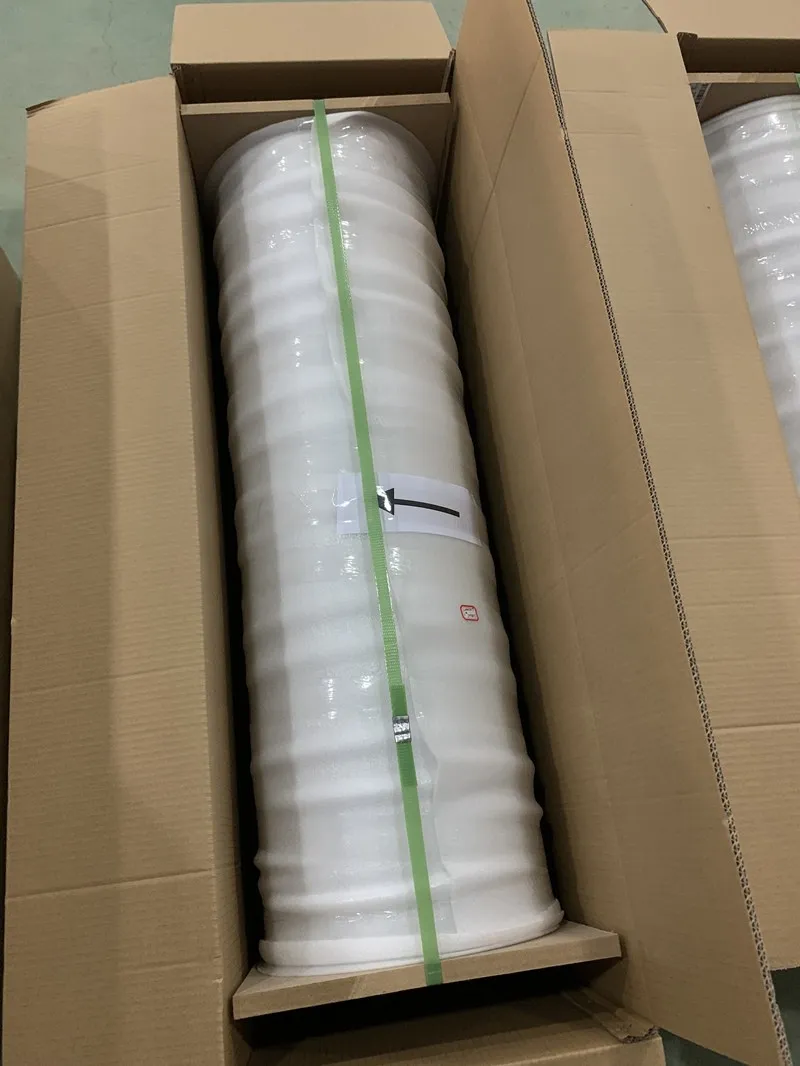
Now, let's talk about nanofiltration membrane flat sheets. Nanofiltration is a pressure-driven membrane separation process that lies between ultrafiltration and reverse osmosis. Nanofiltration membranes have pore sizes in the range of 1 - 10 nanometers, which allows them to reject most organic molecules with molecular weights greater than 200 - 1000 Daltons, as well as divalent and multivalent ions. The flat sheet configuration of these membranes offers several advantages, such as high surface area per unit volume, ease of handling, and compatibility with different module designs.
So, can nanofiltration membrane flat sheets be used for pharmaceutical wastewater treatment? The short answer is yes, and here's why.
Selective Separation
One of the key benefits of using nanofiltration membrane flat sheets in pharmaceutical wastewater treatment is their ability to selectively separate different components in the wastewater. For example, they can effectively remove APIs, which are often present in low concentrations but can have a significant impact on the environment and human health. By retaining these APIs, nanofiltration membranes can help in reducing the environmental footprint of pharmaceutical manufacturing and also enable the recovery and reuse of valuable compounds.
Removal of Salts and Inorganic Compounds
Pharmaceutical wastewaters often contain high levels of salts and inorganic compounds, which can cause corrosion and scaling in treatment equipment. Nanofiltration membrane flat sheets can reject a significant portion of these salts and inorganic ions, especially divalent and multivalent ions. This not only helps in protecting the downstream treatment processes but also reduces the overall salt load in the treated water, making it more suitable for reuse or discharge.
High Flux and Productivity
The flat sheet design of nanofiltration membranes allows for high flux rates, which means that a large volume of wastewater can be treated in a relatively short period of time. This high productivity is crucial in industrial applications, where large volumes of wastewater need to be processed efficiently. Additionally, the flat sheet membranes can be easily replaced or cleaned, minimizing downtime and ensuring continuous operation.
Compatibility with Different Wastewater Characteristics
Pharmaceutical wastewaters can vary widely in terms of their composition, pH, temperature, and other characteristics. Nanofiltration membrane flat sheets can be customized to suit different wastewater conditions by selecting the appropriate membrane material and surface properties. For example, some membranes are more resistant to fouling, while others are better suited for high-temperature or high-pH applications.
However, like any technology, there are also some challenges associated with using nanofiltration membrane flat sheets for pharmaceutical wastewater treatment.
Fouling
Fouling is one of the major challenges in membrane filtration processes. In pharmaceutical wastewater treatment, fouling can occur due to the deposition of organic matter, colloids, and microorganisms on the membrane surface. This can lead to a decrease in flux and an increase in operating pressure, ultimately reducing the efficiency and lifespan of the membranes. To mitigate fouling, various pre-treatment methods, such as filtration, coagulation, and oxidation, can be employed. Additionally, regular cleaning and maintenance of the membranes are essential to ensure their long-term performance.
Cost
The initial investment and operating costs associated with nanofiltration membrane flat sheets can be relatively high compared to some other treatment methods. The cost of the membranes themselves, as well as the energy required for the pressure-driven process, can be significant factors. However, it's important to consider the long-term benefits, such as the recovery of valuable compounds, reduced environmental impact, and compliance with regulatory requirements, which can offset the initial costs over time.
Regulatory Compliance
Pharmaceutical wastewater treatment is subject to strict regulatory requirements, which vary from country to country. When using nanofiltration membrane flat sheets, it's important to ensure that the treated water meets all the relevant regulatory standards. This may require additional treatment steps or monitoring to ensure the complete removal of all contaminants.
In conclusion, nanofiltration membrane flat sheets offer a promising solution for pharmaceutical wastewater treatment. Their selective separation capabilities, ability to remove salts and inorganic compounds, high flux and productivity, and compatibility with different wastewater characteristics make them a viable option for this challenging application. While there are some challenges, such as fouling, cost, and regulatory compliance, these can be addressed through proper pre-treatment, maintenance, and process optimization.
If you're in the pharmaceutical industry and looking for an effective solution for wastewater treatment, I encourage you to consider our Nanofiltration Membrane Flat Sheet. Our membranes are designed and manufactured to meet the highest quality standards and are backed by our technical expertise and support. Whether you need a small-scale pilot system or a large-scale industrial solution, we can provide you with the right membrane and module configuration to suit your specific needs.
If you're interested in learning more about our products or discussing your pharmaceutical wastewater treatment requirements, please don't hesitate to get in touch. We're always happy to have a chat and see how we can help you achieve your environmental and operational goals.
References
- Cheryan, M. (1998). Ultrafiltration and Microfiltration Handbook. Technomic Publishing.
- Mulder, M. (1996). Basic Principles of Membrane Technology. Kluwer Academic Publishers.
- Strathmann, H. (2010). Membrane Separation Technology: Principles and Applications. Wiley-VCH.