
Water is an essential resource in the distillery industry, playing a crucial role in various stages of the production process, from mashing and fermentation to dilution and bottling. The quality of water used can significantly impact the taste, aroma, and overall quality of the final product. As such, effective water treatment is of utmost importance for distilleries to ensure consistent product quality and meet regulatory requirements. In recent years, water nanofiltration has emerged as a promising technology for water treatment in the distillery industry. In this blog post, I will explore the potential of water nanofiltration for distillery industry water treatment, drawing on my experience as a water nanofiltration supplier.
Understanding Water Nanofiltration
Nanofiltration (NF) is a membrane - based filtration process that lies between ultrafiltration and reverse osmosis in terms of pore size and separation capabilities. Nanofiltration membranes typically have pore sizes in the range of 1 - 10 nanometers, which allows them to reject a wide range of contaminants, including multivalent ions, organic compounds, and some microorganisms, while allowing monovalent ions and water molecules to pass through.
The separation mechanism of nanofiltration is based on both size exclusion and charge repulsion. The small pore size of the membrane physically blocks larger molecules and particles, while the surface charge of the membrane can repel ions of the same charge. This combination of mechanisms makes nanofiltration an effective method for removing specific contaminants from water while maintaining a certain level of mineral content, which can be beneficial for some applications.
Water Quality Requirements in the Distillery Industry
In the distillery industry, water quality requirements vary depending on the stage of the production process. During mashing, water is used to extract sugars from grains. The presence of certain minerals, such as calcium and magnesium, can affect the enzymatic activity during mashing and the flavor of the wort. For example, calcium ions can help to lower the pH of the mash, which is beneficial for the activity of amylolytic enzymes.
During fermentation, water quality can impact the growth and metabolism of yeast. Contaminants such as heavy metals, chlorine, and microorganisms can inhibit yeast growth and fermentation, leading to off - flavors and inconsistent fermentation results.
In the final stages of production, including dilution and bottling, water quality is critical for ensuring the stability and taste of the finished product. The water used for dilution should be free of contaminants that could affect the flavor or appearance of the spirit, and it should have a suitable mineral profile to maintain the desired taste balance.
Advantages of Water Nanofiltration for Distillery Industry Water Treatment
Selective Removal of Contaminants
One of the key advantages of nanofiltration is its ability to selectively remove contaminants while retaining beneficial minerals. In the distillery industry, this is particularly important as it allows for the control of the mineral content of the water used in different stages of production. For example, nanofiltration can be used to remove heavy metals, organic compounds, and some microorganisms that could negatively impact the fermentation process or the taste of the final product, while leaving behind essential minerals such as calcium and magnesium.
Energy Efficiency
Compared to reverse osmosis, which is a more intensive membrane - based filtration process, nanofiltration requires less energy to operate. This is because nanofiltration membranes have a lower rejection rate for monovalent ions, which means that less pressure is required to force water through the membrane. For distilleries, this can result in significant cost savings in terms of energy consumption, especially for large - scale operations.
Cost - Effectiveness
In addition to energy savings, nanofiltration can also be a cost - effective water treatment solution for distilleries. The initial capital investment for a nanofiltration system is generally lower than that of a reverse osmosis system, and the operating costs, including membrane replacement and chemical usage, are also relatively lower. Moreover, the ability to selectively remove contaminants without over - purifying the water can reduce the need for additional post - treatment steps, further reducing costs.
Process Flexibility
Nanofiltration systems can be easily customized to meet the specific water quality requirements of different distilleries. The membrane properties, such as pore size and surface charge, can be adjusted to target specific contaminants, and the system can be designed to operate at different flow rates and pressures. This flexibility allows distilleries to optimize their water treatment processes based on their production needs and the quality of the source water.
Applications of Water Nanofiltration in the Distillery Industry
Pretreatment for Reverse Osmosis
In some cases, nanofiltration can be used as a pretreatment step for reverse osmosis systems in distilleries. By removing a significant portion of the contaminants, such as organic matter and multivalent ions, nanofiltration can reduce the fouling and scaling of reverse osmosis membranes, extending their lifespan and improving the overall efficiency of the reverse osmosis process.


Water Softening
Nanofiltration can be an effective method for water softening in the distillery industry. By removing divalent ions such as calcium and magnesium, nanofiltration can reduce the hardness of the water, which can prevent scale formation in pipes, boilers, and other equipment. At the same time, nanofiltration can maintain a certain level of monovalent ions, which can be beneficial for the taste and quality of the final product.
Removal of Organic Compounds and Microorganisms
Nanofiltration can also be used to remove organic compounds and microorganisms from the water used in the distillery. Organic compounds such as humic acids and pesticides can affect the taste and odor of the spirit, while microorganisms can cause spoilage and off - flavors. Nanofiltration membranes can effectively reject these contaminants, ensuring the quality and safety of the water used in the production process.
Our Nanofiltration Products for the Distillery Industry
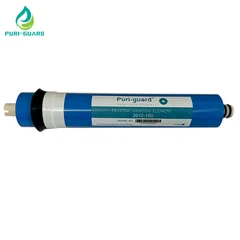
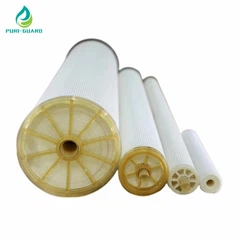
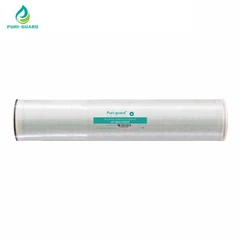
As a water nanofiltration supplier, we offer a range of high - quality nanofiltration membranes suitable for the distillery industry. Our NF 40 Membrane is designed to provide excellent rejection of multivalent ions and organic compounds while maintaining a high water flux. It is a cost - effective solution for water treatment in small to medium - scale distilleries.
For residential and small - scale distillery applications, our Residential NF Membrane offers a compact and easy - to - install solution. It is capable of removing a wide range of contaminants, including heavy metals, bacteria, and viruses, while retaining essential minerals in the water.
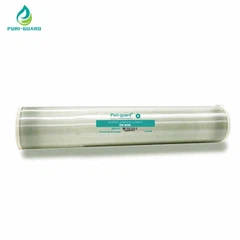
Our Nanofiltration NF 8040 is a high - performance membrane suitable for large - scale distillery operations. It has a large surface area and high rejection rate, making it ideal for treating high - volume water streams with a high concentration of contaminants.
Conclusion
Water nanofiltration has significant potential for use in the distillery industry water treatment. Its ability to selectively remove contaminants while retaining beneficial minerals, combined with its energy efficiency, cost - effectiveness, and process flexibility, makes it an attractive option for distilleries looking to improve the quality of their water and their final products.
If you are in the distillery industry and are interested in exploring the use of water nanofiltration for your water treatment needs, we would be happy to discuss your specific requirements and provide you with a customized solution. Contact us today to start a conversation about how our nanofiltration products can benefit your distillery.
References
- American Society of Brewing Chemists. (2017). Water in Brewing. St. Paul, MN: American Society of Brewing Chemists.
- Cheryan, M. (1998). Ultrafiltration and Microfiltration Handbook. Technomic Publishing.
- Nghiem, L. D., Schäfer, A. I., & Elimelech, M. (2006). Critical review of membrane surface properties and their impact on fouling. Journal of Membrane Science, 281(1 - 2), 1 - 21.