
Nanofiltration has emerged as a crucial technology in various water treatment applications, offering an intermediate level of filtration between ultrafiltration and reverse osmosis. As a prominent supplier of Water Nanofiltration systems, I have witnessed firsthand the impact of membrane materials on water nanofiltration performance. In this blog post, we will delve into the intricate relationship between the material properties of nanofiltration membranes and their performance in water treatment processes.
Understanding Nanofiltration Membranes
Nanofiltration membranes are designed to selectively separate dissolved salts, organic compounds, and other contaminants from water based on their molecular size and charge. These membranes typically have pore sizes in the range of 1 to 10 nanometers, allowing them to reject most multivalent ions and organic molecules while permitting the passage of monovalent ions and water molecules. The performance of nanofiltration membranes is primarily determined by their material properties, including chemical composition, surface charge, hydrophilicity, and mechanical strength.
Impact of Material Composition on Nanofiltration Performance
The chemical composition of nanofiltration membranes plays a critical role in determining their separation efficiency and selectivity. Common membrane materials used in nanofiltration include polymeric materials such as polyamide, polysulfone, and cellulose acetate, as well as inorganic materials such as ceramics and zeolites.
Polymeric Membranes
Polymeric membranes are the most widely used materials in nanofiltration due to their relatively low cost, ease of fabrication, and good separation performance. Polyamide membranes, in particular, are popular because of their high rejection rates for multivalent ions and organic compounds. These membranes are typically formed by interfacial polymerization, which involves the reaction of a diamine and a diacid chloride at the interface between two immiscible solvents. The resulting polyamide layer has a dense structure with a high surface area, which enhances the membrane's separation efficiency.
However, polyamide membranes are prone to fouling, which can reduce their performance over time. Fouling occurs when contaminants such as organic matter, colloids, and microorganisms adhere to the membrane surface, blocking the pores and reducing the flux. To mitigate fouling, various strategies have been developed, including surface modification of the membrane to make it more hydrophilic and resistant to fouling.
Inorganic Membranes
Inorganic membranes, such as ceramic and zeolite membranes, offer several advantages over polymeric membranes, including high chemical and thermal stability, resistance to fouling, and long service life. Ceramic membranes are typically made from metal oxides such as alumina, titania, or zirconia, and are formed by sintering ceramic powders at high temperatures. These membranes have a porous structure with a narrow pore size distribution, which allows for high selectivity and flux.
Zeolite membranes, on the other hand, are made from crystalline aluminosilicate materials and have a well-defined pore structure with uniform pore sizes. These membranes are highly selective for small molecules and ions based on their molecular size and shape, and are often used in gas separation and water purification applications. However, inorganic membranes are generally more expensive than polymeric membranes, and their fabrication process is more complex.
Role of Surface Charge in Nanofiltration
The surface charge of nanofiltration membranes is another important factor that affects their performance. Most nanofiltration membranes have a negative surface charge at neutral pH, which allows them to reject negatively charged ions and organic molecules through electrostatic repulsion. The surface charge of the membrane can be tuned by modifying the chemical composition of the membrane material or by surface treatment.
For example, polyamide membranes can be modified to have a more positive surface charge by incorporating positively charged functional groups into the membrane structure. This can enhance the rejection of positively charged ions and organic molecules, such as heavy metals and dyes. Conversely, a more negative surface charge can be achieved by incorporating negatively charged functional groups, which can improve the rejection of negatively charged contaminants.
Influence of Hydrophilicity on Nanofiltration Performance
The hydrophilicity of nanofiltration membranes refers to their affinity for water. Hydrophilic membranes have a high water contact angle, which means that water spreads easily on the membrane surface. This property is important for nanofiltration because it allows for high water flux and reduces the tendency of the membrane to foul.
Polymeric membranes can be made more hydrophilic by incorporating hydrophilic functional groups into the membrane material or by surface modification. For example, polyamide membranes can be modified with polyethylene glycol (PEG) to increase their hydrophilicity and reduce fouling. Inorganic membranes, such as ceramic membranes, are generally more hydrophilic than polymeric membranes due to their high surface energy and polar nature.
Mechanical Strength and Durability
The mechanical strength and durability of nanofiltration membranes are crucial for their long-term performance and reliability. Membranes must be able to withstand the high pressures and flow rates typically encountered in nanofiltration processes without undergoing mechanical failure or deformation.
Polymeric membranes are generally less mechanically strong than inorganic membranes, but their mechanical properties can be improved by crosslinking the polymer chains or by incorporating reinforcing agents. Inorganic membranes, such as ceramic membranes, have high mechanical strength and can withstand high pressures and temperatures, making them suitable for use in harsh operating conditions.
Case Studies: Impact of Membrane Material on Performance
Let's take a look at some real-world examples of how the material of nanofiltration membranes can affect their performance.


Case Study 1: Polyamide vs. Ceramic Membranes
In a water treatment plant treating brackish water, two types of nanofiltration membranes were tested: a polyamide membrane and a ceramic membrane. The polyamide membrane had a high rejection rate for multivalent ions and organic compounds but was prone to fouling, resulting in a gradual decrease in flux over time. The ceramic membrane, on the other hand, had a lower rejection rate for some contaminants but was more resistant to fouling and maintained a stable flux throughout the testing period.
Case Study 2: Surface-Modified Polyamide Membranes
In another study, surface-modified polyamide membranes were developed to improve their fouling resistance. The membranes were modified with a hydrophilic polymer coating, which reduced the adhesion of organic matter and microorganisms to the membrane surface. As a result, the modified membranes showed a significant improvement in flux and rejection performance compared to the unmodified membranes.
Product Recommendations
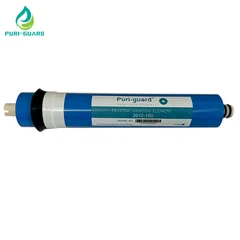
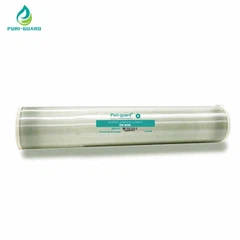
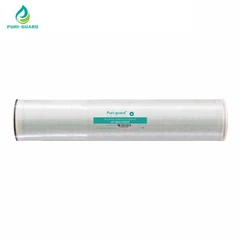
As a Water Nanofiltration supplier, we offer a range of high-quality nanofiltration membranes to meet the diverse needs of our customers. Our NF 8040 and NF 4040 membranes are made from advanced polyamide materials and have been engineered to provide high rejection rates, high flux, and excellent fouling resistance.
If you are looking for a nanofiltration solution for your water treatment application, we encourage you to contact us to discuss your specific requirements. Our team of experts can help you select the right membrane material and configuration to achieve the best possible performance and cost-effectiveness.
Conclusion
In conclusion, the material of nanofiltration membranes has a profound impact on their performance in water treatment processes. The chemical composition, surface charge, hydrophilicity, and mechanical strength of the membrane all play important roles in determining its separation efficiency, selectivity, and fouling resistance. By understanding these factors and choosing the right membrane material for your application, you can achieve optimal water treatment results and maximize the lifespan of your nanofiltration system.
If you are interested in learning more about our Water Nanofiltration products or have any questions about nanofiltration technology, please do not hesitate to contact us. We look forward to the opportunity to work with you and help you solve your water treatment challenges.
References
- Belfort, G., Davis, R. H., & Zydney, A. L. (1994). The behavior of suspensions and macromolecular solutions in crossflow microfiltration. Journal of Membrane Science, 96(1-2), 1-58.
- Elimelech, M., & Phillip, W. A. (2011). The future of seawater desalination: energy, technology, and the environment. Science, 333(6043), 712-717.
- Mulder, M. (1996). Basic principles of membrane technology. Kluwer Academic Publishers.
- Schaep, J., Van der Bruggen, B., & Vandecasteele, C. (2001). Nanofiltration membranes review: recent advances and future prospects. Journal of Membrane Science, 183(2), 251-281.