
As a provider of Water Nanofiltration solutions, I'm often knee - deep in the intricacies of water treatment. One hot topic that keeps coming up is how surfactants mess with water nanofiltration. So, let's dive right in and break it down.
What are Surfactants?
First off, what the heck are surfactants? Well, surfactants are those substances that can reduce the surface tension of a liquid, like water. You'll find them in all sorts of everyday products, from your dish soap to your laundry detergent. They're made up of two parts: a hydrophilic (water - loving) head and a hydrophobic (water - hating) tail. This unique structure allows them to do some pretty cool things, like making oil and water mix in your salad dressing or getting dirt off your clothes.
How Surfactants Enter the Water Supply
Surfactants make their way into our water supplies through various means. When we use our household cleaning products, the wastewater goes down the drain and eventually ends up in the sewage system. If the treatment plants don't remove all the surfactants, they'll find their way into rivers, lakes, or groundwater. Industrial processes are another big culprit. Factories that use surfactants in manufacturing, like the textile or food industry, can release significant amounts into the environment.


The Good Side of Surfactants in Nanofiltration
Believe it or not, surfactants can sometimes be a boon for water nanofiltration. In some cases, they can help improve membrane wetting. Nanofiltration membranes are typically made of materials that need to be well - wetted by the water to work properly. Surfactants can reduce the contact angle between the water and the membrane surface, which means the water spreads out more evenly across the membrane. This can increase the flux, or the rate at which water passes through the membrane, making the filtration process more efficient.
Moreover, surfactants can also act as dispersants. In water that has a lot of suspended particles, surfactants can prevent these particles from clumping together and forming bigger aggregates. This is great for nanofiltration because smaller particles are less likely to block the membrane pores, which helps maintain the membrane's performance over time.
The Bad Side: Fouling and Performance Issues
However, the presence of surfactants can also spell trouble for water nanofiltration. One of the biggest problems is membrane fouling. When surfactants interact with the membrane surface, they can adsorb onto it. Over time, this adsorbed layer can build up and create a barrier that restricts the flow of water. This is called surface fouling.
There's also the issue of micelle formation. Surfactants can form micelles, which are tiny spherical clusters, in solution. These micelles can be large enough to block the membrane pores, causing a significant decrease in flux. And once the pores are blocked, the pressure required to push water through the membrane increases. This not only consumes more energy but can also damage the membrane if the pressure gets too high.
In addition, surfactants can react with other substances in the water, such as metal ions or organic compounds. These reactions can form complexes that are even more difficult to remove and can exacerbate the fouling problem.
Impact on Membrane Selectivity
Another aspect to consider is how surfactants affect membrane selectivity. Nanofiltration membranes are designed to be selective, meaning they can separate different types of molecules based on their size, charge, and other properties. Surfactants can interfere with this selectivity. For example, if a surfactant has a charge, it can interact with charged molecules in the water. This interaction can change the way these molecules are retained or passed through the membrane, leading to a decrease in the membrane's ability to separate specific contaminants effectively.
Mitigating the Effects of Surfactants
As a Water Nanofiltration provider, we're constantly looking for ways to deal with the challenges posed by surfactants. One approach is pre - treatment. By using processes like coagulation, flocculation, or activated carbon adsorption before the water reaches the nanofiltration membrane, we can remove a significant portion of the surfactants.
Another option is to modify the membrane itself. Newer membranes are being developed with special surface coatings that are less prone to surfactant adsorption. These coatings can repel surfactants, reducing the likelihood of fouling and improving the membrane's long - term performance.
The Role of Different Types of Membranes
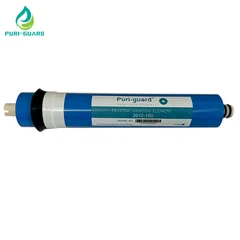
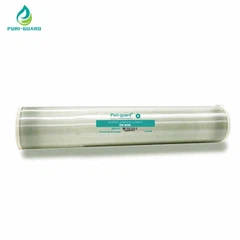
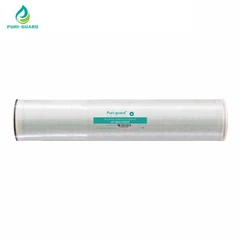
When it comes to dealing with surfactants, not all membranes are created equal. Our NF RO Membrane and Residential NF Membrane have different characteristics that can affect how they handle surfactants.
The NF RO Membrane is known for its high rejection rate and relatively small pore size. This can be both a blessing and a curse when dealing with surfactants. On one hand, the small pores can prevent larger surfactant micelles from passing through. On the other hand, they're also more likely to get clogged by even small amounts of surfactant adsorption.
The Residential NF Membrane, on the other hand, is designed for smaller - scale applications, like home water treatment. It may be more forgiving when it comes to surfactant fouling, but it still needs to be protected to ensure long - term performance.
Real - World Examples
Let's take a look at some real - world scenarios. In a municipal water treatment plant that uses nanofiltration, the presence of surfactants from household wastewater can cause significant problems. If the pre - treatment isn't sufficient, the membranes can start to foul quickly, leading to increased maintenance costs and reduced water production.
In an industrial setting, such as a food processing plant, surfactants used in cleaning operations can end up in the wastewater. If this wastewater is then treated using nanofiltration, the surfactants can cause issues with membrane performance, affecting the quality and quantity of the treated water.
Conclusion
In conclusion, the presence of surfactants in water has a complex impact on nanofiltration. While they can sometimes offer some benefits, such as improved wetting and dispersion, the potential for fouling and reduced selectivity is a major concern. As a provider of Water Nanofiltration solutions, we're committed to helping our customers navigate these challenges. Whether it's through pre - treatment, membrane modification, or choosing the right membrane for the job, we have the expertise to ensure that your nanofiltration system runs smoothly and efficiently.
If you're in the market for a reliable water nanofiltration solution, we'd love to chat with you. Don't hesitate to reach out and start a conversation about how we can meet your specific needs.
References
- Schaep, J., Van der Bruggen, B., & Vandecasteele, C. (2001). Influence of surfactants on charged nanofiltration membranes. Journal of Membrane Science, 183(1), 1 - 11.
- Vrijenhoek, E. M., Hong, S. - H., & Elimelech, M. (2001). Critical flux for membrane fouling in forward osmosis. Journal of Membrane Science, 188(1), 115 - 129.
- Field, R. W., Wu, D., Howell, J. A., & Gupta, B. (1995). The behavior of suspensions and macromolecular solutions in crossflow microfiltration. Journal of Membrane Science, 100(1 - 2), 259 - 272.