
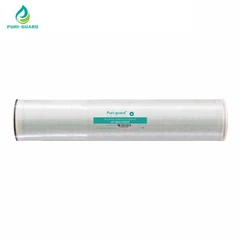
Hey there! As a supplier of commercial RO membranes, I've seen firsthand the growing demand for efficient desalination solutions. In this blog, I'm gonna share some practical tips on how to boost the desalination efficiency of a commercial RO membrane.
Understanding the Basics of RO Membrane Desalination
Before we dive into the tips, let's quickly go over how RO membranes work for desalination. Reverse osmosis is a process where pressure is applied to a saline solution to force water molecules through a semi - permeable membrane, leaving behind salts and other impurities. The efficiency of this process depends on several factors, including the membrane's properties, operating conditions, and water quality.
Choosing the Right RO Membrane
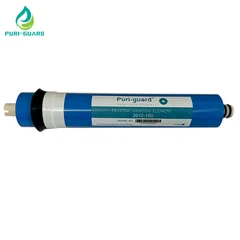
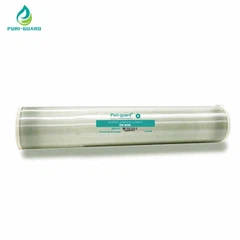
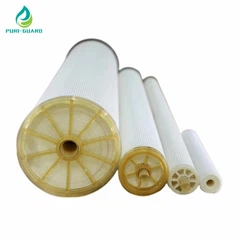
The first step in improving desalination efficiency is to pick the right RO membrane for your specific needs. We offer a range of commercial RO membranes, like the TW 4021, TW30 2540, and BW30 2540. Each membrane has its own unique characteristics in terms of salt rejection rate, water flux, and durability.
For instance, if you're dealing with high - salinity water, a membrane with a high salt rejection rate would be ideal. On the other hand, if you need a high volume of purified water quickly, a membrane with a high water flux is the way to go. So, it's crucial to assess your water source and production requirements before making a choice.
Optimizing Operating Conditions
Once you've selected the right membrane, it's time to optimize the operating conditions. Here are some key factors to consider:
Pressure
Applying the right pressure is essential. Too little pressure, and the water won't pass through the membrane efficiently. Too much pressure, and you risk damaging the membrane. Generally, the optimal pressure depends on the type of membrane and the salinity of the feed water. You may need to do some testing to find the sweet spot for your specific setup.
Temperature
Temperature also plays a significant role in desalination efficiency. As the temperature increases, the water flux through the membrane typically goes up. However, extremely high temperatures can degrade the membrane over time. Most commercial RO membranes work best within a temperature range of 5 - 45°C. So, try to maintain the feed water temperature within this range for optimal performance.
Flow Rate
The flow rate of the feed water affects both the water production and the salt rejection. A proper flow rate ensures that the membrane is evenly wetted and that the salts are effectively removed. If the flow rate is too low, the salts may accumulate on the membrane surface, leading to fouling. If it's too high, the membrane may not have enough time to separate the water from the salts properly.


Preventing Membrane Fouling
Membrane fouling is one of the biggest enemies of desalination efficiency. It occurs when particles, microorganisms, or dissolved substances accumulate on the membrane surface, reducing the water flux and salt rejection. Here are some ways to prevent fouling:
Pre - treatment
Pre - treating the feed water is crucial. This can involve processes like filtration, sedimentation, and disinfection. Filtration removes large particles, while sedimentation allows the heavier particles to settle at the bottom. Disinfection helps to kill microorganisms that could cause biofouling. By removing these contaminants before the water reaches the membrane, you can significantly extend the membrane's lifespan and improve its efficiency.
Chemical Cleaning
Regular chemical cleaning is also necessary to remove any fouling that has already occurred. There are different types of cleaning chemicals available, depending on the nature of the fouling. For example, acidic cleaners are effective for removing inorganic deposits, while alkaline cleaners are better for organic fouling. However, it's important to follow the manufacturer's instructions when using these chemicals to avoid damaging the membrane.
Monitoring and Maintenance
Continuous monitoring and proper maintenance are key to keeping your RO membrane operating at peak efficiency.
Monitoring
You should regularly monitor parameters such as water flux, salt rejection rate, pressure, and temperature. By keeping track of these values, you can detect any changes early on and take corrective action. For example, a sudden drop in water flux may indicate fouling or a problem with the operating conditions.
Maintenance
In addition to chemical cleaning, other maintenance tasks include checking for leaks, replacing worn - out parts, and ensuring that the system is properly calibrated. Regular maintenance not only improves the desalination efficiency but also reduces the risk of costly breakdowns.
Training and Education
Lastly, it's important to ensure that your staff is well - trained in operating and maintaining the RO membrane system. Proper training can help them understand the principles of reverse osmosis, operate the equipment correctly, and troubleshoot common problems. We offer training programs for our customers to ensure that they get the most out of our commercial RO membranes.
Conclusion
Improving the desalination efficiency of a commercial RO membrane requires a combination of the right membrane selection, optimized operating conditions, fouling prevention, monitoring, maintenance, and staff training. By following these tips, you can increase the water production, reduce the energy consumption, and extend the lifespan of your RO membrane.
If you're interested in learning more about our commercial RO membranes or need help in improving your desalination efficiency, don't hesitate to reach out. We're here to assist you in finding the best solutions for your water treatment needs. Let's work together to make desalination more efficient and sustainable!
References
- Cheryan, M. (1998). Ultrafiltration and Microfiltration Handbook. Technomic Publishing.
- Greenlee, L. F., Lawler, D. F., Freeman, B. D., Marrot, B., & Moulin, P. (2009). Reverse osmosis desalination: Water sources, technology, and today's challenges. Water Research, 43(9), 2317 - 2348.
- Mulder, M. (1996). Basic Principles of Membrane Technology. Kluwer Academic Publishers.