
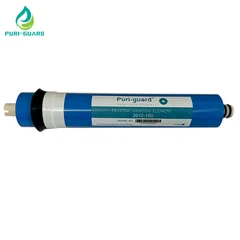
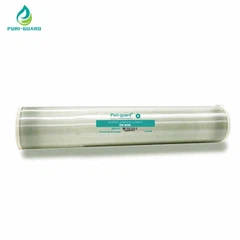
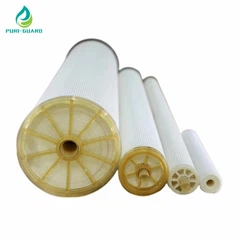
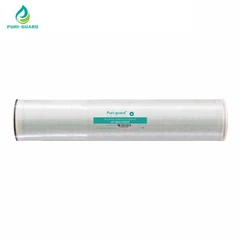
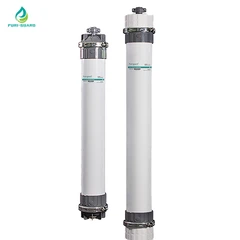
Dissolved organic matter (DOM) can pose significant challenges when using NF RO Membranes. As a leading supplier of NF RO Membrane, we understand the importance of effectively removing DOM before membrane filtration to ensure optimal performance and longevity of the membranes.
Understanding Dissolved Organic Matter
DOM is a complex mixture of organic compounds that are dissolved in water. It can originate from various sources, including natural organic matter (NOM) such as humic and fulvic acids, industrial wastewater, and agricultural runoff. DOM can have a negative impact on NF RO Membrane performance in several ways. Firstly, it can cause membrane fouling, which reduces the membrane's permeability and increases the operating pressure required for filtration. Secondly, DOM can react with disinfectants, such as chlorine, to form harmful disinfection by - products (DBPs).
Pre - treatment Methods for DOM Removal
Coagulation and Flocculation
Coagulation and flocculation are commonly used pre - treatment methods for DOM removal. Coagulants, such as aluminum sulfate or ferric chloride, are added to the water to neutralize the negative charges on the DOM particles, causing them to aggregate. Flocculants are then added to promote the formation of larger flocs, which can be more easily removed by sedimentation or filtration.
Coagulation and flocculation can effectively remove a significant portion of DOM, especially the larger and more hydrophobic fractions. However, the efficiency of these methods depends on several factors, including the type and dosage of coagulant, the pH of the water, and the contact time between the coagulant and the water.
Activated Carbon Adsorption
Activated carbon is a highly porous material with a large surface area, which makes it an effective adsorbent for DOM removal. It can adsorb a wide range of organic compounds, including both hydrophobic and hydrophilic DOM fractions.
There are two main types of activated carbon used for water treatment: granular activated carbon (GAC) and powdered activated carbon (PAC). GAC is typically used in fixed - bed adsorbers, where the water flows through a bed of activated carbon. PAC is added directly to the water, and the adsorption process occurs in the water phase. After adsorption, the PAC can be removed by filtration or sedimentation.
Activated carbon adsorption is effective in removing low - molecular - weight DOM and can also remove some DBPs precursors. However, the adsorption capacity of activated carbon is limited, and it needs to be replaced or regenerated periodically.
Oxidation
Oxidation is another pre - treatment method for DOM removal. Oxidants, such as ozone, hydrogen peroxide, and chlorine, can react with DOM to break down the organic compounds into smaller and more biodegradable fragments.
Ozone is a powerful oxidant that can effectively oxidize DOM and improve the quality of the water before membrane filtration. It can also reduce the formation of DBPs. Hydrogen peroxide can be used in combination with other oxidants or catalysts to enhance the oxidation process. Chlorine is a commonly used disinfectant, but it can react with DOM to form DBPs. Therefore, when using chlorine for oxidation, careful control of the dosage and contact time is required.
Biological Treatment
Biological treatment can be used to remove DOM by utilizing microorganisms to degrade the organic compounds. Anaerobic and aerobic biological processes are the two main types of biological treatment.
In anaerobic biological treatment, microorganisms break down DOM in the absence of oxygen, producing methane and carbon dioxide. Aerobic biological treatment, on the other hand, uses oxygen - consuming microorganisms to degrade DOM. Biological treatment is effective in removing biodegradable DOM, but it may not be suitable for removing non - biodegradable or recalcitrant DOM.
Importance of DOM Removal for NF RO Membranes
Effective DOM removal before using Reverse Osmosis Nanofiltration membranes is crucial for several reasons. Firstly, it helps to prevent membrane fouling. Membrane fouling can lead to a decrease in membrane flux, an increase in operating pressure, and a shorter membrane lifespan. By removing DOM, the frequency of membrane cleaning and replacement can be reduced, resulting in cost savings.
Secondly, DOM removal can improve the quality of the permeate water. DOM can contain various contaminants, such as heavy metals and organic pollutants, which can be removed along with the DOM. This ensures that the treated water meets the required quality standards.
Finally, removing DOM can reduce the formation of DBPs. As mentioned earlier, DOM can react with disinfectants to form DBPs, which are potentially harmful to human health. By reducing the DOM content in the water, the formation of DBPs can be minimized.
Evaluating Pre - treatment Methods for Your System
When choosing pre - treatment methods for DOM removal, several factors need to be considered. These include the characteristics of the feed water, such as the DOM concentration, molecular weight distribution, and biodegradability. The cost and availability of the pre - treatment methods also need to be taken into account.
For example, if the feed water has a high concentration of biodegradable DOM, biological treatment may be a cost - effective option. If the DOM is mainly composed of hydrophobic and high - molecular - weight compounds, coagulation and flocculation may be more suitable.
It is also important to consider the compatibility of the pre - treatment methods with the NF RO Membranes. Some pre - treatment chemicals, such as chlorine, can damage the membranes if not properly controlled. Therefore, it is necessary to select pre - treatment methods that do not have a negative impact on the membrane performance.


Case Studies
Let's look at a few case studies to illustrate the effectiveness of DOM removal pre - treatment methods. In a water treatment plant that supplies drinking water, the feed water contained a high concentration of NOM. The plant initially used only simple filtration as pre - treatment, and the NF RO Membranes quickly became fouled. The plant then implemented a coagulation - flocculation - sedimentation pre - treatment process followed by activated carbon adsorption. After the implementation of the new pre - treatment process, the membrane fouling rate was significantly reduced, and the membrane flux was maintained at a stable level.
In another industrial application, a chemical factory was using Water Nanofiltration to treat its wastewater. The wastewater contained a large amount of industrial - derived DOM, which was difficult to degrade. The factory adopted an oxidation pre - treatment method using ozone, followed by biological treatment. This combination of pre - treatment methods was able to effectively remove the DOM, and the membrane performance was improved, resulting in better water quality and reduced operating costs.
Conclusion
In conclusion, removing dissolved organic matter before using NF RO Membranes is essential for ensuring optimal membrane performance, enhancing water quality, and reducing operating costs. A variety of pre - treatment methods, including coagulation and flocculation, activated carbon adsorption, oxidation, and biological treatment, are available for DOM removal. Each method has its own advantages and limitations, and the choice of pre - treatment method should be based on the specific characteristics of the feed water and the requirements of the filtration system.
As a trusted supplier of NF RO Membranes, we are committed to providing our customers with high - quality membranes and comprehensive technical support. If you are interested in learning more about our NF RO Membranes or need advice on DOM removal pre - treatment for your specific application, we encourage you to contact us for a detailed consultation. Our team of experts is ready to assist you in finding the most suitable solutions for your water treatment needs.
References
- Crittenden, J. C., Trussell, R. R., Hand, D. W., Howe, K. J., & Tchobanoglous, G. (2012). MWH's Water Treatment: Principles and Design. John Wiley & Sons.
- Amy, G., & Drewes, J. E. (2013). Membrane Technology and Applications. John Wiley & Sons.
- Le-Clech, P., Chen, V., & Fane, A. G. (2006). Fouling in membrane bioreactors used in wastewater treatment. Journal of Membrane Science, 284(1 - 2), 17 - 53.