
Hey there! As a supplier of commercial RO membrane systems, I've seen my fair share of issues that can crop up with these setups. In this blog, I'm gonna walk you through some of the common faults you might encounter with a commercial RO membrane system.
1. Poor Water Quality at the Outlet
One of the most obvious problems is when the water coming out of the RO system doesn't meet the expected quality standards. There are a few reasons for this.
Contaminant Fouling
Over time, contaminants in the feed water can build up on the surface of the RO membrane. This is like when your car windshield gets dirty with bugs and grime. The membrane pores can get clogged, which reduces its ability to filter out impurities. For example, if your feed water has a high level of suspended solids, they can form a layer on the membrane, making it less effective at removing salts, bacteria, and other unwanted substances.
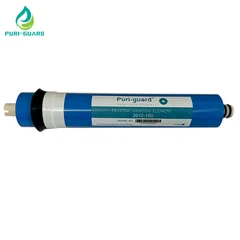
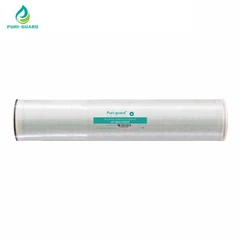
To fix this, you can perform regular membrane cleaning. There are specific cleaning agents available that are designed to break down and remove different types of fouling. But if the fouling is too severe, you might have to replace the membrane. And that's where our RO 2521 and 4021 RO Membrane come in handy. They are high - quality membranes that can offer better performance and longer service life.
Membrane Degradation
Another cause of poor water quality could be membrane degradation. This can happen due to factors like exposure to high - chlorine levels in the feed water. Chlorine is a strong oxidizing agent, and it can damage the polymer structure of the RO membrane over time. Once the membrane is degraded, it won't be able to separate contaminants from the water as effectively.
To prevent this, you need to pre - treat the feed water to remove chlorine. You can use activated carbon filters to adsorb the chlorine before it reaches the RO membrane. And if you suspect membrane degradation, it's a good idea to test the membrane integrity and consider replacing it with a new one.
2. Low Water Production
If your RO system isn't producing as much water as it should, there are a few things that could be going wrong.
Pressure Issues
The RO process relies on pressure to force water through the membrane. If the feed water pressure is too low, the water won't pass through the membrane at an optimal rate. This could be due to problems with the feed water pump. Maybe the pump isn't working at full capacity, or there could be a blockage in the pipes leading to the pump.


On the other hand, if the pressure is too high, it can also cause problems. Excessive pressure can damage the membrane, leading to leaks and reduced water production. You need to make sure that the pressure is within the recommended range for your specific RO membrane system.
Membrane Compaction
Membrane compaction is another factor that can lead to low water production. When the membrane is under high pressure for a long time, the membrane structure can get compressed. This reduces the pore size and the overall flow rate of water through the membrane. It's like squeezing a sponge too hard; the water can't flow through it as easily.
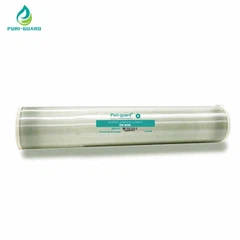
To avoid membrane compaction, you should operate the RO system within the recommended pressure limits. And if you notice a significant drop in water production, it might be time to check the membrane for compaction and consider replacement. Our 4021 Membrane is designed to resist compaction to a certain extent, providing more stable water production.
3. High Energy Consumption
A commercial RO membrane system can be a big energy consumer, and if you notice a sudden spike in energy usage, there are likely some underlying issues.
Inefficient Pumping
The pump is one of the main energy - consuming components in an RO system. If the pump is old or not properly sized for the system, it will have to work harder to maintain the required pressure. This leads to higher energy consumption. For example, if you have a pump that is too large for your system, it will be using more energy than necessary to achieve the same water production.
You can address this issue by upgrading to a more energy - efficient pump or by properly sizing the pump according to your system's requirements. There are also variable - speed pumps available that can adjust their speed based on the system's needs, which can save a significant amount of energy.
Leaks in the System
Leaks in the RO system can also cause increased energy consumption. When there are leaks, the pump has to work harder to maintain the pressure in the system. Even small leaks can add up over time and result in a substantial increase in energy usage. You should regularly inspect the system for leaks, especially around the connections, valves, and pipes. If you find a leak, it should be repaired immediately.
4. High Concentrate Flow
The concentrate flow is the stream of water that contains the rejected contaminants. If the concentrate flow is too high, it means that the RO system is wasting a lot of water.
Incorrect Recovery Rate Setting
The recovery rate is the percentage of feed water that is converted into product water. If the recovery rate is set too low, more water will be sent to the concentrate stream. You need to adjust the recovery rate according to the characteristics of your feed water and the capabilities of your RO membrane system.
Membrane Scaling
Membrane scaling can also cause an increase in concentrate flow. When salts in the feed water precipitate and form a scale on the membrane surface, it can disrupt the normal flow of water through the membrane. This can lead to an imbalance in the system, causing more water to be diverted to the concentrate stream.
To prevent membrane scaling, you can use anti - scaling agents in the feed water. These agents can inhibit the precipitation of salts and keep the membrane surface clean.
5. Frequent Membrane Replacements
If you find yourself replacing the RO membranes more often than expected, there are a few possible reasons.
Improper Feed Water Pretreatment
As I mentioned earlier, proper feed water pretreatment is crucial for the longevity of the RO membrane. If the feed water contains high levels of contaminants, such as suspended solids, chlorine, or hardness, it can damage the membrane quickly. You need to have an effective pretreatment system in place to remove these contaminants before the water reaches the RO membrane.
Inadequate Cleaning
Regular membrane cleaning is essential to keep the membrane in good condition. If you don't clean the membrane often enough or use the wrong cleaning agents, fouling and scaling can build up, reducing the membrane's lifespan. You should follow the manufacturer's recommendations for cleaning frequency and the type of cleaning agents to use.
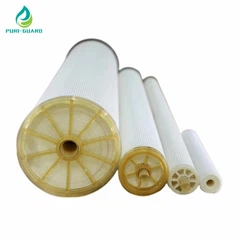
If you're facing any of these common faults with your commercial RO membrane system, don't worry! We're here to help. As a reliable supplier of commercial RO membranes, we offer a wide range of high - quality membranes like RO 2521, 4021 RO Membrane, and 4021 Membrane. Our membranes are designed to provide excellent performance and durability, helping you to minimize these common issues.
If you're interested in learning more about our products or have any questions regarding your RO membrane system, feel free to reach out to us. We'd be more than happy to discuss your needs and help you find the best solutions for your commercial water treatment requirements.
References
- Water Treatment Handbook, various authors
- Membrane Filtration Technology: Principles and Applications, many industry experts
- Technical guides provided by membrane manufacturers