
Hey there! As a supplier of Seawater RO systems, I've had my fair share of discussions with customers about what makes a great Seawater RO system tick. In this blog, I'm gonna break down the key parameters for evaluating Seawater RO performance. So, let's dive right in!
1. Salt Rejection
Salt rejection is hands - down one of the most crucial parameters when it comes to Seawater RO. Essentially, it measures how effectively the RO membrane can keep salts and other dissolved solids from passing through with the water. A high salt rejection rate means you're getting cleaner, fresher water on the other side.
For us, we've seen that our Seawater RO membranes can achieve salt rejection rates of up to 99.8%. That's pretty impressive, right? When you're evaluating a Seawater RO system, look for a high salt rejection rate. The higher it is, the less work you'll have to do downstream to further purify the water.
2. Water Flux
Water flux refers to the volume of water that passes through the RO membrane per unit area and time. It's measured in gallons per square foot per day (GFD) or liters per square meter per hour (LMH). A higher water flux means that the system can produce more water in a shorter amount of time.
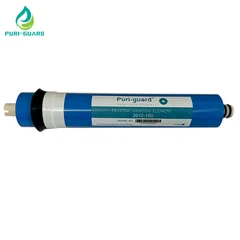
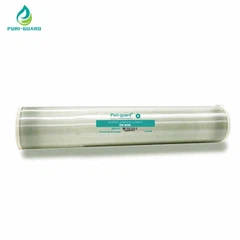
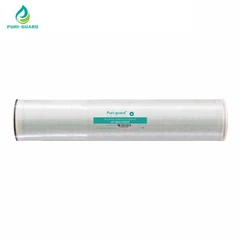
Our SW 8040 membrane, for example, has a great water flux. It allows for a significant amount of water to be processed quickly, which is super important for large - scale desalination projects. But here's the thing: there's a balance. If the water flux is too high, it can lead to fouling and a decrease in the membrane's lifespan. So, you need to find that sweet spot.
3. Membrane Permeability
Membrane permeability is related to water flux but takes into account the pressure required to push the water through the membrane. It's a measure of how easily water can pass through the membrane under a given pressure. A more permeable membrane will require less pressure to achieve a certain water flux.
This is a big deal because lower pressure means less energy consumption. And let's face it, energy costs can be a major part of operating a Seawater RO system. Our membranes are designed to have high permeability, which helps our customers save on energy bills in the long run.
4. Fouling Resistance
Fouling is the buildup of contaminants on the surface of the RO membrane. It can be caused by things like suspended solids, organic matter, and even microorganisms. When fouling occurs, it can reduce the membrane's performance and lifespan.
That's why fouling resistance is so important. Our Seawater RO membranes are engineered to resist fouling. They have special surface properties that make it harder for contaminants to stick. For instance, the SW 4040 membrane has a smooth surface that helps prevent the accumulation of debris. This means less frequent cleaning and maintenance, which saves both time and money.
5. Operating Pressure
The operating pressure of a Seawater RO system is the pressure required to force water through the membrane against the osmotic pressure. Seawater has a high salt concentration, which means a relatively high osmotic pressure. So, you need to apply enough pressure to overcome it.
However, as I mentioned earlier, high pressure means higher energy consumption. That's why it's important to find an optimal operating pressure. Our systems are designed to operate at the most efficient pressure possible, maximizing water production while minimizing energy use.
6. Recovery Rate
The recovery rate is the percentage of the feed water that is converted into product water. For example, if you have a recovery rate of 50%, it means that half of the seawater you feed into the system is turned into fresh, usable water.


A higher recovery rate is generally better because it means you're getting more out of the seawater. But there's a limit. If you try to push the recovery rate too high, it can lead to scaling and fouling. Our Seawater RO systems are designed to achieve a good balance, typically offering recovery rates in the range of 30 - 50%.
7. Chemical Compatibility
Seawater RO systems often require the use of chemicals for pre - treatment, cleaning, and disinfection. So, it's crucial that the membranes are compatible with these chemicals.
Our membranes are tested to ensure they can withstand a wide range of chemicals. This means that you can use the appropriate chemicals to keep your system running smoothly without worrying about damaging the membranes.
8. Long - Term Stability
Finally, long - term stability is key. You want a Seawater RO system that will perform consistently over time. Our membranes are made from high - quality materials and are designed to last. They can handle the harsh conditions of seawater desalination and maintain their performance for years.
So, there you have it - the key parameters for evaluating Seawater RO performance. If you're in the market for a Seawater RO system, keep these factors in mind. And if you have any questions or want to discuss your specific needs, don't hesitate to reach out. We're here to help you find the best solution for your desalination project. Whether you're a small - scale operation or a large industrial facility, we've got the expertise and the products to meet your requirements. Let's work together to make your desalination goals a reality!
References
- AWWA (American Water Works Association). "Reverse Osmosis Membrane Technology."
- Desalination Research and Development Center. "Handbook on Seawater Desalination."