

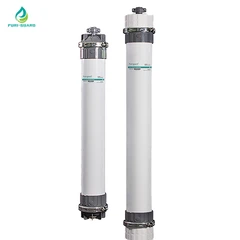
Hey there! As a supplier of SWRO (Seawater Reverse Osmosis) membranes, I often get asked about the pore size of these membranes. It's a crucial factor that determines how well the membranes can filter out various substances from seawater. So, let's dive right into it and explore what the pore size of SWRO membranes is all about.
First off, what exactly is SWRO? Well, Seawater Reverse Osmosis is a process that uses a semi - permeable membrane to remove salt, minerals, and other impurities from seawater, making it suitable for drinking, industrial use, and other applications. The membrane is the heart of this process, and its pore size plays a vital role in its performance.
The pore size of SWRO membranes is extremely small. In fact, it's typically in the range of 0.1 to 1 nanometer. To put that into perspective, a human hair is about 80,000 to 100,000 nanometers in diameter. That gives you an idea of just how tiny these pores are. This small pore size is what allows the membrane to be so effective at separating salt and other contaminants from water molecules.
The reason for such a small pore size is simple: seawater contains a high concentration of dissolved salts, mainly sodium chloride, as well as other minerals and impurities. The membrane needs to be able to block these larger particles while allowing water molecules to pass through. Water molecules are relatively small, and with a pore size in the nanometer range, the membrane can selectively allow water to permeate while keeping the salts and other contaminants on the other side.
Now, you might be wondering how these membranes are made with such precise pore sizes. Well, it's a highly specialized manufacturing process. The membranes are usually made from polymers, such as polyamide. These polymers are carefully engineered to form a dense, thin film with the desired pore structure. During the manufacturing process, various techniques are used to control the size and distribution of the pores. This ensures that the membrane has consistent performance across its surface.
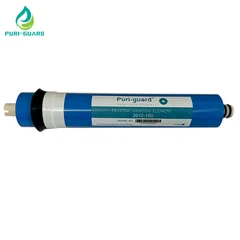
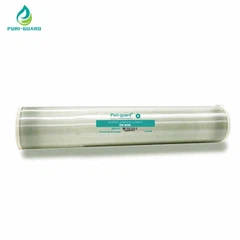
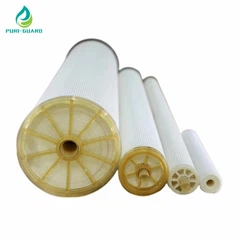
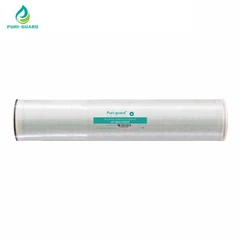
There are different types of SWRO membranes available in the market, each with its own unique characteristics and pore size specifications. For example, our SW 4040 membrane is designed for high - performance seawater desalination. It has a very uniform pore size distribution, which allows for efficient water flow and excellent salt rejection. This membrane is widely used in small to medium - scale desalination plants.
Another popular option is our SW30 4021 membrane. It's known for its durability and resistance to fouling. The pore size of this membrane is optimized to balance water flux and salt rejection, making it a great choice for a variety of seawater desalination applications.
The Seawater RO membranes in general are designed to handle the harsh conditions of seawater. The small pore size not only helps in salt rejection but also in preventing the passage of other contaminants like bacteria, viruses, and suspended solids. This means that the water produced by the SWRO process is of high quality and can be used for a wide range of purposes.
However, it's important to note that the pore size is not the only factor that affects the performance of SWRO membranes. Other factors such as the membrane's surface properties, its chemical composition, and the operating conditions also play a significant role. For example, the pressure applied during the reverse osmosis process can affect the water flux through the membrane. Higher pressures generally result in higher water production rates, but they also need to be carefully balanced to avoid damaging the membrane.
The temperature of the seawater can also have an impact on the membrane's performance. Warmer water has lower viscosity, which means that water can flow more easily through the membrane. On the other hand, very high temperatures can cause the membrane to degrade over time. So, it's important to operate the SWRO system within the recommended temperature range.
In addition, fouling is a major concern when it comes to SWRO membranes. Fouling occurs when particles, such as silt, organic matter, or microorganisms, accumulate on the surface of the membrane. This can reduce the membrane's performance by blocking the pores and increasing the resistance to water flow. To prevent fouling, pre - treatment steps are usually taken to remove these larger particles before the seawater enters the reverse osmosis system.
So, why should you choose our SWRO membranes? Well, we've been in the business for a long time, and we've developed a reputation for providing high - quality membranes. Our membranes are manufactured using the latest technology and strict quality control measures. This ensures that you get a product that has consistent pore size, excellent performance, and long - term durability.
Whether you're building a new desalination plant or looking to upgrade your existing system, our SWRO membranes can meet your needs. We offer a range of products with different pore size specifications to suit various applications. And if you have any specific requirements, our team of experts is always ready to help you find the right solution.
If you're interested in learning more about our SWRO membranes or are looking to make a purchase, we'd love to hear from you. Contact us to start a discussion about your desalination needs. We can provide you with detailed product information, technical support, and pricing. Let's work together to make seawater desalination more efficient and cost - effective for you.
In conclusion, the pore size of SWRO membranes is a critical factor in their performance. With a pore size in the nanometer range, these membranes are able to effectively separate water from salt and other contaminants in seawater. Our company is committed to providing high - quality SWRO membranes that offer reliable performance and long - term value. So, if you're in the market for SWRO membranes, don't hesitate to get in touch with us.


References
- "Seawater Reverse Osmosis Desalination: Current Status and Future Challenges" - Journal of Membrane Science
- "Principles of Reverse Osmosis Membrane Processes" - CRC Press