
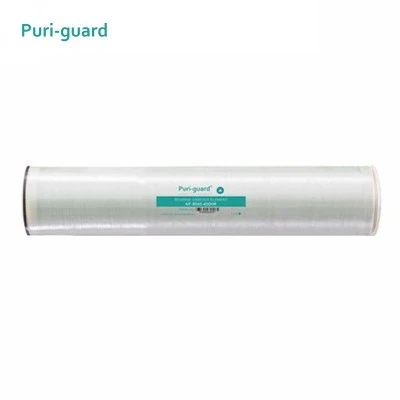
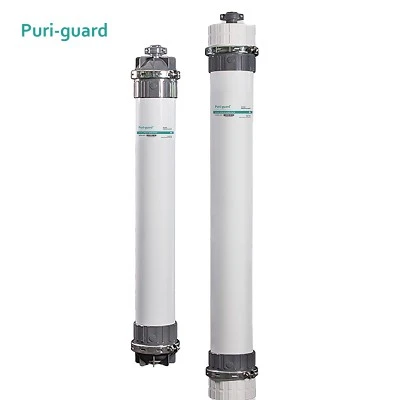
Yo, what's up guys! I'm an NF RO Membrane supplier, and today I wanna chat about the impact of sulfates on an NF RO Membrane. It's a topic that's super relevant in our industry, and understanding it can really help you make the most out of your membrane systems.
Sulfates are a kind of salt that has the sulfate ion inside it. They come from natural places such as water, soil and rocks. They also show up in some activities and in waste water. Sulfates are very common. They can change how well a NF RO Membrane works.
One way sulfates affect a NF RO Membrane is by causing scaling. Scaling happens when minerals like sulfates collect on the membrane surface. This can happen if the sulfates in the water are too much. When scaling happens a hard layer forms on the membrane. This layer can close the holes and make it harder for the membrane to clean the water. This means clean water comes out and the membrane has to work harder. Over time this can make the membrane last long and cost more to run.
Imagine you have a NF Membrane in your home water filter and the water in your area has a lot of sulfates. You might see the water come out slower or the quality not be as good. That is probably because of scaling on the membrane.
Another way sulfates affect a NF RO Membrane is by causing fouling. Fouling is not the same as scaling. Scaling is about minerals collecting. Fouling is when organic things, tiny creatures and other bits collect on the membrane. Sulfates can help fouling happen in a couple of ways. First sulfates can give food to some creatures. When these creatures grow on the membrane they make a film. This film can block holes and make the membrane not work as well. Second sulfates can mix with things in the water to form sticky stuff that sticks to the membrane and causes fouling.
Think about using a Household NF system. If there are sulfates in the water with some stuff the chance of fouling is much higher. This can make the membrane let water through and need more pressure to push the water through.
There is good news too. Sulfates don't always do things to NF RO Membranes. Sometimes they can make the membrane work better. For example sulfates can help the membrane remove more of some things. The rejection rate is how bad stuff the membrane can take out. Some NF RO Membranes are made to work when sulfates are around. They can mix with the membrane material. Make it better at separating things.
Now lets talk about the types of NF RO Membranes and how they act with sulfates. There is the NF 40 Membrane and the NF 60 Membrane. These have qualities and are for different uses.
The NF 40 Membrane usually has a rejection rate than the NF 60 Membrane. When it comes to sulfates the NF 40 Membrane might have scaling and fouling if the sulfates are high. Still it can be a choice if the water isn't too bad and the sulfates are not too high.
The NF 60 Membrane has a rejection rate and deals with sulfates better. It can take sulfates without much scaling or fouling.. It costs more. So when picking between these two membranes you have to think about the sulfates in your water your money and what you need from the filter.
As a supplier of NF RO Membranes I have seen how important it is to know how sulfates affect the membranes. That is why we have NF RO Membrane products for different needs. Whether you need a membrane for your home or for a factory we have something that can fit.
If you are having problems, with sulfates in your water and you don't know which membrane to pick don't wait to ask. We can check your water suggest the membrane for you and help you keep your membrane system working well.
In conclusion, sulfates can have both positive and negative impacts on an NF RO Membrane. Scaling and fouling are the main negative effects, but in some cases, sulfates can improve the rejection rate of contaminants. By understanding these impacts, you can make better decisions when choosing and maintaining your NF RO Membrane system. So, if you're in the market for an NF RO Membrane or you need some advice on dealing with sulfates, just give us a shout. We're here to help you get the most out of your water filtration system.