

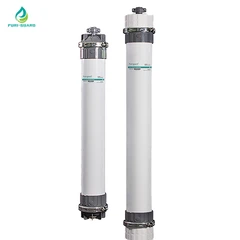
As a supplier of residential nanofiltration (NF) membranes, I often encounter inquiries about the potential use of our products in seawater desalination systems. This topic is not only of great interest to those in the water treatment industry but also to individuals and communities seeking sustainable and cost - effective solutions for clean water access. In this blog, I will delve into the technical aspects, advantages, limitations, and practical considerations of using a residential NF membrane in a seawater desalination system.
Technical Overview of Nanofiltration Membranes
Nanofiltration is a pressure - driven membrane filtration process that lies between ultrafiltration and reverse osmosis. NF membranes have pore sizes typically in the range of 0.5 - 2 nanometers, which allows them to reject a significant portion of multivalent ions, organic compounds, and some microorganisms while allowing monovalent ions and water molecules to pass through more easily.
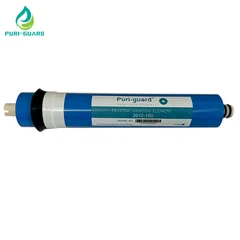
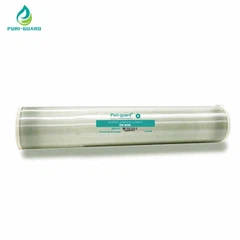
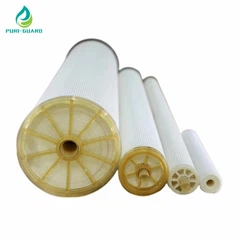
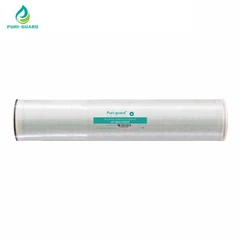
Our Nanofiltration NF 8040 and NF 60 Membrane are designed for residential applications. They are engineered to provide high - quality water filtration for household use, removing contaminants such as heavy metals, pesticides, and hardness - causing ions. These membranes are known for their high flux rates, which means they can produce a relatively large volume of filtered water per unit of time, and their long service life, reducing the need for frequent replacements.
Seawater Composition and Desalination Requirements
Seawater is a complex mixture of various salts, mainly sodium chloride (NaCl), along with other ions such as magnesium, calcium, sulfate, and bicarbonate. The total dissolved solids (TDS) in seawater typically range from 32,000 to 42,000 ppm, with sodium and chloride ions accounting for the majority of the TDS.
The primary goal of seawater desalination is to reduce the TDS to a level suitable for human consumption, which is generally less than 500 ppm. Additionally, desalination systems need to remove other contaminants such as microorganisms, heavy metals, and organic matter to ensure the safety and palatability of the treated water.
Advantages of Using Residential NF Membranes in Seawater Desalination
Cost - Effectiveness
One of the main advantages of using residential NF membranes in seawater desalination is their relatively low cost compared to traditional reverse osmosis (RO) membranes used in large - scale desalination plants. Residential NF membranes are mass - produced for household applications, which results in economies of scale and lower manufacturing costs. This makes them an attractive option for small - scale seawater desalination projects, such as those in remote coastal communities or individual households.
Energy Efficiency
NF membranes operate at lower pressures than RO membranes. Since the energy consumption of a membrane - based desalination system is directly related to the operating pressure, using a residential NF membrane can significantly reduce the energy requirements of the desalination process. This is particularly important in areas where electricity is scarce or expensive, as it can lead to substantial cost savings over the long term.
Partial Salt Rejection
Residential NF membranes can reject a significant portion of multivalent ions, which are responsible for many of the negative effects of seawater, such as hardness and scaling. While they do not remove monovalent ions as effectively as RO membranes, the partial salt rejection can still produce water that is suitable for some non - potable applications, such as irrigation or industrial processes. In some cases, the partially desalinated water can be further treated with other methods, such as ion exchange or blending with freshwater, to meet the required water quality standards.
Limitations of Using Residential NF Membranes in Seawater Desalination
Incomplete Salt Removal
The most significant limitation of using residential NF membranes in seawater desalination is their inability to achieve the same level of salt removal as RO membranes. As mentioned earlier, NF membranes allow a significant amount of monovalent ions, especially sodium and chloride, to pass through. This means that the treated water may still have a relatively high TDS, which may not be suitable for direct human consumption without further treatment.
Fouling and Scaling
Seawater contains a high concentration of suspended solids, microorganisms, and scaling - forming ions. Residential NF membranes are more prone to fouling and scaling compared to RO membranes, which can reduce their performance and lifespan. Fouling occurs when particles and organic matter accumulate on the membrane surface, blocking the pores and reducing the flux rate. Scaling, on the other hand, is caused by the precipitation of sparingly soluble salts, such as calcium carbonate and calcium sulfate, on the membrane surface. To mitigate these issues, pre - treatment processes, such as sediment filtration, activated carbon filtration, and chemical dosing, are often required.
Limited Capacity
Residential NF membranes are designed for small - scale applications, typically with a production capacity of a few hundred liters per day. For large - scale seawater desalination projects, multiple membranes would need to be used in parallel, which can increase the complexity and cost of the system.
Practical Considerations for Using Residential NF Membranes in Seawater Desalination
Pre - treatment
As mentioned earlier, pre - treatment is essential to protect the NF membrane from fouling and scaling. A typical pre - treatment system for seawater desalination using NF membranes may include sediment filtration to remove large particles, activated carbon filtration to remove organic matter and chlorine, and chemical dosing to adjust the pH and prevent scaling. The specific pre - treatment requirements will depend on the quality of the seawater and the characteristics of the NF membrane.
System Design
The design of the seawater desalination system using residential NF membranes needs to take into account the operating pressure, flow rate, and recovery rate. The operating pressure should be optimized to achieve the desired flux rate while minimizing the energy consumption. The flow rate should be adjusted to ensure that the membrane is not overloaded, and the recovery rate, which is the ratio of the product water to the feed water, should be carefully controlled to prevent scaling and fouling.
Monitoring and Maintenance
Regular monitoring and maintenance are crucial to ensure the long - term performance of the seawater desalination system. This includes monitoring the water quality parameters, such as TDS, pH, and conductivity, as well as the membrane performance parameters, such as flux rate and rejection rate. Maintenance tasks may include membrane cleaning, replacement of pre - filter cartridges, and chemical dosing adjustments.
Conclusion
In conclusion, while residential NF membranes have some limitations in seawater desalination, they can be a viable option for small - scale applications, especially in areas where cost and energy efficiency are major concerns. Their ability to reject multivalent ions and produce partially desalinated water can be useful for non - potable applications or as a pre - treatment step before further purification. However, careful consideration needs to be given to pre - treatment, system design, and monitoring and maintenance to ensure the reliable and efficient operation of the desalination system.
If you are interested in exploring the use of our Household NF membranes in a seawater desalination project, we invite you to contact us for a detailed discussion. Our team of experts is ready to provide you with customized solutions based on your specific requirements.


References
- Cheryan, M. (1998). Ultrafiltration and Microfiltration Handbook. Technomic Publishing.
- Greenlee, L. F., Lawler, D. F., Freeman, B. D., Marrot, B., & Moulin, P. (2009). Reverse osmosis desalination: Water sources, technology, and today's challenges. Water Research, 43(9), 2317 - 2348.
- Mulder, M. (1996). Basic Principles of Membrane Technology. Kluwer Academic Publishers.