

As a supplier of Household NF (Nanofiltration) products, measuring the effectiveness of these products is crucial for both our business and the satisfaction of our customers. In this blog, I will share some key methods and considerations for evaluating the performance of Household NF products.
1. Understanding the Basics of Nanofiltration
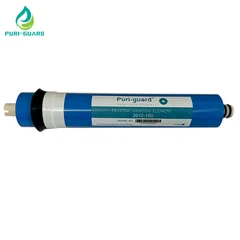
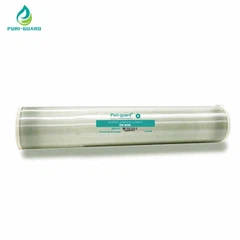
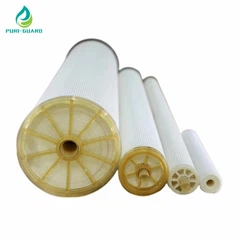
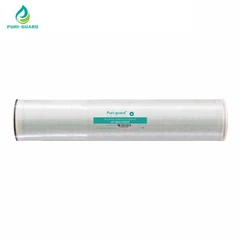
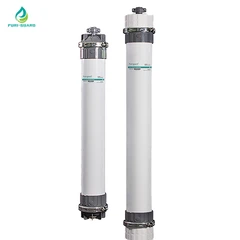
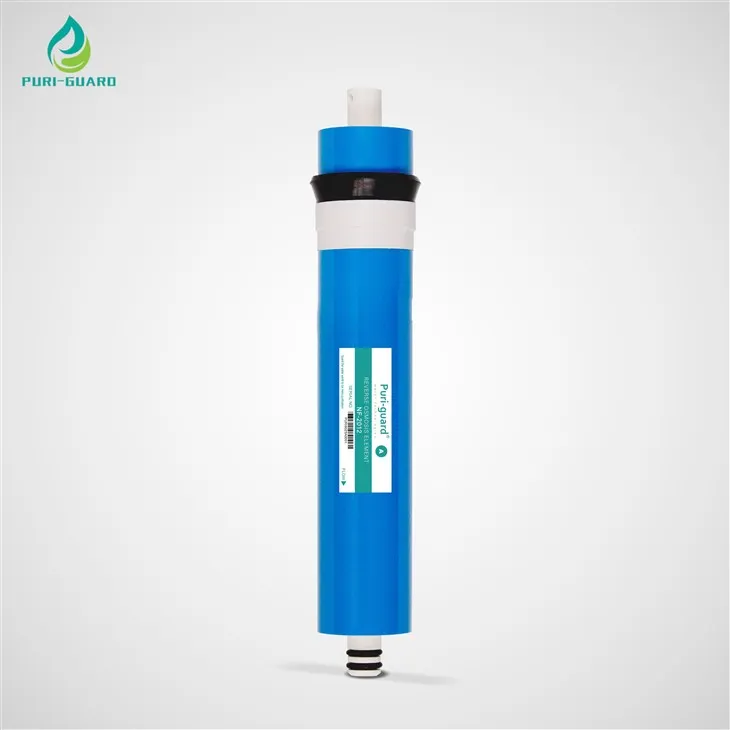
Nanofiltration is a membrane - based filtration process that lies between ultrafiltration and reverse osmosis. It can remove a wide range of contaminants, including multivalent ions, organic compounds, and some microorganisms. Our Household NF products, such as the Nanofiltration NF 8040, Water Nanofiltration, and NF 4040, are designed to provide clean and safe water for household use.
2. Key Performance Indicators (KPIs) for Measuring Effectiveness
2.1 Rejection Rate
The rejection rate is one of the most important indicators of the effectiveness of NF products. It measures the ability of the membrane to reject specific contaminants. For example, we can measure the rejection rate of common contaminants such as calcium, magnesium, and heavy metals. To calculate the rejection rate, we use the following formula:
[R=\left(1 - \frac{C_p}{C_f}\right)\times100%]
where (R) is the rejection rate, (C_p) is the concentration of the contaminant in the permeate (the water that has passed through the membrane), and (C_f) is the concentration of the contaminant in the feed water.
We can use laboratory analysis methods such as atomic absorption spectroscopy (AAS) or inductively coupled plasma - mass spectrometry (ICP - MS) to accurately measure the concentrations of contaminants in the feed water and permeate. A high rejection rate indicates that the NF membrane is effectively removing the target contaminants.
2.2 Permeate Flux
Permeate flux refers to the volume of water that passes through the membrane per unit area and per unit time. It is usually expressed in units of liters per square meter per hour (L/m²·h). A higher permeate flux means that the membrane can produce more clean water in a shorter time.
The permeate flux is affected by several factors, including the pressure applied across the membrane, the temperature of the feed water, and the concentration of contaminants in the feed water. We can measure the permeate flux by collecting the permeate water over a certain period of time and measuring its volume, and then calculating the flux based on the membrane area.
2.3 Water Recovery Rate
The water recovery rate is the ratio of the volume of permeate water to the volume of feed water. It is calculated as follows:
[WR=\frac{V_p}{V_f}\times100%]
where (WR) is the water recovery rate, (V_p) is the volume of permeate water, and (V_f) is the volume of feed water.
A high water recovery rate is desirable as it means that less water is wasted during the filtration process. However, increasing the water recovery rate may also increase the concentration of contaminants in the concentrate (the water that does not pass through the membrane), which can lead to fouling of the membrane. Therefore, we need to find a balance between water recovery rate and membrane performance.
3. Long - Term Performance Evaluation
3.1 Membrane Fouling
Membrane fouling is a common problem in NF systems, which can reduce the effectiveness of the membrane over time. Fouling can be caused by the deposition of contaminants on the membrane surface or within the membrane pores. To evaluate membrane fouling, we can measure the change in permeate flux and rejection rate over time.
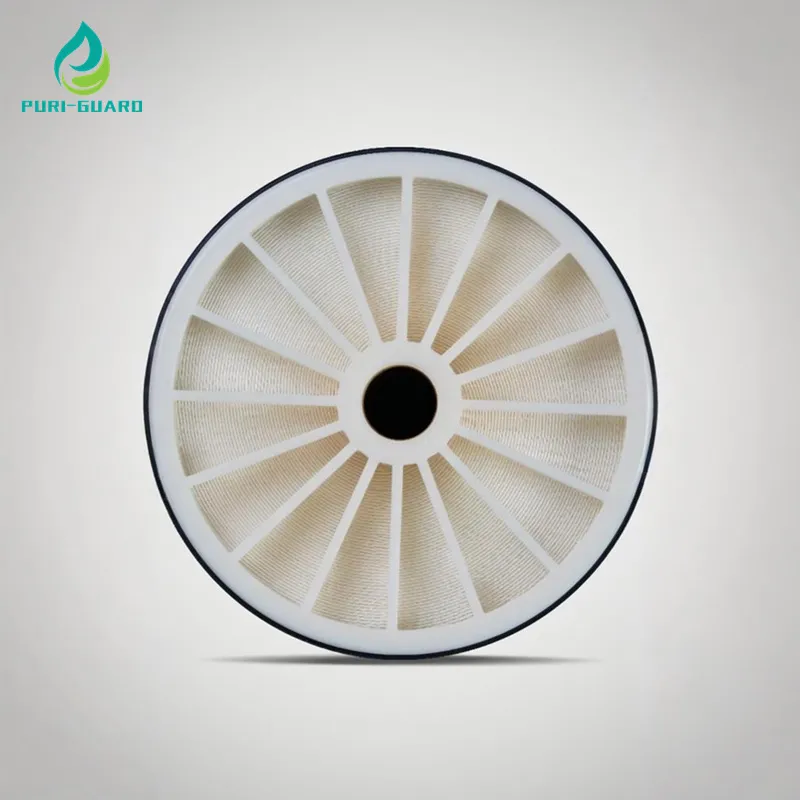
If the permeate flux decreases significantly or the rejection rate drops, it may indicate that the membrane is fouled. We can also use techniques such as scanning electron microscopy (SEM) or atomic force microscopy (AFM) to observe the surface morphology of the membrane and detect the presence of fouling layers.
To prevent membrane fouling, we can use pre - treatment methods such as sediment filtration and activated carbon filtration to remove large particles and organic matter from the feed water. We can also implement regular cleaning procedures for the membrane.
3.2 Chemical Stability
The chemical stability of the NF membrane is also an important factor in long - term performance. The membrane should be able to withstand the chemical environment of the feed water, including the pH value, the presence of oxidants, and the concentration of salts.
We can evaluate the chemical stability of the membrane by exposing it to different chemical conditions in the laboratory and measuring the change in its performance. For example, we can test the membrane's resistance to chlorine by exposing it to a chlorine - containing solution and monitoring the rejection rate and permeate flux.
4. Customer Feedback and Field Testing
In addition to laboratory - based measurements, customer feedback and field testing are also valuable sources of information for evaluating the effectiveness of Household NF products.
We can collect feedback from customers through surveys and interviews. Customers can provide information about the taste, odor, and clarity of the treated water, as well as any problems they have encountered during the use of the product.
Field testing involves installing our NF products in real - world household environments and monitoring their performance over a long period of time. This can help us identify any issues that may not be apparent in the laboratory, such as the impact of local water quality and usage patterns on the product's effectiveness.
5. Conclusion
Measuring the effectiveness of Household NF products is a comprehensive process that involves multiple aspects, including rejection rate, permeate flux, water recovery rate, long - term performance evaluation, and customer feedback. By accurately measuring these performance indicators, we can ensure that our products meet the high standards of quality and reliability.
If you are interested in our Household NF products and would like to learn more about their performance and effectiveness, or if you are considering a purchase, please feel free to contact us for further discussion. We are committed to providing you with the best solutions for your household water treatment needs.
References
- Cheryan, M. Ultrafiltration and Microfiltration Handbook. Technomic Publishing, 1998.
- Mulder, M. Basic Principles of Membrane Technology. Kluwer Academic Publishers, 1996.
- Baker, R. W. Membrane Technology and Applications. John Wiley & Sons, 2004.