
As a supplier of HSRO membranes, I've witnessed firsthand how the chemical composition of the feed solution can have a profound impact on the performance and longevity of these crucial components in the chemical industry. In this blog post, I'll delve into the various ways in which the feed solution's chemical makeup affects HSRO membranes, drawing on my years of experience and industry knowledge.
Understanding HSRO Membranes
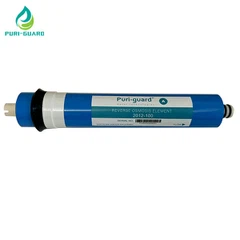
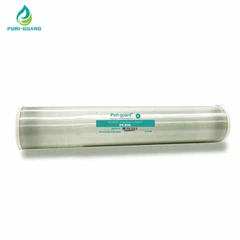
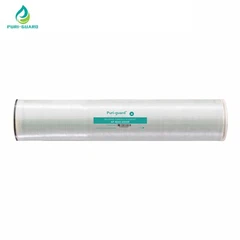
Before we explore the effects of feed solution composition, let's briefly review what HSRO membranes are and how they work. HSRO, or High Selectivity Reverse Osmosis, membranes are a type of semi - permeable membrane used in the chemical industry for separation processes. They are designed to allow the passage of certain molecules while blocking others, based on size, charge, and other physical and chemical properties. HSRO Membane is a leading product in this field, offering high efficiency and reliability in various applications.
Impact of pH on HSRO Membranes
One of the most significant factors in the chemical composition of the feed solution is its pH level. The pH can affect the membrane's surface charge, which in turn influences the rejection of ions and other solutes. Most HSRO membranes have an optimal pH range within which they operate most effectively.
For example, in an acidic environment (low pH), the membrane surface may become positively charged. This can lead to increased rejection of positively charged ions, as like charges repel each other. Conversely, in an alkaline environment (high pH), the membrane surface may acquire a negative charge, enhancing the rejection of negatively charged ions.
If the pH of the feed solution strays too far from the membrane's optimal range, it can cause several problems. At extremely low or high pH values, the membrane material may degrade. For instance, some polymer - based HSRO membranes can experience hydrolysis at high pH, which weakens the membrane structure and reduces its performance over time. This degradation can lead to increased salt passage and decreased water flux, ultimately affecting the overall efficiency of the separation process.
Influence of Ionic Strength
The ionic strength of the feed solution, which is determined by the concentration of dissolved salts, also plays a crucial role. High ionic strength can cause a phenomenon known as concentration polarization. When the feed solution has a high salt concentration, a layer of concentrated solutes forms on the membrane surface. This layer creates a resistance to the flow of water through the membrane, reducing the water flux.
Moreover, high ionic strength can affect the electrostatic interactions between the membrane and the solutes. In solutions with high salt concentrations, the shielding effect of the ions can reduce the membrane's ability to selectively reject certain solutes. For example, the presence of a large number of ions can neutralize the surface charge of the membrane, making it less effective at separating ions based on their charge.
On the other hand, low ionic strength may not provide enough charge screening, which can lead to strong electrostatic interactions between the membrane and the solutes. This can cause fouling, as solutes are more likely to adhere to the membrane surface.
Effect of Organic Compounds
Organic compounds in the feed solution can have a significant impact on HSRO membranes. These compounds can be classified into different categories, such as natural organic matter (NOM), synthetic organic chemicals, and microbial metabolites.
NOM, which includes substances like humic and fulvic acids, can cause fouling of the membrane. These organic molecules can adsorb onto the membrane surface, forming a layer that reduces the membrane's permeability. Additionally, NOM can react with disinfectants in the feed solution, such as chlorine, to form disinfection by - products (DBPs). These DBPs can be harmful to the membrane and may also pose a risk to human health if present in the treated water.
Synthetic organic chemicals, such as pesticides, pharmaceuticals, and industrial solvents, can also foul the membrane or cause chemical damage. Some of these compounds may be hydrophobic and can adsorb strongly to the membrane surface, while others may react with the membrane material, altering its structure and performance.
Microbial metabolites, produced by bacteria and other microorganisms in the feed solution, can lead to biofouling. Biofouling is a major problem in membrane systems, as it can significantly reduce the membrane's performance and increase the energy consumption required for operation. Microorganisms can form a biofilm on the membrane surface, which acts as a barrier to water flow and can also harbor enzymes that degrade the membrane material.
Role of Particulate Matter
Particulate matter in the feed solution can cause physical fouling of the HSRO membrane. Particles such as sand, silt, and clay can accumulate on the membrane surface, blocking the pores and reducing the water flux. This type of fouling is often referred to as cake - layer formation.


The size and shape of the particles also matter. Smaller particles are more likely to penetrate the membrane pores and cause internal fouling, while larger particles tend to form a more visible cake layer on the surface. Additionally, the presence of colloidal particles, which are very small and have a high surface area, can be particularly problematic as they can aggregate and form larger clusters that are difficult to remove.
Compatibility with Different HSRO Membrane Models
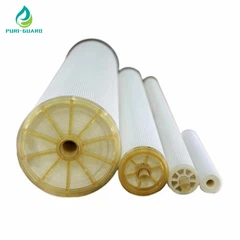
Different HSRO membrane models, such as HSRO 8040 and HSRO 4040, may have different sensitivities to the chemical composition of the feed solution. These models are designed for different applications and flow rates, and their membrane materials and structures may vary.
For example, the HSRO 8040 membrane, which is typically used in larger - scale industrial applications, may have a more robust structure and be more resistant to certain chemical components in the feed solution. On the other hand, the HSRO 4040 membrane, which is often used in smaller - scale systems or for pilot testing, may be more sensitive to changes in the feed solution's chemical composition.
Mitigating the Effects of Feed Solution Composition
To mitigate the negative effects of the feed solution's chemical composition on HSRO membranes, several pre - treatment steps can be taken.
- pH Adjustment: By adjusting the pH of the feed solution to the membrane's optimal range, the performance and longevity of the membrane can be improved. This can be achieved using acid or base addition, depending on the initial pH of the solution.
- Desalination and Ion Exchange: For feed solutions with high ionic strength, desalination techniques such as reverse osmosis pre - treatment or ion exchange can be used to reduce the salt concentration. This helps to minimize concentration polarization and improve the membrane's performance.
- Organic Removal: To remove organic compounds, processes like activated carbon filtration or advanced oxidation processes can be employed. Activated carbon can adsorb a wide range of organic molecules, while advanced oxidation processes can break down organic compounds into smaller, less harmful substances.
- Particle Filtration: Pre - filtration using microfiltration or ultrafiltration membranes can remove particulate matter from the feed solution. This helps to prevent cake - layer formation and internal fouling of the HSRO membrane.
Conclusion
In conclusion, the chemical composition of the feed solution has a far - reaching impact on HSRO membranes in the chemical industry. The pH, ionic strength, presence of organic compounds, and particulate matter all influence the membrane's performance, rejection efficiency, and longevity. As a supplier of HSRO membranes, understanding these effects is crucial for providing our customers with the best possible solutions.
By carefully considering the feed solution's chemical makeup and implementing appropriate pre - treatment measures, we can ensure that our HSRO membranes, such as the HSRO Membane, HSRO 8040, and HSRO 4040, operate at their optimal level.
If you are in the chemical industry and are looking for high - quality HSRO membranes or need advice on how to optimize your membrane - based separation processes, we are here to help. Contact us to discuss your specific requirements and explore how our products can meet your needs.
References
- Mulder, M. (1996). Basic Principles of Membrane Technology. Kluwer Academic Publishers.
- Cheryan, M. (1998). Ultrafiltration and Microfiltration Handbook. Technomic Publishing Company.
- Baker, R. W. (2004). Membrane Technology and Applications. John Wiley & Sons.