
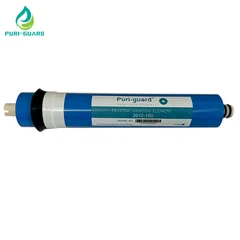
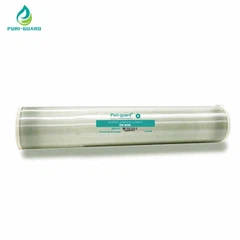
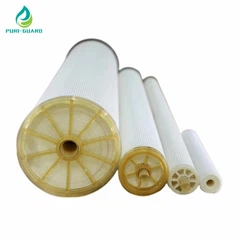
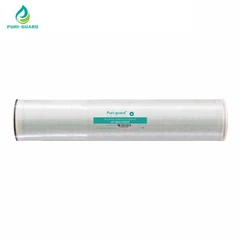
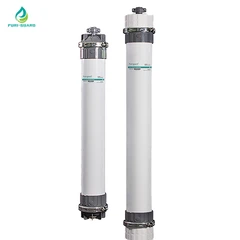
Desalination, the process of removing salt and other impurities from seawater or brackish water, has become an increasingly important solution to address the global water scarcity issue. Among the various desalination technologies available, reverse osmosis (RO) and nanofiltration (NF) have emerged as leading methods due to their efficiency and effectiveness. As a supplier of Reverse Osmosis Nanofiltration products, I am well - versed in the capabilities and limitations of these technologies, and in this blog, I will explore just how effective RO and NF are in desalination.
Understanding Reverse Osmosis and Nanofiltration
Reverse osmosis is a water purification process that uses a semi - permeable membrane to remove ions, molecules, and larger particles from water. Under high pressure, water is forced through the membrane, leaving behind salts and other contaminants. Nanofiltration, on the other hand, is a type of membrane filtration that uses a membrane with pores slightly larger than those in RO membranes. NF can remove divalent ions (such as calcium and magnesium) and organic compounds, while allowing some monovalent ions (such as sodium) to pass through.


Efficiency in Salt Removal
One of the primary measures of desalination effectiveness is the ability to remove salts from water. RO membranes are highly effective in this regard, capable of rejecting up to 99% of dissolved salts. This makes RO ideal for desalinating seawater, which has a high salt content. For example, in large - scale desalination plants around the world, RO technology has been used to produce high - quality freshwater from seawater with a salinity of around 35,000 ppm (parts per million) down to less than 500 ppm, which meets the World Health Organization's (WHO) standards for drinking water.
Nanofiltration, while not as effective as RO in removing all salts, is still very efficient at removing specific types of salts. NF membranes can reject up to 95% of divalent ions, which are responsible for water hardness. This makes NF a great option for treating brackish water, where the salt content is lower than seawater but still high enough to cause problems. For instance, in agricultural areas where brackish groundwater is used for irrigation, NF can be used to reduce the hardness of the water, preventing soil salinization and improving crop yields.
Energy Efficiency
Energy consumption is a significant factor in desalination, as the process typically requires a large amount of energy to operate pumps and other equipment. RO and NF have made significant strides in improving energy efficiency over the years. Modern RO systems use energy recovery devices, such as pressure exchangers, to recycle the energy from the brine stream. This can reduce the energy consumption of RO desalination by up to 60%, making it more cost - effective and environmentally friendly.
Nanofiltration generally requires less pressure than RO, which means it consumes less energy. This makes NF a more energy - efficient option for treating water with lower salt concentrations. For small - scale desalination applications, such as in rural communities or for residential use, NF can be a more practical and cost - effective solution. We offer a Residential NF Membrane that is specifically designed for home use, providing an energy - efficient way to purify water.
Membrane Lifespan and Maintenance
The lifespan of the membranes and the ease of maintenance are also important considerations in desalination. RO and NF membranes are subject to fouling, which occurs when particles, microorganisms, or organic matter accumulate on the membrane surface, reducing its performance. However, advancements in membrane technology have led to the development of more fouling - resistant membranes.
Regular maintenance, such as cleaning and chemical treatment, is necessary to extend the lifespan of the membranes. Our company offers high - quality membranes, like the Nanofiltration NF 8040 and NF 40 Membrane, which are designed to be durable and easy to maintain. With proper care, these membranes can last for several years, reducing the overall cost of desalination.
Cost - Effectiveness
When considering the effectiveness of RO and NF in desalination, cost - effectiveness is a crucial factor. The initial investment for RO and NF systems can be high, especially for large - scale desalination plants. However, the long - term benefits, such as the production of high - quality water and the potential savings in water treatment costs, often outweigh the initial costs.
In addition, the cost of RO and NF membranes has been decreasing over the years, making these technologies more accessible to a wider range of users. For small - scale applications, the cost of a residential NF system can be relatively low, providing an affordable solution for households to access clean water.
Applications in Different Sectors
RO and NF have a wide range of applications in different sectors. In the municipal sector, large - scale RO desalination plants are used to provide drinking water to cities. For example, in countries like Saudi Arabia and the United Arab Emirates, RO desalination is a major source of freshwater.
In the industrial sector, RO and NF are used for water treatment in various industries, such as power generation, food and beverage, and pharmaceuticals. These industries require high - quality water for their processes, and RO and NF can provide the necessary purification.
In the agricultural sector, as mentioned earlier, NF can be used to treat brackish water for irrigation. This helps to improve water quality and increase crop productivity.
Conclusion
In conclusion, reverse osmosis and nanofiltration are highly effective technologies in desalination. RO is extremely efficient in removing salts from seawater, making it suitable for large - scale desalination projects. Nanofiltration, on the other hand, is well - suited for treating brackish water and offers energy - efficient and cost - effective solutions for small - scale applications.
As a supplier of Reverse Osmosis Nanofiltration products, we are committed to providing high - quality membranes and systems that meet the diverse needs of our customers. Whether you are a municipality looking for a large - scale desalination solution or a homeowner in need of a residential water purification system, we have the products and expertise to help you.
If you are interested in learning more about our Reverse Osmosis Nanofiltration products or would like to discuss a potential procurement, please feel free to reach out. We are more than happy to engage in a detailed discussion and provide you with the best solutions for your desalination needs.
References
- Elimelech, M., & Phillip, W. A. (2011). The future of seawater desalination: energy, technology, and the environment. Science, 333(6043), 712 - 717.
- Schäfer, A. I., Fane, A. G., & Waite, T. D. (2005). Membrane technology for water and wastewater treatment. Elsevier.
- Mickley, L. J., & Deshmukh, A. (2018). Nanofiltration membranes for water treatment: A review. Journal of Membrane Science, 552, 1 - 16.