

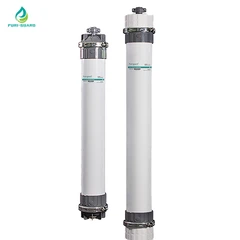
As a supplier of NF membrane filters, I understand the critical importance of membrane selectivity in various industrial and environmental applications. Selectivity refers to the ability of a nanofiltration (NF) membrane to separate specific solutes from a solution while allowing others to pass through. Improving the selectivity of an NF membrane filter can significantly enhance the efficiency and effectiveness of separation processes, leading to better product quality and reduced operational costs. In this blog post, I will share some practical strategies and insights on how to improve the selectivity of an NF membrane filter.

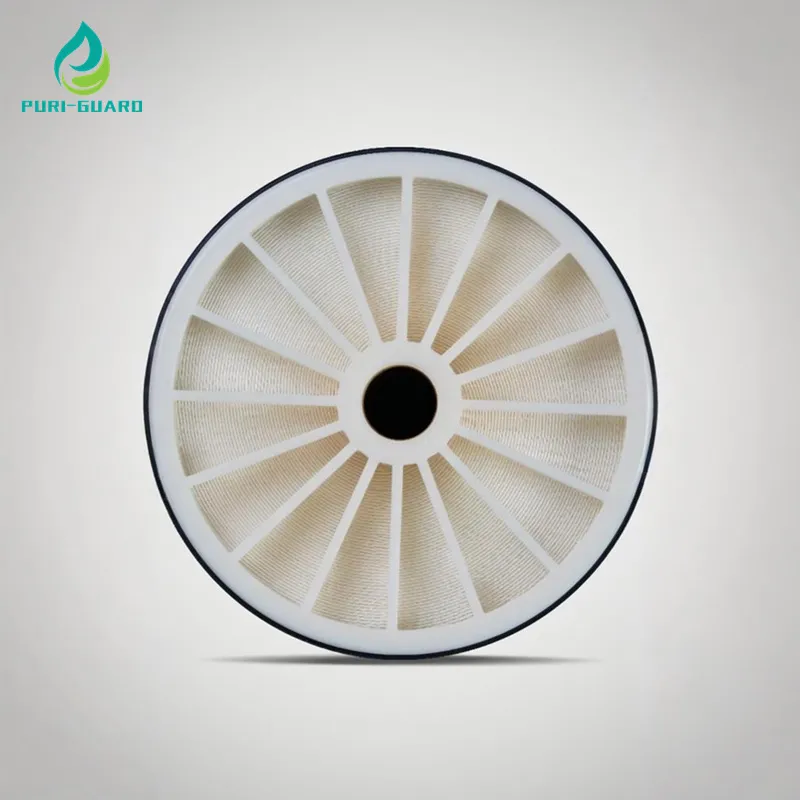
Understanding the Basics of NF Membrane Selectivity
Before delving into the methods of improving selectivity, it is essential to understand the factors that influence it. The selectivity of an NF membrane is primarily determined by its pore size, surface charge, and chemical composition.
- Pore Size: The pore size of an NF membrane typically ranges from 1 to 10 nanometers, which allows it to retain solutes based on their molecular size. Smaller pores generally result in higher selectivity for larger molecules. However, reducing the pore size too much can also lead to a decrease in permeate flux, which is the rate at which the solution passes through the membrane.
- Surface Charge: NF membranes often have a surface charge, which can interact with charged solutes in the solution. A positively charged membrane can attract negatively charged solutes, while a negatively charged membrane can attract positively charged solutes. This charge interaction can enhance the selectivity for specific ions or charged molecules.
- Chemical Composition: The chemical composition of the membrane material can also affect its selectivity. Different polymers and additives can be used to modify the membrane's surface properties, such as hydrophilicity or hydrophobicity, which can influence the interaction between the membrane and the solutes.
Strategies to Improve NF Membrane Selectivity
1. Optimize Membrane Material and Structure
- Select the Right Polymer: Choosing the appropriate polymer for the NF membrane is crucial. Polymers with specific chemical properties can provide better selectivity for certain solutes. For example, polyamide membranes are commonly used in NF applications due to their good chemical stability and selectivity for salts and organic compounds.
- Modify the Membrane Structure: Advanced manufacturing techniques can be used to modify the membrane structure to improve selectivity. For instance, thin-film composite (TFC) membranes are designed with a thin selective layer on top of a porous support layer. This structure allows for precise control of the pore size and surface properties, resulting in higher selectivity.
2. Adjust Operating Conditions
- Pressure: Increasing the operating pressure can enhance the permeate flux, but it can also affect the selectivity. Higher pressures may cause some solutes to be forced through the membrane pores, reducing the selectivity. Therefore, it is important to find the optimal pressure that balances the permeate flux and selectivity.
- Temperature: Temperature can also influence the selectivity of an NF membrane. Generally, higher temperatures can increase the permeate flux, but they may also reduce the selectivity due to increased molecular mobility. Operating at a moderate temperature can help maintain a good balance between flux and selectivity.
- pH: The pH of the feed solution can affect the surface charge of the membrane and the ionization state of the solutes. Adjusting the pH to an optimal value can enhance the charge interaction between the membrane and the solutes, improving the selectivity.
3. Pretreatment of the Feed Solution
- Filtration: Pretreating the feed solution with a pre - filter can remove large particles and suspended solids, which can foul the NF membrane and reduce its selectivity. A well - designed pre - filtration system can significantly extend the membrane's lifespan and maintain its selectivity.
- Chemical Treatment: Chemical treatment of the feed solution can also improve the selectivity of the NF membrane. For example, adding a chelating agent can remove divalent cations, which can cause scaling on the membrane surface and reduce its performance.
4. Surface Modification of the Membrane
- Coating: Applying a thin coating on the membrane surface can modify its surface properties and improve selectivity. For example, a hydrophilic coating can reduce the adsorption of hydrophobic solutes, while a charged coating can enhance the selectivity for specific ions.
- Grafting: Grafting functional groups onto the membrane surface can also be used to improve selectivity. By grafting specific functional groups, such as sulfonic acid groups or amine groups, the membrane can have a stronger affinity for certain solutes.
Case Studies: Improved Selectivity in Real - World Applications
Case Study 1: Water Softening
In a water softening application, an NF membrane was used to remove hardness ions (calcium and magnesium) from the feed water. By optimizing the membrane material and operating conditions, the selectivity for hardness ions was significantly improved. The membrane was made of a polyamide material with a negatively charged surface, which attracted the positively charged calcium and magnesium ions. The operating pressure was adjusted to a moderate level to ensure a good balance between permeate flux and selectivity. As a result, the hardness of the permeate water was reduced to a very low level, meeting the requirements for industrial and domestic use.
Case Study 2: Pharmaceutical Separation
In a pharmaceutical separation process, an NF membrane was used to separate a specific drug compound from other impurities in the solution. The membrane was surface - modified with a functional group that had a high affinity for the target drug. By adjusting the pH of the feed solution to optimize the charge interaction between the membrane and the solutes, the selectivity for the drug compound was greatly enhanced. This led to a higher purity of the final product and reduced the need for further purification steps.
Our Product Offerings
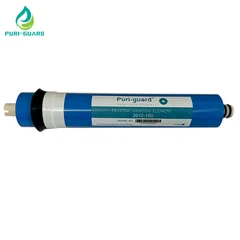
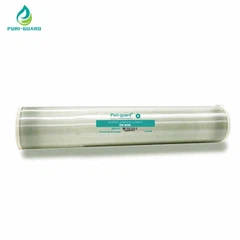
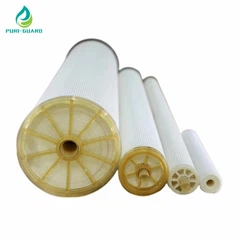
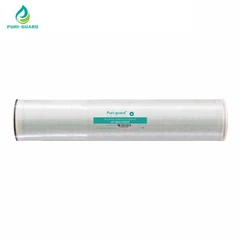
As a supplier, we offer a range of high - quality NF membrane filters, including NF 8040 and NF 60 Membrane. Our Nanofiltration NF 8040 is designed with advanced technology to provide excellent selectivity and high permeate flux. These membranes are suitable for various applications, such as water treatment, food and beverage processing, and pharmaceutical manufacturing.
Contact Us for Purchase and Consultation
If you are interested in improving the selectivity of your NF membrane filtration process or would like to learn more about our products, we encourage you to contact us. Our team of experts is ready to provide you with professional advice and customized solutions to meet your specific needs. Whether you are a small - scale laboratory or a large - scale industrial plant, we can help you achieve better separation performance with our high - quality NF membrane filters.
References
- Cheryan, M. Ultrafiltration and Microfiltration Handbook. Technomic Publishing, 1998.
- Mulder, M. Basic Principles of Membrane Technology. Kluwer Academic Publishers, 1996.
- Strathmann, H. "Membrane separation processes: Current relevance and future opportunities." Desalination, 2010, 261(1): 1 - 8.