
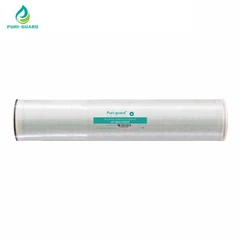
The replacement frequency of a commercial reverse osmosis (RO) membrane is a critical consideration for businesses relying on water purification systems. As a commercial RO membrane supplier, I understand the importance of providing clear guidance on this matter to ensure optimal performance and cost - effectiveness for our customers.
Factors Affecting RO Membrane Replacement Frequency
Water Quality
The quality of the feed water is one of the most significant factors influencing how often a commercial RO membrane needs to be replaced. Water with high levels of contaminants such as suspended solids, dissolved salts, heavy metals, and organic matter will put more stress on the membrane. For instance, in areas where the water source is a river or a well with high turbidity, the membrane is likely to become fouled more quickly. Fouling occurs when particles accumulate on the membrane surface, reducing its efficiency and lifespan. In contrast, if the feed water is pre - treated effectively to remove most of the contaminants, the membrane can last longer.
Operating Conditions
The operating conditions of the RO system also play a crucial role. High pressure, high temperature, and improper flow rates can all accelerate membrane degradation. Running the RO system at pressures higher than the recommended levels can cause physical damage to the membrane structure, leading to increased salt passage and reduced water production. Similarly, elevated temperatures can speed up chemical reactions within the membrane, potentially causing it to break down more rapidly. Maintaining the system within the manufacturer's specified operating parameters is essential for extending the membrane's life.
System Design and Maintenance
A well - designed RO system with proper pre - treatment and post - treatment components can significantly extend the membrane's lifespan. Adequate pre - treatment, such as sediment filtration, activated carbon filtration, and anti - scaling chemical dosing, can prevent many of the contaminants from reaching the membrane. Regular maintenance, including membrane cleaning, pressure monitoring, and replacement of worn - out parts, is also vital. If maintenance is neglected, the membrane will be more prone to fouling and damage, necessitating more frequent replacements.
General Guidelines for Membrane Replacement
Lightly - Loaded Systems
In commercial applications where the feed water quality is relatively good and the system is not heavily loaded, a commercial RO membrane can typically last between 3 to 5 years. For example, in some office buildings or small laboratories where the water source is municipal water with low levels of contaminants, and the RO system is used for moderate water purification needs, the membranes may have a longer service life. These systems often have proper pre - treatment in place, which helps protect the membranes from fouling.


Moderately - Loaded Systems
For systems that are exposed to moderately contaminated water, such as those in food and beverage processing plants or small - scale industrial facilities, the membrane replacement interval is usually around 2 to 3 years. In these applications, the water may contain higher levels of salts, organic matter, or particulate matter. Although pre - treatment is often used, the membranes still face a greater challenge in removing contaminants, leading to a shorter lifespan.
Heavily - Loaded Systems
In industries where the feed water is highly contaminated, such as mining, chemical manufacturing, or some agricultural applications, the RO membranes may need to be replaced every 1 to 2 years. These systems are constantly dealing with high levels of suspended solids, heavy metals, and other contaminants, which can quickly foul and damage the membranes. Even with advanced pre - treatment and regular cleaning, the membranes in these heavily - loaded systems are subject to significant stress and wear.
Signs That a RO Membrane Needs Replacement
Decreased Water Production
One of the most obvious signs that a RO membrane may need replacement is a significant decrease in water production. Over time, as the membrane becomes fouled or damaged, its ability to allow water to pass through is reduced. If the water output from the RO system drops by more than 15 - 20% compared to its initial performance, it could be an indication that the membrane is nearing the end of its useful life.
Increased Salt Passage
Another sign is an increase in the salt content of the product water. A properly functioning RO membrane should reject a high percentage of dissolved salts. If the conductivity or total dissolved solids (TDS) of the product water starts to rise steadily, it means that the membrane is no longer able to effectively separate the salts from the water, and replacement may be necessary.
Pressure Changes
Unusual pressure changes within the RO system can also signal membrane problems. An increase in the feed pressure or a decrease in the differential pressure across the membrane can indicate fouling or blockage. On the other hand, a significant drop in the feed pressure may suggest a membrane rupture or other serious damage.
Our Product Offerings
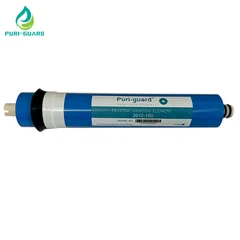
As a commercial RO membrane supplier, we offer a wide range of high - quality membranes to meet different customer needs. Our TW30 2540 membrane is designed for small - to - medium - sized commercial applications. It provides excellent salt rejection and water production rates, making it suitable for various water purification tasks.
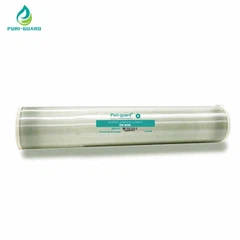
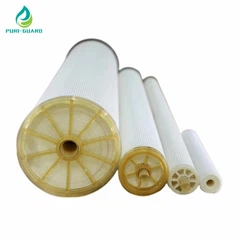
For larger commercial systems, our 4021 Membrane and 4021 RO Membrane are ideal choices. These membranes are engineered to handle higher flow rates and more challenging water conditions, ensuring reliable performance in industrial and large - scale commercial settings.
Conclusion and Call to Action
Determining how often a commercial RO membrane should be replaced is not a one - size - fits - all answer. It depends on multiple factors such as water quality, operating conditions, and system maintenance. By understanding these factors and monitoring the performance of the RO system, businesses can optimize the membrane replacement schedule to balance cost and performance.
If you are in the market for commercial RO membranes or need more information on membrane replacement and system maintenance, we are here to help. Our team of experts can provide personalized advice based on your specific water purification requirements. Contact us to discuss your needs and explore our range of high - quality RO membranes.
References
- Cheryan, M. (1998). Ultrafiltration and Microfiltration Handbook. Technomic Publishing.
- Baker, R. W. (2004). Membrane Technology and Applications. Wiley.
- Water Quality Association. (2023). RO System Maintenance and Troubleshooting Guide.