
As a supplier of nanofiltration (NF) membranes, one of the most frequently asked questions I encounter is, "How often should an NF membrane be cleaned?" This is a crucial question, as proper cleaning intervals can significantly impact the performance, lifespan, and cost - effectiveness of the NF membrane system. In this blog, I'll explore the factors that influence the cleaning frequency of NF membranes and provide some guidelines to help you determine the optimal cleaning schedule for your specific application.
Factors Affecting NF Membrane Cleaning Frequency
Feed Water Quality
The quality of the feed water is perhaps the most significant factor in determining how often an NF membrane needs to be cleaned. Feed water with high levels of suspended solids, organic matter, scaling agents (such as calcium carbonate, calcium sulfate, and silica), and microorganisms will foul the membrane more quickly.


For instance, if the feed water is sourced from a surface water body like a river or a lake, it is likely to contain a large amount of suspended particles, algae, and organic debris. These substances can form a cake layer on the membrane surface, reducing the permeate flux and increasing the operating pressure. In such cases, more frequent cleaning may be required, perhaps every 1 - 2 months.
On the other hand, if the feed water is from a well with relatively low levels of contaminants, the fouling rate will be slower, and the cleaning interval can be extended to 3 - 6 months or even longer.
Operating Conditions
The operating conditions of the NF membrane system also play a vital role in determining the cleaning frequency. Higher operating pressures and fluxes can lead to more rapid fouling. When the pressure is increased, more contaminants are forced onto the membrane surface, increasing the likelihood of fouling. Similarly, a high flux means that more water is passing through the membrane per unit time, which can also accelerate fouling.
For example, if a system is operating at a very high flux to meet a large water demand, the membrane may need to be cleaned more often compared to a system operating at a lower, more conservative flux. Additionally, the temperature of the feed water can affect the fouling rate. Higher temperatures can increase the growth rate of microorganisms and the solubility of scaling agents, potentially leading to more frequent fouling and thus more frequent cleaning.
Membrane Type and Configuration
Different types of NF membranes have different resistance to fouling. Some membranes are designed with special surface properties or materials that make them more resistant to certain types of fouling, such as biofouling or scaling. For example, membranes with a hydrophilic surface tend to be less prone to organic fouling compared to hydrophobic membranes.
The membrane configuration also matters. Spiral - wound membranes are widely used in NF systems, but they can be more susceptible to fouling in the feed channels compared to other configurations. Plate - and - frame or tubular membranes may offer better resistance to fouling in some applications, which could result in longer cleaning intervals.
General Guidelines for Cleaning Intervals
Based on the factors mentioned above, here are some general guidelines for NF membrane cleaning intervals:
Light Fouling Conditions
In applications where the feed water quality is good, the operating conditions are relatively mild, and the membrane is resistant to fouling, the cleaning interval can be as long as 6 - 12 months. For example, in a system treating groundwater with low levels of contaminants and operating at a moderate flux, annual cleaning may be sufficient.
Moderate Fouling Conditions
When the feed water has a moderate level of contaminants, or the operating conditions are more demanding, the cleaning interval may be reduced to 3 - 6 months. This could be the case in a system treating surface water that has been pre - treated to remove some of the larger particles but still contains a certain amount of organic matter and microorganisms.
Severe Fouling Conditions
In applications with poor feed water quality, high operating pressures or fluxes, or a high risk of biofouling or scaling, the membrane may need to be cleaned every 1 - 3 months. For example, in a system treating industrial wastewater with high levels of suspended solids and organic pollutants, frequent cleaning is essential to maintain the system's performance.
Monitoring and Detection of Fouling
To determine the exact cleaning time, it is necessary to monitor the performance of the NF membrane system regularly. Key performance indicators include permeate flux, operating pressure, and salt rejection. A significant decrease in permeate flux or an increase in operating pressure may indicate membrane fouling. A decline in salt rejection could also be a sign of membrane damage or fouling.
In addition to these performance indicators, online monitoring tools such as pressure sensors, flow meters, and conductivity meters can provide real - time data on the system's operation. Regular analysis of the feed water, permeate, and concentrate can also help detect the presence of contaminants and predict the onset of fouling.
Cleaning Methods and Considerations
When it comes to cleaning NF membranes, there are several methods available, including physical cleaning and chemical cleaning.
Physical Cleaning
Physical cleaning methods include backwashing, flushing, and air scouring. Backwashing involves reversing the flow of water through the membrane to remove loosely attached foulants. Flushing is the process of passing a large volume of water through the membrane at a high velocity to dislodge and remove contaminants. Air scouring uses compressed air to create turbulence in the feed channels, helping to remove fouling materials.
Physical cleaning is usually the first step in the cleaning process and can be performed relatively frequently without causing significant damage to the membrane.
Chemical Cleaning
Chemical cleaning is used when physical cleaning is not sufficient to restore the membrane performance. Chemical cleaners can be classified into acid cleaners, alkaline cleaners, and biocides. Acid cleaners are effective in removing inorganic scaling, such as calcium carbonate and metal oxides. Alkaline cleaners are used to remove organic fouling, such as proteins and polysaccharides. Biocides are used to control biofouling.
However, chemical cleaning should be used with caution, as improper use of chemicals can damage the membrane. It is essential to follow the manufacturer's recommendations regarding the type, concentration, and contact time of the cleaning chemicals.
Our Product Offerings and Their Cleaning Requirements
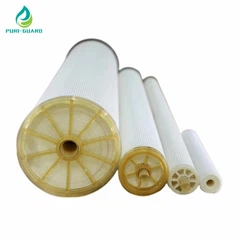
As an NF membrane supplier, we offer a range of high - quality membranes, including the FR 4040, RO 1812 75, and XLE 440 Membrane.
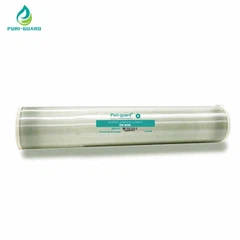
The FR 4040 is a popular industrial - grade NF membrane. Due to its wide application in various industrial processes, its cleaning frequency depends on the specific feed water and operating conditions. In general, for industrial applications with moderate fouling conditions, a cleaning interval of 3 - 6 months is recommended.
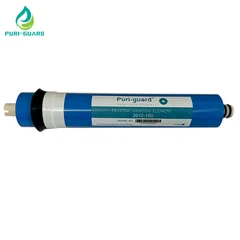
The RO 1812 75 is mainly used in residential RO systems. Since the feed water in residential applications is usually treated to a certain extent, the fouling rate is relatively low. A cleaning interval of 6 - 12 months may be sufficient for most residential applications.
The XLE 440 Membrane is designed for high - efficiency industrial applications. It has excellent resistance to fouling, but in applications with severe fouling conditions, it may still require cleaning every 1 - 3 months.
Conclusion
Determining the optimal cleaning frequency for an NF membrane is a complex process that depends on multiple factors, including feed water quality, operating conditions, membrane type, and configuration. By carefully considering these factors, regularly monitoring the system's performance, and following the appropriate cleaning methods, you can ensure the long - term performance and reliability of your NF membrane system.
If you are interested in our NF membrane products or need more information on membrane cleaning and maintenance, please feel free to contact us for a detailed discussion. We are committed to providing you with the best solutions for your water treatment needs.
References
- Cheryan, M. Ultrafiltration and Microfiltration Handbook. Technomic Publishing, 1998.
- Baker, R. W. Membrane Technology and Applications. John Wiley & Sons, 2004.
- Fane, A. G., et al. "Membrane Bioreactors for Wastewater Treatment." Elsevier, 2012.