

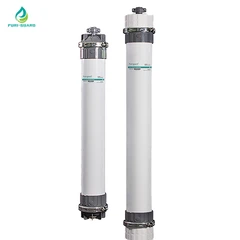
Hey there! As a supplier of Reverse Osmosis Nanofiltration (RO/NF) solutions, I'm super stoked to chat about the awesome applications of these technologies in the winemaking industry. Winemaking is an art that combines tradition with modern science, and RO/NF plays a crucial role in enhancing the quality and consistency of wines. Let's dive right in!
Understanding Reverse Osmosis and Nanofiltration
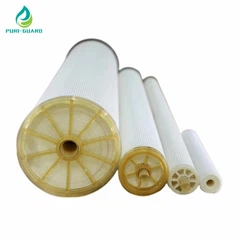
Before we get into the winemaking applications, let's quickly go over what reverse osmosis and nanofiltration are. Reverse osmosis is a process that uses a semi - permeable membrane to remove dissolved solids, ions, and other impurities from a liquid by applying pressure. It can reject particles as small as 0.0001 microns. Nanofiltration, on the other hand, is a bit less restrictive. It can reject particles in the range of 0.001 to 0.01 microns, and it's great for removing multivalent ions, organic compounds, and some larger molecules while allowing monovalent ions to pass through more easily.
Alcohol Adjustment
One of the most significant applications of RO/NF in winemaking is alcohol adjustment. In recent years, due to climate change and improved viticulture techniques, grapes are often harvested with higher sugar levels. When these grapes are fermented, the resulting wines can have an alcohol content that's too high for the desired style. That's where RO/NF comes in handy.
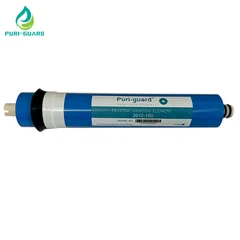
Using our NF RO Membrane, winemakers can separate the wine into two streams: an alcohol - rich permeate and a wine concentrate. The alcohol - rich permeate can be adjusted, and then recombined with the concentrate to achieve the desired alcohol level. This process is much more gentle compared to traditional methods like distillation, which can strip the wine of its delicate flavors and aromas.


Acid Adjustment
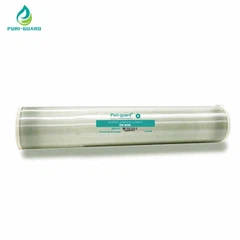
Acidity is another critical factor in wine quality. If a wine is too acidic, it can taste tart and unbalanced. RO/NF can help winemakers adjust the acid levels. The nanofiltration membrane can selectively remove some of the organic acids, such as tartaric and malic acids, from the wine. By carefully controlling the filtration process, winemakers can fine - tune the acidity to create a more harmonious and balanced wine. Our NF 60 Membrane is particularly well - suited for this application, as it has excellent selectivity for acid removal while retaining the wine's flavor and aroma compounds.
Color and Tannin Adjustment
The color and tannin levels in wine are also important for its appearance, mouthfeel, and aging potential. RO/NF can be used to adjust these parameters. For example, if a red wine has too intense a color or too high a tannin content, nanofiltration can be used to remove some of the larger pigment and tannin molecules. This can result in a wine with a more elegant color and a smoother, less astringent mouthfeel.
Water Removal and Concentration
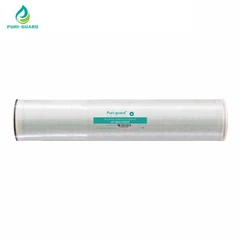
In some cases, winemakers may want to concentrate the flavors and aromas in a wine. RO/NF can be used to remove water from the wine, increasing the concentration of the desirable components. This can be especially useful for making dessert wines or for enhancing the flavor intensity of a regular table wine. The Household NF technology, although often associated with home use, can also be scaled up for small - batch winemaking operations to achieve this water removal and concentration effect.
Microbial and Particle Removal
RO/NF membranes can also act as a physical barrier to remove microorganisms and particles from the wine. This can help prevent spoilage and improve the clarity of the wine. By removing bacteria, yeast, and other unwanted particles, winemakers can extend the shelf life of the wine and ensure a consistent product quality.
Benefits of Using RO/NF in Winemaking
There are several benefits to using RO/NF in winemaking. Firstly, it's a non - chemical process, which means it doesn't introduce any foreign substances into the wine. This is important for winemakers who want to maintain the natural character of their wines. Secondly, it's a precise and controllable process. Winemakers can adjust the parameters of the RO/NF system to achieve the exact results they want, whether it's alcohol adjustment, acid adjustment, or flavor concentration. Thirdly, it's a relatively gentle process compared to some other methods, so it helps preserve the delicate flavors and aromas of the wine.
Challenges and Considerations
Of course, like any technology, there are some challenges and considerations when using RO/NF in winemaking. One of the main challenges is the cost of the equipment and the membranes. However, in the long run, the benefits of using RO/NF, such as improved wine quality and consistency, can outweigh the initial investment. Another consideration is the need for proper maintenance of the RO/NF system. The membranes need to be cleaned and replaced regularly to ensure optimal performance.
Conclusion
In conclusion, reverse osmosis and nanofiltration have a wide range of applications in the winemaking industry, from alcohol and acid adjustment to color and tannin control. As a supplier of RO/NF solutions, we're committed to providing high - quality membranes and systems that can help winemakers create the best possible wines. Whether you're a small - scale winery or a large commercial operation, our products can be tailored to meet your specific needs.
If you're interested in learning more about how our RO/NF solutions can benefit your winemaking process, we'd love to hear from you. Contact us to start a conversation about your requirements and explore how we can work together to take your wines to the next level.
References
- Boulton, R. B., Singleton, V. L., Bisson, L. F., & Kunkee, R. E. (1996). Principles and Practices of Winemaking. Chapman & Hall.
- Jackson, R. S. (2008). Wine Science: Principles, Practices, Perception. Academic Press.