
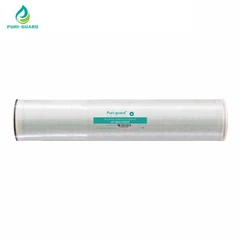
Hey there! As a supplier of RO 2521, I often get asked about the detection methods for this product. So, I thought I'd share some insights on what the detection method for RO 2521 is all about.
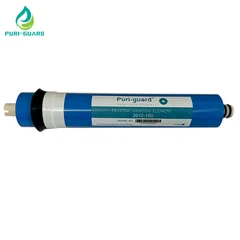
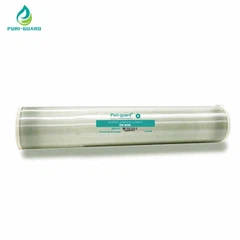
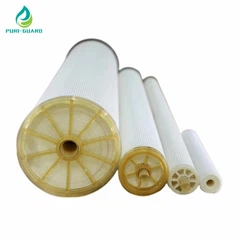
First off, let's understand what RO 2521 is. RO stands for Reverse Osmosis, and RO 2521 is a type of reverse osmosis membrane. These membranes are crucial in water purification systems as they help remove impurities, salts, and other contaminants from water. They work by allowing water molecules to pass through while blocking the passage of larger molecules and ions.
Now, onto the detection methods. There are several ways to detect the performance and integrity of an RO 2521 membrane.
Salt Rejection Test
One of the most common detection methods is the salt rejection test. This test measures how effectively the RO 2521 membrane can reject salts from the water. To conduct this test, you'll need a sample of the feed water (the water going into the membrane) and the permeate water (the water that has passed through the membrane). You measure the salt concentration in both the feed water and the permeate water using a conductivity meter or a titration method.
The salt rejection percentage is then calculated using the following formula:
[ \text{Salt Rejection} (%) = \left(1 - \frac{\text{Permeate Salt Concentration}}{\text{Feed Salt Concentration}}\right) \times 100 ]
A high salt rejection percentage indicates that the membrane is working well and is effectively removing salts from the water. For RO 2521 membranes, a good salt rejection rate is typically around 95 - 99%. If the salt rejection rate drops significantly, it could be a sign that the membrane is damaged or fouled.
Permeate Flow Rate Test
Another important detection method is the permeate flow rate test. This test measures the amount of water that passes through the RO 2521 membrane per unit of time. To perform this test, you simply collect the permeate water for a specific period (usually 1 - 5 minutes) and measure its volume. Then, you calculate the flow rate by dividing the volume of the collected water by the time.


The permeate flow rate is affected by several factors, including the pressure applied to the membrane, the temperature of the water, and the salt concentration in the feed water. A decrease in the permeate flow rate could indicate that the membrane is clogged or that there is a problem with the water pressure.
Visual Inspection
Visual inspection is also a simple yet effective detection method. You can visually inspect the RO 2521 membrane for any signs of physical damage, such as cracks, holes, or delamination. These damages can occur due to improper handling, high pressure, or chemical exposure. If you notice any visible damage, the membrane should be replaced immediately.
Chemical Analysis
Chemical analysis can be used to detect the presence of contaminants or fouling agents on the RO 2521 membrane. You can take a sample of the membrane surface and analyze it using techniques such as Fourier-transform infrared spectroscopy (FTIR) or scanning electron microscopy (SEM). These techniques can help identify the type of contaminants or fouling agents present on the membrane, which can then guide the appropriate cleaning or maintenance procedures.
Comparison with Similar Membranes
It can also be helpful to compare the performance of your RO 2521 membrane with similar membranes in the market. For example, you can look at the performance data of the 4021 RO Membrane, BW2521, or TW30 2521. This comparison can give you an idea of whether your RO 2521 membrane is performing as expected or if there are any issues that need to be addressed.
In conclusion, regularly detecting the performance and integrity of your RO 2521 membrane is crucial to ensure the efficient operation of your water purification system. By using a combination of these detection methods, you can identify any problems early and take appropriate measures to maintain or replace the membrane.
If you're in the market for RO 2521 membranes or have any questions about their detection and maintenance, feel free to reach out. We're here to help you make the best choice for your water purification needs.
References
- AWWA (American Water Works Association). Water Quality and Treatment: A Handbook of Community Water Supplies.
- Membrane Technology and Applications by R. W. Baker.