
Yo, what's up? As a supplier of HSRO membrane, I often get asked, "What is the permeability of HSRO membrane?" Well, I'm gonna break it down for you in this blog.


First off, let's talk about what permeability means in the context of membranes. Permeability is basically a measure of how easily a substance can pass through a membrane. In the case of HSRO membrane, we're usually talking about the ability of water and certain solutes to move through it.
The permeability of HSRO membrane is a crucial factor because it directly impacts its performance in various applications. For example, in water treatment, a higher permeability means the membrane can allow more water to pass through in a given amount of time. This is super important as it affects the efficiency of the water purification process. If the permeability is too low, the treatment process will be slow, and you might need more membranes to achieve the desired water output.
Now, let me tell you a bit about the factors that influence the permeability of HSRO membrane. One of the main factors is the membrane's structure. HSRO membranes are designed with a specific pore size and distribution. The pore size determines which substances can pass through and how easily. For instance, if the pores are too large, unwanted solutes might also pass through, reducing the quality of the treated water. On the other hand, if the pores are too small, the permeability will be low, and the water flow rate will decrease.
Another factor is the material of the membrane. The HSRO membrane is made from high - quality materials that are carefully selected to optimize its permeability. These materials have unique chemical and physical properties that allow for the efficient passage of water molecules while blocking other contaminants.
The operating conditions also play a big role in determining the permeability. Things like pressure, temperature, and the concentration of the feed solution can all have an impact. Higher pressure usually increases the permeability as it forces more water through the membrane. However, there's a limit to how much pressure you can apply without damaging the membrane. Temperature can also affect the permeability. Generally, an increase in temperature can lead to an increase in permeability because the water molecules move more freely at higher temperatures.
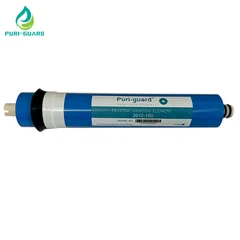
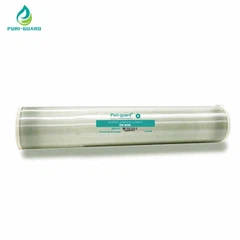
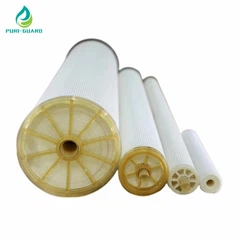
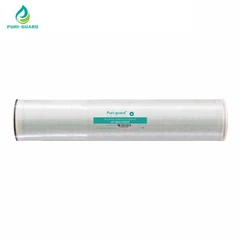
Let's take a look at some of our popular products, the HSRO 4040 and HSRO 8040. These membranes are known for their excellent permeability. The HSRO 4040 is a smaller - sized membrane that is often used in smaller water treatment systems. It offers a good balance between permeability and rejection rate. The HSRO 8040, on the other hand, is larger and is designed for high - capacity water treatment plants. It has a high permeability, which allows for a large volume of water to be treated quickly.
If you're interested in learning more about our HSRO Membane, you can click on the link. We've got a lot of detailed information on our website about its features, specifications, and how it can be used in different applications.
When it comes to measuring the permeability of HSRO membrane, there are several methods. One common method is to measure the flux, which is the volume of water that passes through a unit area of the membrane per unit time under a specific pressure. By measuring the flux, we can get an idea of how permeable the membrane is. Another method involves analyzing the rejection rate of certain solutes. A good membrane should have a high rejection rate for contaminants while maintaining a reasonable permeability for water.
Now, if you're in the market for an HSRO membrane, you're probably wondering how to choose the right one based on its permeability. It really depends on your specific needs. If you have a small - scale water treatment project, you might be fine with a membrane with a lower permeability but higher rejection rate. But if you're dealing with a large - scale industrial water treatment plant, you'll need a membrane with high permeability to handle the large volume of water.
In conclusion, the permeability of HSRO membrane is a complex but important characteristic. It's influenced by many factors, including the membrane's structure, material, and operating conditions. Our HSRO 4040 and HSRO 8040 are great options that offer different levels of permeability to suit various applications. If you're interested in our HSRO Membane or want to discuss your specific requirements, don't hesitate to reach out. We're here to help you find the perfect membrane solution for your needs.
References:
- Membrane Science and Technology textbooks
- Industry reports on water treatment membranes