
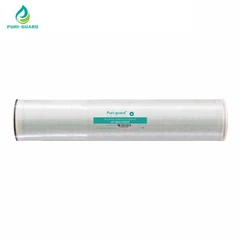
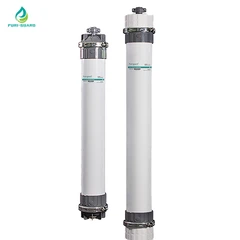
Hey there! As a flat sheet membrane supplier, I'm often asked about the surface modification of flat sheet membranes. So, in this blog, I'll break down what surface modification is all about, its benefits, and how we're involved in offering top - quality flat sheet membranes that might use these modifications.
Let's start with the basics. What exactly is the surface modification of flat sheet membranes? Well, flat sheet membranes are, as the name suggests, flat sheets that are used for filtration and separation processes. They can be made from various materials like polymers, ceramics, and metals. Surface modification refers to the process of altering the properties of the membrane's surface to enhance its performance in specific applications.


There are several reasons why we might want to modify the surface of a flat sheet membrane. One of the main reasons is to improve its fouling resistance. Fouling is a big problem in membrane filtration. It occurs when particles, colloids, or microorganisms in the feed solution stick to the membrane surface or pores, reducing the membrane's permeability and efficiency over time. By modifying the surface, we can make it more hydrophilic, which means it has an affinity for water. A hydrophilic surface is less likely to attract and hold onto organic foulants. For example, if we're using a Flat Sheet Membrane Filtration system to treat wastewater, a fouling - resistant membrane will last longer and require less frequent cleaning or replacement.
Another benefit of surface modification is to enhance the selectivity of the membrane. Selectivity is the ability of the membrane to separate different components in a mixture. For instance, in a Nanofiltration Membrane Flat Sheet used for removing specific ions from water, surface modification can help the membrane to be more selective in allowing only certain ions to pass through while rejecting others. This can be crucial in applications like water softening or the purification of pharmaceutical products.
There are different methods of surface modification. One common approach is coating. We can apply a thin layer of a polymer or other material on the membrane surface. This coating can change the surface's chemical properties, such as its charge, hydrophilicity, or roughness. For example, a positively charged coating can attract negatively charged particles in the feed solution, which can be useful in selective separation processes.
Grafting is another popular method. It involves attaching polymer chains or functional groups to the membrane surface. These grafted chains can provide new chemical functionalities to the membrane. For instance, we can graft chains that have a high affinity for specific pollutants, making the membrane more effective in removing those pollutants from the feed solution.
Plasma treatment is also a powerful tool for surface modification. In plasma treatment, the membrane surface is exposed to a plasma, which is a highly ionized gas. The plasma can break the chemical bonds on the membrane surface and create new reactive sites, allowing for the introduction of new functional groups. Plasma treatment can be used to modify the surface energy, wettability, and chemical composition of the membrane in a controlled way.
As a Flat Sheet Membrane Flat Sheet Membrane supplier, we understand the importance of surface modification. We work closely with our R & D team to develop membranes with the right surface properties for different applications. Whether you're in the water treatment industry, food and beverage industry, or pharmaceutical industry, our flat sheet membranes with advanced surface modifications can offer you better performance.
In the water treatment industry, for example, our modified flat sheet membranes can significantly reduce the operating costs. Since they are more fouling - resistant, they require less chemical cleaning, which is not only cost - effective but also more environmentally friendly. In the food and beverage industry, our membranes with enhanced selectivity can be used for clarifying juices, separating proteins, and removing contaminants while retaining the valuable components of the product.
In the pharmaceutical industry, purity is of the utmost importance. Our surface - modified flat sheet membranes can provide high - level separation efficiency, ensuring that the final pharmaceutical products meet the strict quality standards.
If you're in the market for flat sheet membranes, I encourage you to reach out to us. We can discuss your specific requirements and see how our surface - modified membranes can fit into your processes. Our team of experts is always ready to provide you with detailed information and support. Whether you need a small - scale trial or a large - scale supply, we've got you covered.
Surface modification of flat sheet membranes is a game - changer in the field of filtration and separation. It offers numerous benefits in terms of fouling resistance, selectivity, and overall performance. As a reliable flat sheet membrane supplier, we're committed to providing you with the best - in - class products. So, don't hesitate to contact us to start a discussion about your membrane needs.
References
- Cheryan, M. (1998). Ultrafiltration and Microfiltration Handbook. Technomic Publishing.
- Mulder, M. (1996). Basic Principles of Membrane Technology. Kluwer Academic Publishers.