
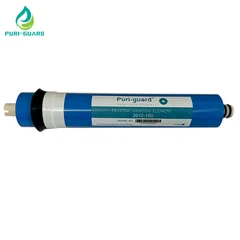
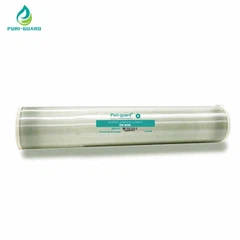
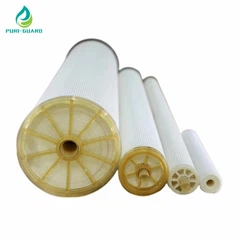
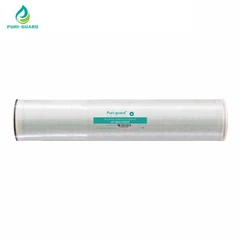
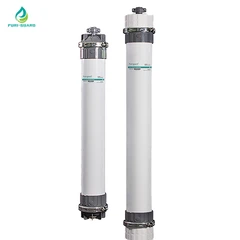
Reverse osmosis membrane, behind this seemingly ordinary name, hides a huge scientific and technological power. It is an artificial semipermeable membrane that simulates biological semipermeable membrane and is the core of reverse osmosis technology.
💧 Working Principle
The working principle of reverse osmosis membrane is based on osmotic pressure, but in the opposite direction of natural osmosis. By applying pressure, the solvent (usually water) will reverse osmosis against the natural osmosis direction. In this way, the raw water is separated into two parts after passing through the reverse osmosis membrane: one part is concentrated water with high concentration of solutes; the other part is purified water with most impurities removed.
🛠️ Materials and Structure
Reverse osmosis membrane is mainly made of hydrophilic organic polymer materials, such as cellulose acetate and its derivatives, aromatic polyamide, etc. These materials have good chemical stability and mechanical strength. The membrane structure is divided into asymmetric membrane and homogeneous membrane. The former has a dense desalination layer and a porous support layer, while the latter combines the advantages of different materials and has better performance.
🌟 Performance Characteristics
High filtration accuracy: The membrane pore size is very small, usually between 0.5 and 10 nanometers, which can effectively remove dissolved salts, colloids, microorganisms, organic matter, etc. in water, with a removal rate of up to 97% to 98%.
Selective permeability: Allows water molecules to pass through, while almost completely blocking macromolecules or ions such as salts, minerals, viruses, and bacteria.
Strong durability: It is less affected by many factors, has high mechanical strength and service life, and can function under low operating pressure.
🌐 Application Areas
Water treatment industry: used to produce pure water and ultrapure water, widely used in seawater desalination, brackish water desalination, boiler water softening, wastewater treatment, etc.
Food and beverage industry: used for the concentration of dairy products and fruit juices, as well as water purification in food processing to improve product quality and safety.
Pharmaceutical industry: used to prepare high-purity water to meet the strict requirements of drug production.
Electronics industry: used in key steps in the chip semiconductor manufacturing process, such as wafer cleaning, chemical mechanical polishing, etc.
🛠️ Maintenance and Care
Pretreatment: Perform proper pretreatment of raw water, such as filtration, softening, sterilization, etc., to remove large particles of impurities, suspended matter, organic matter, residual chlorine, etc.
Regular cleaning: As the use time increases, the reverse osmosis membrane will be contaminated and requires regular physical cleaning (such as pressure washing, backwashing) and chemical cleaning (using specific chemical agents).
Replacement: The service life of the reverse osmosis membrane is limited, generally about 3-5 years, depending on the quality of the membrane, the use environment, maintenance, etc. When the membrane performance deteriorates, it needs to be replaced in time.