

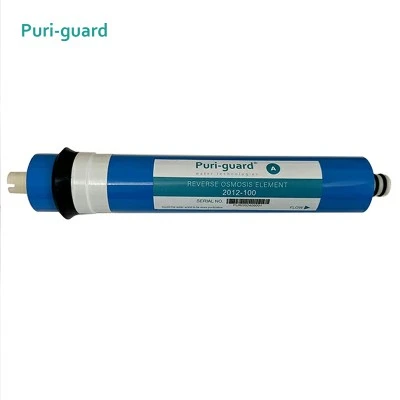
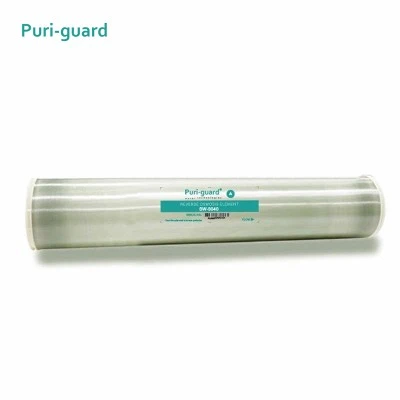
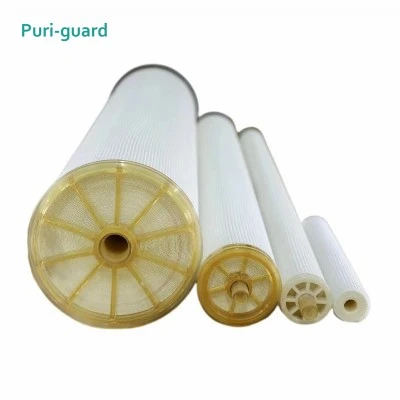
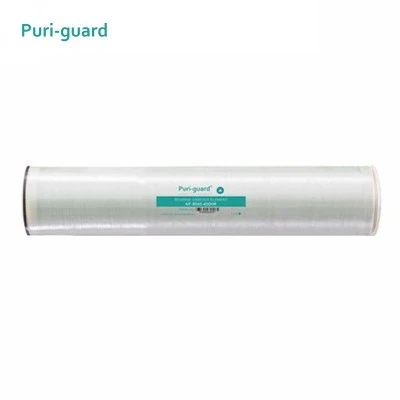
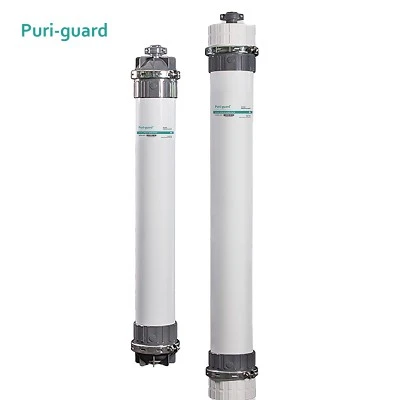
Reverse osmosis membrane elements are core components in water treatment systems, and proper storage methods are essential to ensure their performance and extend their service life. The following are key steps for storing reverse osmosis membrane elements:
1️⃣ Storage of new membrane elements
Pre-factory treatment: Membrane elements will be tested for water flow before leaving the factory, and will be treated with 1% sodium sulfite solution for storage, and then vacuum packed with oxygen-isolating bags.
Keep moist: Membrane elements must always be kept moist. Even when checking the number of packages, it should be done without damaging the plastic bag.
Cryogenic storage: Membrane elements are best stored at a low temperature of 5~10℃. When stored in an environment with a temperature exceeding 10℃, a well-ventilated place should be selected, and direct sunlight should be avoided. The storage temperature should not exceed 35℃.
Anti-freezing measures: Membrane elements may be physically damaged when frozen, so insulation measures need to be taken to prevent freezing.
Stacking precautions: When stacking membrane elements, the packaging boxes should not exceed 5 layers, and ensure that the cartons remain dry.
2️⃣ Storage of used membrane elements
Store away from light: The membrane elements must be stored in a dark place, the storage temperature should not exceed 35℃, and avoid direct sunlight.
Anti-freezing measures: When the temperature is below 0℃, the membrane elements are at risk of freezing, so anti-freezing measures need to be taken.
Soaking in protective solution: In order to prevent the growth of microorganisms, it is necessary to use pure water or reverse osmosis water to prepare a sodium sulfite (food grade) protective solution with a concentration of 500~1,000ppm and pH3~6 to soak the elements.
Post-soaking treatment: After soaking the membrane element in the preservation solution for about 1 hour, take it out and pack it in an oxygen isolation bag, seal it and label it with the packaging date.
Repackaging: After the membrane elements that need to be preserved are repackaged, the storage conditions are the same as those of new membrane elements.
Preservation liquid inspection: The concentration and pH of the preservation liquid must be kept within the specified range, and regular inspections are required. If deviations may occur, the preservation liquid needs to be re-adjusted.
Dry state: Regardless of the circumstances of preservation, the membrane cannot be left in a dry state.
Formaldehyde solution storage: You can also use a 0.2~0.3% formaldehyde solution as a storage solution. Formaldehyde is a stronger microbial killer than sodium bisulfite and does not contain oxygen.
By following these storage steps, you can ensure that the performance and life of the reverse osmosis membrane element are optimally maintained.