
As a seasoned supplier of industrial RO membranes, I've witnessed firsthand the transformative impact these technologies have on treating high - salt water. In this blog, I'll explore how industrial RO membranes effectively handle high - salt water, the challenges involved, and the solutions we offer.
Understanding High - Salt Water
High - salt water, often referred to as saline water, contains a significant concentration of dissolved salts. This can come from various sources such as seawater, industrial wastewater, and brackish groundwater. Seawater typically has a salt concentration of around 35,000 ppm (parts per million), while brackish water can have salt levels ranging from a few hundred to over 10,000 ppm. Industrial wastewater may contain even higher and more complex mixtures of salts and contaminants, depending on the industry.
The presence of high salt concentrations in water can have several negative impacts. It can render the water undrinkable for humans and animals, damage agricultural crops if used for irrigation, and cause scaling and corrosion in industrial equipment. Therefore, finding efficient ways to treat high - salt water is crucial for various applications, including drinking water supply, industrial processes, and environmental protection.


How Industrial RO Membranes Work
Reverse osmosis (RO) is a water purification technology that uses a semi - permeable membrane to remove ions, molecules, and larger particles from water. In the context of high - salt water treatment, industrial RO membranes act as a physical barrier that allows water molecules to pass through while blocking the majority of dissolved salts and other contaminants.
The process begins with the application of pressure to the high - salt water on one side of the membrane. The pressure forces the water molecules to move from the high - salt concentration side to the low - salt concentration side (the permeate side), leaving behind the salts and other impurities. This is the opposite of the natural osmotic process, where water moves from an area of low solute concentration to an area of high solute concentration.
Industrial RO membranes are designed with specific pore sizes and surface properties to optimize the separation process. The pores are small enough to prevent the passage of salt ions and other large molecules but large enough to allow water molecules to pass through relatively easily. Additionally, the membrane surface may have special coatings or chemical properties to resist fouling, which is the accumulation of contaminants on the membrane surface that can reduce its performance over time.
Challenges in Treating High - Salt Water with RO Membranes
While industrial RO membranes are highly effective in treating high - salt water, they also face several challenges.
One of the main challenges is the high osmotic pressure associated with high - salt water. As the salt concentration increases, the osmotic pressure also increases, requiring more energy to force the water through the membrane. This can significantly increase the operating costs of the RO system. For example, treating seawater requires much higher pressure compared to treating brackish water.
Another challenge is membrane fouling. High - salt water often contains other contaminants such as suspended solids, organic matter, and microorganisms. These contaminants can adhere to the membrane surface, forming a layer that reduces the membrane's permeability and separation efficiency. Fouling can also lead to increased pressure drop across the membrane, further increasing energy consumption and potentially causing damage to the membrane.
Scaling is another issue. When the concentration of certain salts in the water reaches their solubility limit, they can precipitate out of the solution and form scale on the membrane surface. Common scaling salts include calcium carbonate, calcium sulfate, and silica. Scale formation can reduce the membrane's performance and lifespan, and it can be difficult and costly to remove.
Our Solutions
As a leading supplier of industrial RO membranes, we offer a range of products specifically designed to address these challenges.
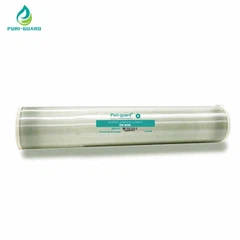
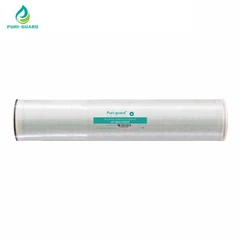
Our ULP 8040 Membrane is a low - pressure membrane that can effectively remove salts from high - salt water with relatively low energy consumption. It has a high rejection rate for various salts and is resistant to fouling. This makes it an ideal choice for applications where energy efficiency is a priority, such as in decentralized water treatment plants or in areas with limited power supply.
The TW 8040 RO Membrane is designed for high - performance seawater desalination. It has a high salt rejection rate and can withstand the high pressures required for treating seawater. The membrane is also engineered to resist fouling and scaling, ensuring long - term stable operation in harsh seawater environments.
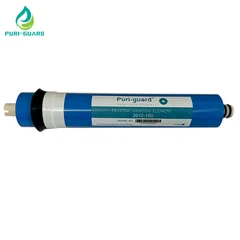
For applications requiring a more compact and cost - effective solution, our BW 4040 membrane is a great option. It is suitable for treating brackish water and can effectively remove salts and other contaminants to produce high - quality water. The BW 4040 membrane is easy to install and maintain, making it a popular choice for small - to - medium - sized industrial and commercial applications.
In addition to our high - quality membranes, we also offer comprehensive technical support and after - sales service. Our team of experts can help customers select the most suitable membrane for their specific application, design the RO system, and provide training on system operation and maintenance.
Conclusion
Industrial RO membranes offer an effective solution for treating high - salt water, but they also face challenges such as high osmotic pressure, fouling, and scaling. At our company, we are committed to providing high - quality membranes and comprehensive solutions to overcome these challenges. Our products, such as the ULP 8040 Membrane, TW 8040 RO Membrane, and BW 4040, are designed to provide efficient and reliable high - salt water treatment.
If you are looking for a reliable supplier of industrial RO membranes for high - salt water treatment, we encourage you to reach out to us for a detailed discussion. Whether you are dealing with seawater desalination, industrial wastewater treatment, or any other high - salt water application, our team can work with you to find the best solution.
References
- Cheryan, M. (1998). Ultrafiltration and Microfiltration Handbook. Technomic Publishing.
- Mulder, M. (1996). Basic Principles of Membrane Technology. Kluwer Academic Publishers.
- Strathmann, H. (2010). Synthetic Membranes: Science, Engineering, and Applications. Springer.