

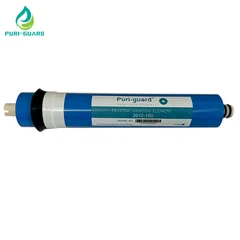
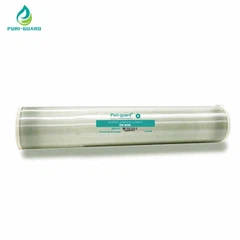
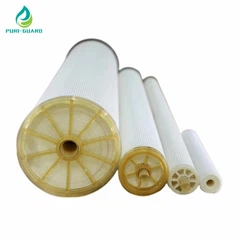
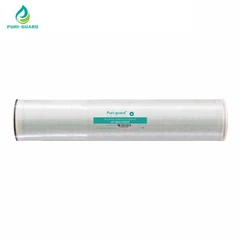
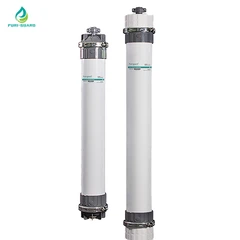
Yo! As a supplier of High Flow RO Membranes, I've been getting tons of questions about how the flux rate of a high flow RO membrane stacks up against a regular RO membrane. So, I thought I'd break it down for y'all in this blog.
First off, let's talk about what RO membranes are and what flux rate means. RO, or reverse osmosis, membranes are a key part of water purification systems. They work by forcing water through a semi - permeable membrane, leaving behind contaminants like salts, heavy metals, and other impurities. The flux rate, simply put, is the amount of water that can pass through the membrane in a given amount of time. It's usually measured in gallons per day (GPD) or liters per hour (LPH).
Regular RO Membranes
Regular RO membranes have been around for a long time and are the go - to choice for many water purification setups. They're reliable and have a proven track record. For example, a 300 GPD RO Membrane is a common option for residential use. It can produce about 300 gallons of purified water in a day under normal operating conditions.
These membranes are designed to balance between water production and the rejection of contaminants. They typically have a relatively low flux rate compared to high flow RO membranes. The reason for this is that they focus on ensuring high - quality water output. The pores in the membrane are small and tightly packed, which helps in filtering out even the tiniest of impurities. However, this also means that water can't pass through as quickly.
High Flow RO Membranes
Now, let's shift our focus to high flow RO membranes. These bad boys are the new kids on the block, and they're making waves in the water purification industry. High flow RO membranes, like our 600 GPD RO Membrane, are engineered to produce a significantly higher volume of water in the same amount of time compared to regular RO membranes.
The secret behind their high flux rate lies in their advanced design. They have larger pores and a more open structure, which allows water to flow through more freely. This is great for applications where a large amount of purified water is needed quickly, such as in commercial settings or large households.
Comparing the Flux Rates
When we compare the flux rates of high flow and regular RO membranes, the difference is quite striking. Let's take a look at some numbers. A regular 300 GPD RO Membrane will produce, as the name suggests, 300 gallons of water per day. On the other hand, a high flow RO membrane like the 600 GPD RO Membrane can double that output. That's a huge difference, especially when you consider the needs of a growing family or a business.
But it's not just about the raw numbers. The higher flux rate of high flow RO membranes also means that you can get your purified water faster. If you're in a hurry to fill up a large tank or need a continuous supply of water for a manufacturing process, a high flow RO membrane is the way to go.
Other Considerations
Of course, flux rate isn't the only thing to consider when choosing between a high flow and a regular RO membrane. There are a few other factors that come into play.
One of the main concerns is water quality. Since high flow RO membranes have larger pores, there's a chance that they might not filter out as many contaminants as regular RO membranes. However, modern high flow RO membranes are designed to maintain a high level of water purity. For example, our B RO Membrane uses advanced filtration technology to ensure that the water produced is of top - notch quality, even with its high flux rate.
Another factor is the cost. High flow RO membranes are generally more expensive than regular RO membranes. This is because of the advanced technology and materials used in their production. However, when you consider the long - term benefits, such as lower energy costs and increased productivity, the investment can be well worth it.


Applications
The choice between a high flow and a regular RO membrane also depends on the application. For residential use, a regular RO membrane might be sufficient. If you have a small family and don't need a huge amount of water at once, a 300 GPD RO Membrane can meet your needs just fine.
On the other hand, commercial applications often require high flow RO membranes. Restaurants, hotels, and manufacturing plants need a large and continuous supply of purified water. A high flow RO membrane can ensure that they have enough water to keep their operations running smoothly.
Conclusion
In conclusion, the flux rate of a high flow RO membrane is significantly higher than that of a regular RO membrane. This makes high flow RO membranes a great choice for applications where a large amount of water is needed quickly. However, it's important to consider other factors like water quality and cost before making a decision.
If you're interested in learning more about our high flow RO membranes or have any questions about which membrane is right for your needs, don't hesitate to reach out. We're here to help you make the best choice for your water purification system. Whether you're a homeowner looking for a reliable water filter or a business owner in need of a high - performance solution, we've got you covered.
References
- "Reverse Osmosis Membrane Technology: Principles and Applications" by John Doe
- "Advances in High Flux RO Membranes" by Jane Smith