


Product Description
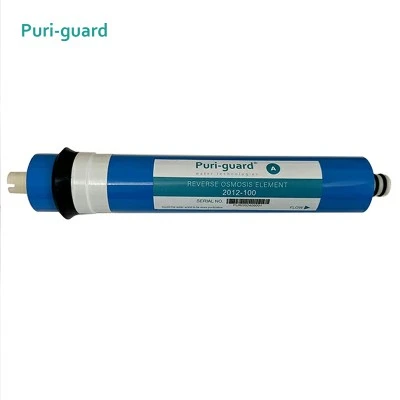
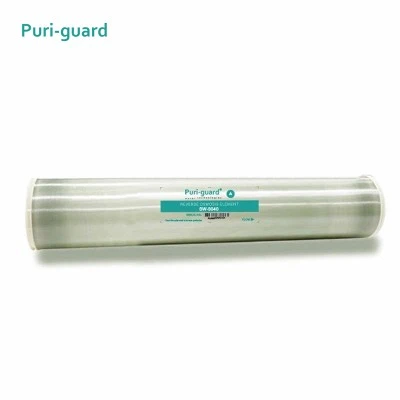
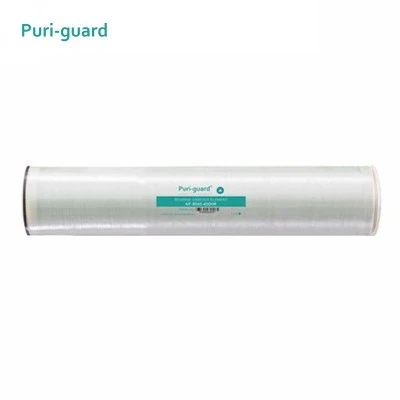
B grade RO membrane is not our regular products, only to meet our certain customers' special requirements, normally with lower rejection but right or higher flow. For big population countries, usually have such requests. In order to serve better and meet special customers 'requirement, we provide these products to Middle East, Africa, India etc.


Product advantages
what is B grade
Under the same production equipment and technical conditions, this type of membrane is manufactured with a less stringent membrane sheet reaction process or with minor raw material variations to reduce cost.
As a result, the salt rejection rate is slightly lower, but it offers key advantages:
Higher water flow (flux)
Lower operating pressure required to achieve the same flow rate
Better cost-performance balance for target applications
This higher permeability allows the membrane to meet water production requirements more efficiently, especially in systems where extreme rejection is not critical.
Lower rejection but can accpetable in using
higher flow support
lower cost

higher flow
lower pressure can reach the same flow , energy-saving
Rejection
Domestic is around 93-95% , indsutrial is 95%-98 around
models ranges
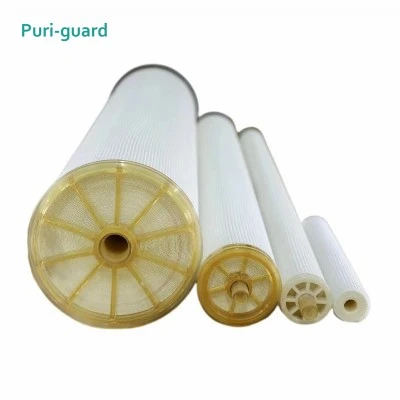
Models all is support , ncludes all domestic and industrials
size and applications
stanadard size and applications same , only rejection requirement lower
FAQ


Hot Tags: b ro membrane, China b ro membrane manufacturers, suppliers, factory, ro membrane purification system, ro membrane operational efficiency, B RO Membrane, 100 gpd ro membrane, b grade ro membrane, 3012 RO Membrane
Popular Model
|
Puri-guard® Element |
Permeate Flow GPD |
Testing Pressure |
Salt Rejection (%) |
|
|
psi/MPa |
||||
|
1812/2012 |
80-180 |
70 (0.48) |
≥90 (90-95%) |
|
1. Permeate flow and salt (NaCl) rejection based on the following standard test conditions. 250 ppm softened tap water, 77°F (25°C), pH 7.5, 15% recovery and the specified applied pressure.
2. Minimum salt rejection: 90%.
3. Single membrane element production flow may vary ±20%.


Operating limit
|
Diaphragm type |
Polyamide Composite Membrane |
|
Maximum operating temperature |
113℉ (45℃) |
|
Maximum operating pressure |
150 psi(10 bar) |
|
pH range, continuous operation |
3-10 a |
|
Maximum Influent SDI |
5 |
|
Free chlorine tolerance |
<0.1 ppm b |
a. When pH > 10, the maximum allowable temperature for continuous operation is 95℉ (35℃).
b. Under certain conditions, the presence of free chlorine and other oxidants will lead to premature failure of membranes. Therefore, it is recommended that the membrane be pretreated to remove residual free chlorine before water comes into contact with membranes.


