

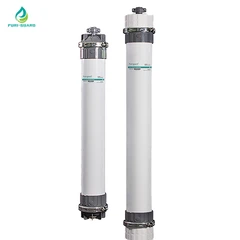
Water nanofiltration is a crucial process in various industries, from water treatment for households to large - scale industrial applications. As a leading water nanofiltration supplier, we understand the significance of membrane configuration in the efficiency and performance of nanofiltration systems. In this blog, we will explore how different membrane configurations, such as spiral - wound and hollow - fiber, impact water nanofiltration.
Spiral - Wound Membrane Configuration
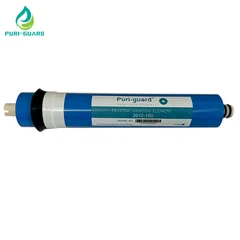
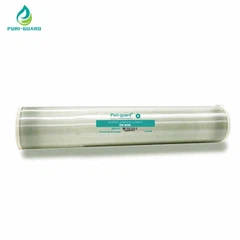
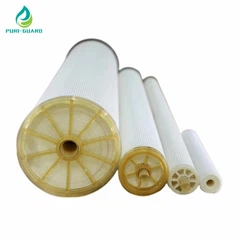
Spiral - wound membranes are one of the most commonly used configurations in water nanofiltration. These membranes are constructed by winding a flat sheet membrane around a central permeate collection tube, with spacer materials separating the layers. This design creates a large surface area within a relatively small volume, which is beneficial for high - flux applications.
Advantages in Water Nanofiltration
- High Surface Area: The spiral - wound design allows for a large membrane surface area to be packed into a single module. This high surface area enables a greater amount of water to come into contact with the membrane, increasing the overall filtration capacity. For example, in industrial water treatment plants, spiral - wound membranes can handle large volumes of water, making them suitable for continuous and high - volume filtration processes.
- Ease of Installation and Maintenance: Spiral - wound modules are relatively easy to install in existing filtration systems. They are designed to fit standard pressure vessels, which simplifies the integration process. Additionally, maintenance is straightforward as individual modules can be easily replaced if they become fouled or damaged. This reduces downtime and maintenance costs for our customers.
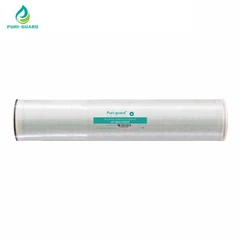
- Good Resistance to Pressure: Spiral - wound membranes can withstand relatively high operating pressures. This is important in nanofiltration as higher pressures can enhance the filtration efficiency by driving more water through the membrane pores. Our Nanofiltration NF 8040 product, which uses a spiral - wound configuration, is designed to operate at optimal pressures to achieve high rejection rates of contaminants.
Limitations
- Susceptibility to Fouling: One of the main drawbacks of spiral - wound membranes is their susceptibility to fouling. The spacer materials between the membrane layers can trap particles and organic matter, leading to a decrease in flux over time. This requires regular cleaning and chemical treatment to maintain the membrane performance. However, our company offers advanced anti - fouling technologies and cleaning protocols to mitigate this issue.
- Limited Flexibility in Small - Scale Applications: Spiral - wound modules are typically designed for larger - scale applications. In small - scale or household settings, the large size of these modules may not be practical. For household applications, other membrane configurations may be more suitable.
Hollow - Fiber Membrane Configuration
Hollow - fiber membranes consist of numerous small, hollow fibers bundled together. Water flows either inside the fibers (inside - out flow) or outside the fibers (outside - in flow), and the filtration occurs as water passes through the fiber walls.
Advantages in Water Nanofiltration
- High Surface - to - Volume Ratio: Hollow - fiber membranes have an extremely high surface - to - volume ratio. The small diameter of the fibers allows for a large number of fibers to be packed into a module, providing a large filtration area in a compact space. This makes them ideal for applications where space is limited, such as in mobile water treatment units or small - scale household systems. Our Household NF products utilize hollow - fiber membranes to provide efficient water filtration in a small and convenient package.
- Self - Cleaning Properties: In some hollow - fiber membrane systems, the flow pattern can create a self - cleaning effect. For example, in inside - out flow systems, the cross - flow of water along the fiber walls helps to prevent the accumulation of particles on the membrane surface. This reduces the frequency of cleaning and extends the membrane lifespan.
- Flexibility in Flow Direction: Hollow - fiber membranes offer flexibility in terms of flow direction. Depending on the application requirements, either inside - out or outside - in flow can be selected. This allows for customization of the filtration process to achieve the best performance for different types of water sources and contaminants.
Limitations
- Fiber Breakage Risk: Hollow - fibers are relatively fragile compared to spiral - wound membranes. They can be damaged by high pressures, abrasive particles, or improper handling. However, our company uses high - quality materials and advanced manufacturing techniques to minimize the risk of fiber breakage.
- Lower Pressure Tolerance: Hollow - fiber membranes generally have a lower pressure tolerance compared to spiral - wound membranes. This may limit their use in applications that require high - pressure operation. However, for many low - to - medium - pressure applications, such as household water filtration and some industrial pre - treatment processes, hollow - fiber membranes perform very well.
Impact on Filtration Performance
The membrane configuration has a significant impact on the filtration performance in terms of flux, rejection rate, and selectivity.
Flux
Flux refers to the volume of water that passes through the membrane per unit area and time. Spiral - wound membranes typically have higher fluxes in large - scale applications due to their large surface area and ability to withstand high pressures. However, in small - scale applications, hollow - fiber membranes can achieve comparable or even higher fluxes per unit volume due to their high surface - to - volume ratio.
Rejection Rate
The rejection rate is the percentage of contaminants that are retained by the membrane. Both spiral - wound and hollow - fiber membranes can achieve high rejection rates for various contaminants, such as salts, organic matter, and microorganisms. However, the rejection performance can be affected by factors such as membrane material, pore size, and operating conditions. Our Reverse Osmosis Nanofiltration products are designed to optimize the rejection rate for different types of contaminants, regardless of the membrane configuration.
Selectivity
Selectivity refers to the ability of the membrane to separate different types of solutes. Hollow - fiber membranes can offer better selectivity in some cases due to their smaller pore size distribution and the ability to control the flow path. This makes them suitable for applications where precise separation of specific contaminants is required.
Considerations for Choosing the Right Membrane Configuration
When choosing between spiral - wound and hollow - fiber membrane configurations, several factors need to be considered:
- Application Scale: For large - scale industrial applications, spiral - wound membranes are often the preferred choice due to their high - volume filtration capacity. For small - scale or household applications, hollow - fiber membranes are more suitable because of their compact size and high surface - to - volume ratio.
- Water Quality: The quality of the feed water also plays a role in the membrane selection. If the water contains a high concentration of suspended solids or organic matter, a membrane configuration with better anti - fouling properties may be required. Spiral - wound membranes may need more advanced pre - treatment in such cases, while hollow - fiber membranes with self - cleaning properties may be more resilient.
- Operating Conditions: The operating pressure, temperature, and flow rate requirements of the filtration process should be considered. Spiral - wound membranes can handle higher pressures, while hollow - fiber membranes are better suited for lower - pressure applications.
Conclusion
In conclusion, both spiral - wound and hollow - fiber membrane configurations have their own advantages and limitations in water nanofiltration. As a water nanofiltration supplier, we offer a wide range of products with different membrane configurations to meet the diverse needs of our customers. Whether you are looking for a high - volume industrial filtration solution or a compact household water treatment system, we have the right membrane technology for you.


If you are interested in learning more about our water nanofiltration products or would like to discuss your specific filtration requirements, please contact us. Our team of experts is ready to assist you in selecting the most suitable membrane configuration and product for your application. We look forward to working with you to provide efficient and reliable water nanofiltration solutions.
References
- Cheryan, M. (1998). Ultrafiltration and Microfiltration Handbook. Technomic Publishing Company.
- Baker, R. W. (2004). Membrane Technology and Applications. John Wiley & Sons.
- Mulder, M. (1996). Basic Principles of Membrane Technology. Kluwer Academic Publishers.