
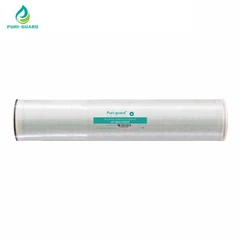
Desalination is a crucial process in addressing the global water scarcity issue, providing a reliable source of freshwater from seawater. Among the various desalination technologies available, reverse osmosis (RO) has emerged as the most widely used method, and seawater reverse osmosis (SWRO) membranes play a pivotal role in this process. As a leading SWRO membrane supplier, we are committed to providing high-quality membranes that offer exceptional efficiency and performance. In this blog post, we will explore the efficiency of SWRO membranes in desalination and discuss the factors that contribute to their effectiveness.
Understanding SWRO Membranes
SWRO membranes are semi-permeable barriers that allow water molecules to pass through while rejecting dissolved salts and other impurities. These membranes are typically made of thin-film composite (TFC) materials, which consist of a thin active layer supported by a porous substrate. The active layer is responsible for the separation process, while the substrate provides mechanical support and enhances the membrane's durability.
The efficiency of SWRO membranes is primarily determined by two key factors: salt rejection and water flux. Salt rejection refers to the membrane's ability to reject dissolved salts, while water flux is the rate at which water passes through the membrane. A high salt rejection rate ensures that the produced water meets the required quality standards, while a high water flux rate allows for a greater volume of water to be treated in a given time.
Factors Affecting SWRO Membrane Efficiency
Several factors can influence the efficiency of SWRO membranes, including feed water quality, operating conditions, and membrane properties. Let's take a closer look at each of these factors:
Feed Water Quality
The quality of the feed water, which is typically seawater, can have a significant impact on the performance of SWRO membranes. Seawater contains a variety of dissolved salts, organic matter, and suspended solids, which can foul the membrane surface and reduce its efficiency. To minimize the impact of feed water quality on membrane performance, pre-treatment processes such as filtration, sedimentation, and chemical treatment are often employed to remove these contaminants before the water enters the RO system.
Operating Conditions
The operating conditions of the RO system, such as pressure, temperature, and flow rate, can also affect the efficiency of SWRO membranes. Higher operating pressures generally result in higher water fluxes, but they can also increase the energy consumption of the system. Similarly, higher temperatures can increase the water flux, but they can also reduce the salt rejection rate. Therefore, it is important to optimize the operating conditions to achieve the best balance between water production and energy consumption.
Membrane Properties
The properties of the SWRO membrane, such as pore size, surface charge, and hydrophilicity, can also influence its efficiency. Membranes with smaller pore sizes generally have higher salt rejection rates, but they may also have lower water fluxes. Similarly, membranes with a more negative surface charge can repel negatively charged ions, such as chloride and sulfate, and improve the salt rejection rate. Additionally, membranes with higher hydrophilicity can reduce the fouling potential and improve the long-term performance of the membrane.
Measuring SWRO Membrane Efficiency
To evaluate the efficiency of SWRO membranes, several performance indicators are commonly used, including salt rejection, water flux, and specific energy consumption (SEC). Salt rejection is typically expressed as a percentage and represents the proportion of dissolved salts that are rejected by the membrane. Water flux is usually measured in gallons per square foot per day (GFD) or liters per square meter per hour (LMH) and indicates the rate at which water passes through the membrane. SEC is a measure of the energy consumption per unit volume of water produced and is typically expressed in kilowatt-hours per cubic meter (kWh/m³).


In addition to these performance indicators, other factors such as membrane fouling, membrane lifespan, and maintenance requirements also need to be considered when evaluating the overall efficiency of an SWRO membrane system. Membrane fouling can reduce the water flux and increase the energy consumption of the system, while a longer membrane lifespan can reduce the replacement costs and downtime. Therefore, it is important to choose a membrane that offers a good balance between performance, durability, and cost.
Our SWRO Membrane Products
As a leading SWRO membrane supplier, we offer a wide range of high-quality membranes that are designed to meet the specific needs of different desalination applications. Our membranes are made of advanced TFC materials and feature a unique surface structure that provides excellent salt rejection and water flux performance. Additionally, our membranes are resistant to fouling and chemical degradation, ensuring long-term reliability and performance.
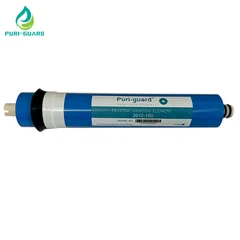
One of our popular products is the SW30 2521, which is a compact and high-performance membrane that is suitable for small-scale desalination applications. This membrane offers a high salt rejection rate of up to 99.7% and a water flux of up to 1,000 GFD, making it an ideal choice for applications where space and energy efficiency are important.
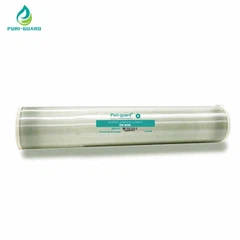
Another product in our portfolio is the Seawater RO membrane, which is designed for large-scale desalination plants. This membrane offers a high water flux of up to 1,500 GFD and a salt rejection rate of up to 99.8%, making it one of the most efficient membranes on the market. Additionally, our Seawater RO membrane is resistant to fouling and chemical degradation, ensuring long-term reliability and performance.
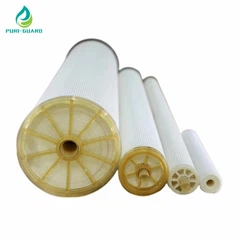
We also offer the SW30 2540 Membrane, which is a high-performance membrane that is suitable for a wide range of desalination applications. This membrane offers a high salt rejection rate of up to 99.7% and a water flux of up to 1,200 GFD, making it an ideal choice for applications where high performance and reliability are required.
Conclusion
SWRO membranes are a critical component of desalination systems, providing a reliable and efficient way to produce freshwater from seawater. The efficiency of SWRO membranes is influenced by several factors, including feed water quality, operating conditions, and membrane properties. By understanding these factors and choosing the right membrane for the specific application, it is possible to achieve high salt rejection, high water flux, and low energy consumption, resulting in a cost-effective and sustainable desalination solution.
As a leading SWRO membrane supplier, we are committed to providing our customers with the highest quality membranes and the best technical support. Our membranes are designed to meet the specific needs of different desalination applications and offer excellent performance, durability, and cost-effectiveness. If you are interested in learning more about our SWRO membrane products or have any questions about desalination, please feel free to contact us. We look forward to working with you to find the best solution for your desalination needs.
References
- Elimelech, M., & Phillip, W. A. (2011). The future of seawater desalination: energy, technology, and the environment. Science, 333(6043), 712-717.
- Greenlee, L. F., Lawler, D. F., Freeman, B. D., Marrot, B., & Moulin, P. (2009). Reverse osmosis desalination: Water sources, technology, and today's challenges. Water Research, 43(9), 2317-2348.
- Nghiem, L. D., Schäfer, A. I., Elimelech, M., & Waite, T. D. (2006). Physicochemical properties of natural organic matter (NOM) fractions isolated from Australian surface waters and their implications in membrane fouling. Water Research, 40(14), 2633-2643.