
The membrane surface charge density plays a crucial and multi - faceted role in water nanofiltration. As a water nanofiltration supplier, understanding these roles allows us to offer high - performance solutions to our clients.
1. Fundamental Principles of Water Nanofiltration
Water nanofiltration is a pressure - driven membrane separation process that lies between ultrafiltration and reverse osmosis. It is capable of removing a wide range of contaminants, including multivalent ions, organic compounds, and some microorganisms from water. The membranes used in nanofiltration typically have pore sizes in the range of 1 - 10 nanometers.
The separation mechanism in nanofiltration is not solely based on size exclusion. Charge - based interactions also play a significant part. The membrane surface can have a net positive or negative charge, which is determined by the chemical composition of the membrane material and the solution chemistry of the feed water.
2. Impact of Membrane Surface Charge Density on Ion Rejection
One of the primary functions of nanofiltration is to remove ions from water. The membrane surface charge density has a profound impact on ion rejection.
2.1. Electrostatic Repulsion
When the membrane surface has a negative charge density, it will repel negatively charged ions (anions) in the feed water. This electrostatic repulsion reduces the likelihood of anions passing through the membrane pores. For example, in a water treatment process where sulfate ions ($SO_4^{2 - }$) need to be removed, a negatively charged nanofiltration membrane with a high surface charge density will have a higher rejection rate for sulfate ions.
Conversely, a positively charged membrane will repel positively charged ions (cations). In a system where heavy metal cations such as lead ($Pb^{2+}$) or copper ($Cu^{2+}$) need to be removed, a positively charged membrane can be very effective. The degree of electrostatic repulsion is directly related to the magnitude of the membrane surface charge density. A higher charge density means a stronger repulsive force, leading to better ion rejection.
2.2. Selectivity between Ions
The membrane surface charge density also affects the selectivity between different ions. Multivalent ions are more strongly affected by electrostatic forces compared to monovalent ions. For instance, a negatively charged nanofiltration membrane will reject divalent anions like carbonate ($CO_3^{2 - }$) more effectively than monovalent anions like chloride ($Cl^ - $). This selectivity is due to the fact that the electrostatic interaction energy is proportional to the square of the ion charge. As a result, nanofiltration membranes can be designed to selectively remove specific ions based on their charge and the membrane surface charge density.
3. Influence on Organic Compound Removal
In addition to ion removal, water nanofiltration is also used to remove organic compounds from water. The membrane surface charge density can influence the removal of organic compounds in several ways.
3.1. Adsorption and Electrostatic Interaction
Many organic compounds can carry a charge in aqueous solutions. For example, some humic substances and proteins can be negatively charged. A negatively charged membrane surface can repel these negatively charged organic compounds, reducing their adsorption on the membrane surface. On the other hand, if the organic compound has a charge opposite to that of the membrane surface, there will be an electrostatic attraction, which may lead to adsorption of the organic compound on the membrane.
This adsorption can have both positive and negative effects. On the positive side, it can enhance the removal of certain organic contaminants. However, excessive adsorption can lead to membrane fouling, which reduces the membrane's performance over time. Therefore, controlling the membrane surface charge density is crucial to balance the removal of organic compounds and prevent fouling.
3.2. Size - Charge Synergy
The membrane surface charge density can also work in synergy with the pore size of the membrane to remove organic compounds. Organic molecules with a size close to the membrane pore size may be more easily removed if they have a charge that is repelled by the membrane surface. For example, a negatively charged membrane with a relatively small pore size can effectively remove small, negatively charged organic acids from water.
4. Impact on Water Flux
The membrane surface charge density also has an impact on water flux, which is the volume of water passing through the membrane per unit area and time.

4.1. Electro - osmotic Effects
The presence of a charged membrane surface can create an electro - osmotic flow. When an electric field is established due to the charged membrane and the ions in the solution, water molecules can be dragged along with the flow of counter - ions. A higher membrane surface charge density can lead to a stronger electro - osmotic effect, which may increase the water flux.
4.2. Surface Hydration and Pore Blockage
The charge on the membrane surface can affect the hydration layer around the membrane pores. A highly charged membrane surface can attract water molecules more strongly, creating a more hydrated environment around the pores. This can facilitate the passage of water through the pores, increasing the water flux. However, if the membrane surface charge density leads to excessive adsorption of contaminants, it can block the membrane pores, reducing the water flux.
5. Applications and Product Offerings
As a water nanofiltration supplier, we offer a range of products that take advantage of the role of membrane surface charge density.
5.1. Reverse Osmosis Nanofiltration
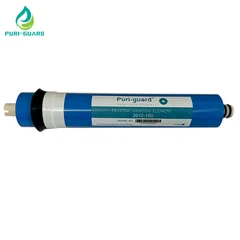
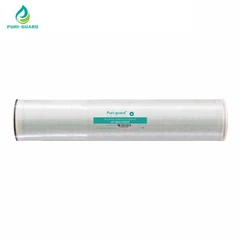
Our reverse osmosis nanofiltration membranes are designed with optimized surface charge densities to achieve high rejection rates for a variety of contaminants while maintaining good water flux. These membranes are suitable for applications such as desalination of brackish water, removal of heavy metals from industrial wastewater, and purification of drinking water.
5.2. Nanofiltration NF 8040
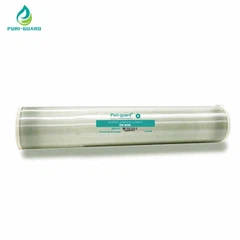
The Nanofiltration NF 8040 membranes have a precisely controlled surface charge density to provide excellent selectivity between different ions and organic compounds. They are ideal for applications in the food and beverage industry, where the removal of specific contaminants without excessive loss of essential minerals is required.
5.3. NF 60 Membrane
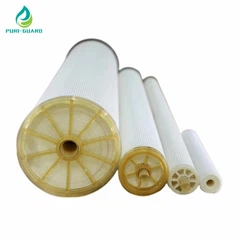
The NF 60 membranes are engineered with a high surface charge density to effectively remove multivalent ions and organic matter. They are commonly used in water treatment plants for municipal water supply, where the goal is to produce high - quality drinking water.
6. Conclusion and Call to Action
In conclusion, the membrane surface charge density is a critical factor in water nanofiltration. It affects ion rejection, organic compound removal, water flux, and overall membrane performance. As a water nanofiltration supplier, we are committed to providing our clients with membranes that are designed to optimize the role of membrane surface charge density.
If you are interested in our water nanofiltration products and would like to discuss your specific requirements, we invite you to reach out to us for a detailed consultation. Our team of experts is ready to assist you in finding the best solution for your water treatment needs.
References
- Baker, R. W. (2012). Membrane Technology and Applications. Wiley.
- Mulder, M. (1996). Basic Principles of Membrane Technology. Kluwer Academic Publishers.
- Nghiem, L. D., Schäfer, A. I., & Elimelech, M. (2004). Influence of membrane surface properties on initial rate of colloidal fouling of reverse osmosis and nanofiltration membranes. Journal of Membrane Science, 246(1 - 2), 1 - 15.