
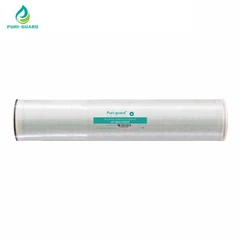
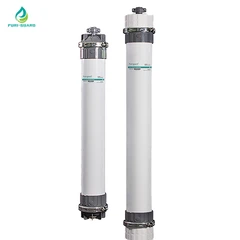
When it comes to choosing the right size of a residential Reverse Osmosis (RO) membrane, there are several factors to consider. As a supplier of residential RO membranes, I've encountered numerous customers with questions about which membrane size is most suitable for their homes. In this blog post, I'll delve into the key aspects that will help you determine the appropriate size of a residential RO membrane for your specific needs.


Understanding RO Membrane Basics
Before we discuss the sizing, let's briefly understand what an RO membrane does. A Reverse Osmosis membrane is a semi - permeable barrier that removes a wide range of contaminants from water. It works by applying pressure to the water, forcing it through the membrane while leaving behind impurities such as salts, heavy metals, bacteria, and viruses.
The performance of an RO membrane is often measured in terms of its Gallons Per Day (GPD) rating. This rating indicates the amount of purified water the membrane can produce in a 24 - hour period under ideal conditions.
Factors Affecting the Choice of RO Membrane Size
Water Consumption
One of the most critical factors in determining the size of the RO membrane is your household's water consumption. Consider how much purified water your family uses on a daily basis. For example, if you have a small family of 1 - 2 people who mainly use purified water for drinking and cooking, a lower GPD membrane might be sufficient. On the other hand, a larger family of 4 - 6 people with higher water usage for drinking, cooking, and perhaps even using it in appliances like coffee makers and ice makers will require a higher GPD membrane.
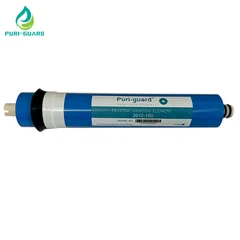
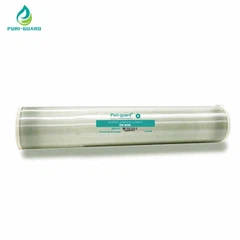
Let's break it down further. A family that consumes around 10 - 20 gallons of purified water per day could likely get by with a RO 1812 75. This membrane has a 75 GPD rating, which means it can produce enough water to meet the daily needs of a small household. However, if your family consumes 30 - 50 gallons of purified water daily, a 400 GPD RO Membrane would be a better choice. It can produce a larger volume of water in a day, ensuring that you never run out of purified water.
Water Source Quality
The quality of your water source also plays a role in determining the membrane size. If your water has a high level of contaminants, the RO membrane will have to work harder to purify it. In such cases, a larger membrane may be required to maintain an adequate flow rate of purified water. For instance, if you are using well water that is known to have high levels of minerals and other impurities, a High Flow RO Membrane might be necessary. These membranes are designed to handle a higher load of contaminants and still produce a sufficient amount of purified water.
Storage Capacity
Your water storage capacity is another important consideration. If you have a large storage tank, you can opt for a lower GPD membrane. The tank will store the purified water produced by the membrane over time, and you can use it as needed. However, if you have limited storage space, a higher GPD membrane is recommended. This way, you can produce a larger volume of water in a shorter period, reducing the risk of running out of purified water.
Common RO Membrane Sizes and Their Applications
75 GPD RO Membranes
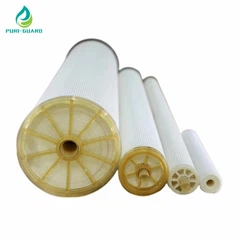
As mentioned earlier, 75 GPD RO membranes are suitable for small households with low water consumption. They are relatively compact and cost - effective, making them a popular choice for apartments or small homes. These membranes can produce enough purified water for drinking and light cooking needs.
100 - 200 GPD RO Membranes
Membranes in this range are a good fit for medium - sized households. They can handle a slightly higher water demand, such as for a family of 3 - 4 people. These membranes are also a good option if you have a moderate level of water contamination in your source water.
400 GPD and Higher RO Membranes
For large households or those with high water consumption, 400 GPD and higher membranes are the way to go. These membranes can produce a significant amount of purified water in a day, ensuring that there is always an ample supply for drinking, cooking, and other household uses. They are also suitable for homes that use purified water in multiple appliances simultaneously.
Making the Right Decision
To make the right decision about the size of the residential RO membrane, it's important to assess your specific needs carefully. Start by calculating your daily water consumption. You can do this by keeping track of how much water you use from your current water purification system or by estimating based on your family size and usage patterns.
Next, consider the quality of your water source. If you're unsure about the water quality, you can get it tested by a professional laboratory. This will give you a clear idea of the level of contaminants in your water and help you choose a membrane that can handle them effectively.
Finally, think about your storage capacity. If you're planning to install a new storage tank, make sure it's large enough to accommodate the water produced by the membrane you choose.
Contact Us for Your RO Membrane Needs
Choosing the right size of a residential RO membrane can be a complex process, but you don't have to do it alone. As a leading supplier of residential RO membranes, we have the expertise and experience to help you make the best decision for your home. Our team of experts can answer all your questions and guide you through the selection process.
If you're interested in purchasing a residential RO membrane or need more information, we encourage you to contact us. We offer a wide range of high - quality RO membranes in various sizes to meet your specific needs. Whether you need a small 75 GPD membrane or a large 400 GPD membrane, we have you covered.
References
- "Reverse Osmosis Water Treatment: Principles and Applications" by Andrew E. Fane and T. David Waite
- "Water Treatment Handbook" by Veolia Water Technologies