
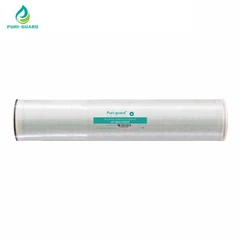
Suspended solids in water pose significant challenges across various industries, from water treatment for residential use to large - scale industrial processes. These particles can cause clogging in pipes, reduce the efficiency of equipment, and even affect the quality of end - products. As a supplier of B RO Membrane, I am well - versed in the crucial role our membranes play in removing suspended solids. In this blog, I will delve into the effects of B RO Membrane on the removal of suspended solids, exploring its mechanisms, advantages, and real - world applications.
Mechanisms of Suspended Solids Removal by B RO Membrane
The B RO Membrane operates based on the principle of reverse osmosis. Reverse osmosis is a water purification process that uses a semi - permeable membrane to remove ions, molecules, and larger particles from water. When water containing suspended solids is forced through the B RO Membrane under pressure, the membrane acts as a physical barrier.
The pores of the B RO Membrane are extremely small, typically in the range of 0.0001 to 0.001 micrometers. This size is much smaller than the size of most suspended solids, which can range from a few micrometers to several millimeters. As a result, the suspended solids are unable to pass through the membrane, while water molecules and some small - sized dissolved substances can. This selective separation is the core mechanism by which B RO Membrane removes suspended solids from water.
In addition to the physical sieving effect, the surface properties of the B RO Membrane also contribute to the removal of suspended solids. The membrane surface can be engineered to have specific charges or hydrophilic/hydrophobic properties. These surface characteristics can interact with the suspended solids, either attracting or repelling them. For example, a negatively - charged membrane surface can repel negatively - charged suspended particles, preventing them from adhering to the membrane and improving the overall efficiency of suspended solids removal.
Advantages of B RO Membrane in Suspended Solids Removal
One of the primary advantages of using B RO Membrane for suspended solids removal is its high removal efficiency. Due to its small pore size and well - designed surface properties, the B RO Membrane can achieve a very high removal rate of suspended solids, often exceeding 99%. This high efficiency ensures that the treated water meets strict quality standards, whether it is for drinking water, industrial process water, or other applications.
Another significant advantage is the stability and durability of the B RO Membrane. Our membranes are made from high - quality materials that are resistant to fouling, chemical degradation, and mechanical stress. Fouling, which is the accumulation of suspended solids and other contaminants on the membrane surface, can significantly reduce the performance of the membrane over time. However, the anti - fouling properties of the B RO Membrane minimize this issue, allowing for long - term, stable operation. This durability also reduces the frequency of membrane replacement, resulting in lower operating costs for our customers.
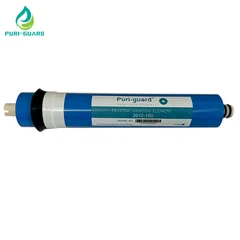
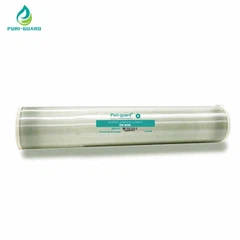
The B RO Membrane also offers flexibility in terms of system design and operation. It can be integrated into various water treatment systems, including small - scale residential units and large - scale industrial plants. For residential applications, products like the RO 1812 75 are designed to provide efficient suspended solids removal for home use. In industrial settings, larger membranes such as the 500 GPD Membrane and 3012 RO Membrane can be used to meet the high - volume water treatment requirements.
Real - World Applications of B RO Membrane in Suspended Solids Removal
In the residential water treatment sector, B RO Membrane is widely used to improve the quality of drinking water. Many households around the world rely on well water or surface water sources, which often contain suspended solids such as sand, silt, and organic matter. By installing a B RO Membrane - based water purification system, homeowners can effectively remove these suspended solids, along with other contaminants like heavy metals and bacteria. This results in cleaner, safer, and better - tasting drinking water.
In the industrial sector, B RO Membrane plays a crucial role in various processes. For example, in the food and beverage industry, the presence of suspended solids in water can affect the taste, appearance, and shelf - life of products. B RO Membrane is used to treat process water, ensuring that it is free from suspended solids and other impurities before it is used in production. In the pharmaceutical industry, where strict quality control is essential, B RO Membrane is used to produce high - purity water for drug manufacturing and laboratory use.
The power generation industry also benefits from the use of B RO Membrane for suspended solids removal. Cooling water in power plants often contains suspended solids that can cause scaling and corrosion in the cooling systems. By using B RO Membrane to treat the cooling water, the efficiency of the cooling systems can be maintained, and the lifespan of the equipment can be extended.
Considerations for Using B RO Membrane in Suspended Solids Removal
While B RO Membrane offers many advantages for suspended solids removal, there are also some considerations that need to be taken into account. One of the main challenges is the pre - treatment of the feed water. If the feed water contains a high concentration of suspended solids, it can quickly foul the membrane, reducing its performance and lifespan. Therefore, pre - treatment processes such as sedimentation, filtration, and coagulation are often required to reduce the suspended solids load before the water enters the RO system.
Another consideration is the operating pressure. Reverse osmosis requires a certain amount of pressure to force the water through the membrane. The optimal operating pressure depends on various factors, including the type of membrane, the feed water quality, and the desired water production rate. Operating at too low a pressure may result in insufficient water production, while operating at too high a pressure can damage the membrane.


Conclusion
In conclusion, the B RO Membrane has a profound effect on the removal of suspended solids from water. Its unique mechanism of action, high removal efficiency, stability, and flexibility make it an ideal choice for a wide range of applications, from residential to industrial. However, proper pre - treatment and careful operation are essential to ensure the long - term performance and effectiveness of the membrane.
If you are interested in incorporating B RO Membrane into your water treatment system for suspended solids removal or have any questions about our products, I encourage you to reach out to us for a detailed discussion. We are committed to providing high - quality membranes and professional technical support to meet your specific needs. Let's work together to achieve efficient and reliable water treatment solutions.
References
- Cheryan, M. (1998). Ultrafiltration and Microfiltration Handbook. Technomic Publishing.
- Mulder, M. (1996). Basic Principles of Membrane Technology. Kluwer Academic Publishers.
- Baker, R. W. (2004). Membrane Technology and Applications. John Wiley & Sons.